
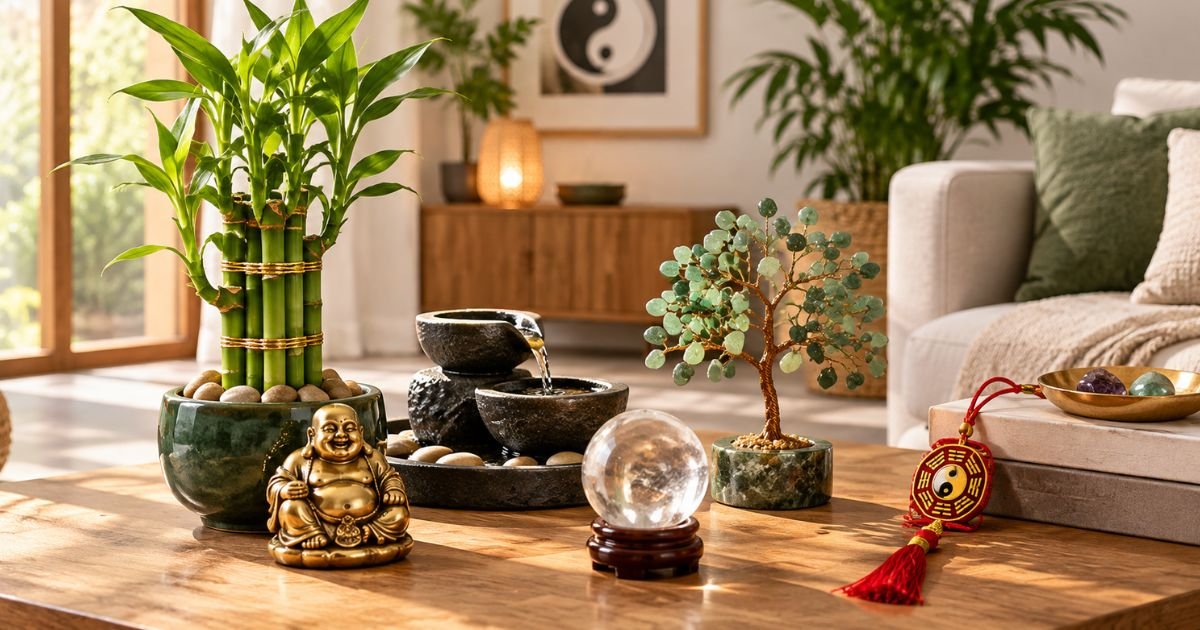
Feng Shui is an ancient Chinese practice that blends two words, “Feng” (wind) and “Shui” (water), to represent balance. It’s built around arranging your home so energy, called “chi,” can move through it freely. This balance not only enhances the aesthetics of your home but also promotes a sense of peace and wellbeing.
What Is Feng Shui?
Feng Shui, an ancient Chinese practice, goes beyond interior design by considering how furniture, colors, shapes, and other elements can influence the feel of a space. It encourages thoughtful choices that make your home feel more peaceful, comfortable, and connected to its surroundings.
Principles of Feng Shui Interior Design
- Chi: Feng Shui involves chi, the vital life force that connects us to our environment. To harness this energy effectively, it is important to create a harmonious space that allows chi to flow freely. This can be achieved through the thoughtful arrangement of furniture, colors, and natural elements. Keep entrances clear, avoid overcrowding rooms, and leave open pathways so you can move easily through each space.
- Commanding Position: Arrange your bed, desk, and stove so you can see the door without being directly in line with it.
- Bagua: An octagonal grid that serves as a roadmap for harmonizing your living environment. By overlaying this grid onto your home’s floor plan, you can pinpoint how specific areas correlate with different aspects of your life, such as wealth, career, and family. For example, the wealth corner of your home might be enhanced with plants or vibrant artwork, fostering prosperity.
- Five Elements: Feng Shui consists of five elements: Wood, Fire, Earth, Metal, and Water. Each element represents different qualities of nature and plays a role in creating harmony within a space. The placement and balance of these elements enhance the flow of chi, or life energy, in a home or office.
- Yin and Yang: To create a serene environment, add soft, quiet textures that represent Yin, such as plush textiles and muted colors. These elements create a calm atmosphere, grounding the room in comfort and peace.
Chi in Feng Shui
In Feng Shui, chi is connected with how freely a space feels and functions. An overly empty room may feel unwelcoming, while too much furniture or clutter can make a small room feel restricted. A thoughtful mix of furniture and open space can make the room feel comfortable and easy to move through.
The Commanding Position
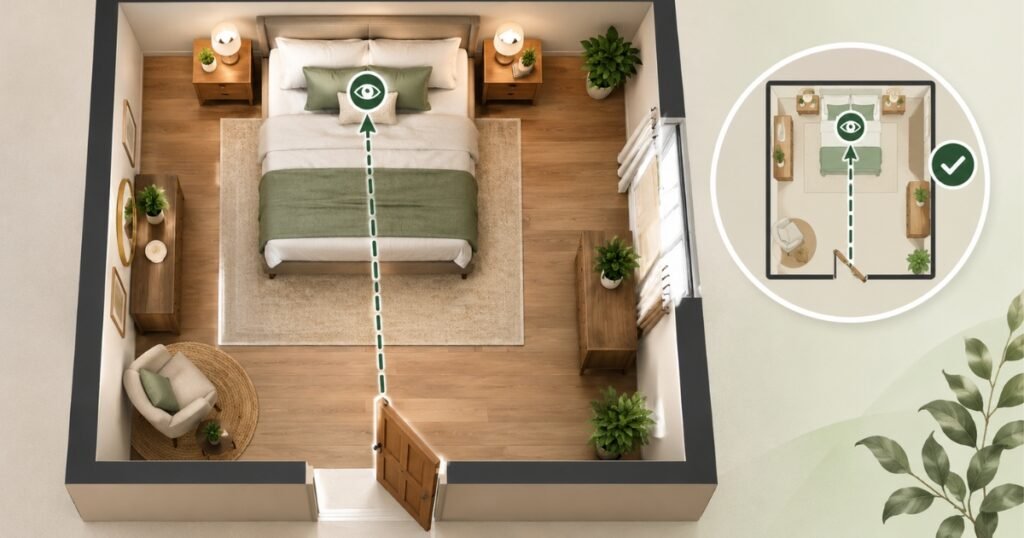
In Feng Shui, the commanding position is simply a place where you can see the door without sitting directly in line with it. This setup can make a room feel more comfortable and give you a better sense of security and control. It is often used for important pieces of furniture, such as your bed, desk, or stove.
- Workspace: Placing your desk where you can easily see the door can make your workspace feel more comfortable and less distracting.
- Feng Shui in the bedroom: Placing the bed against a solid wall while keeping a clear view of the entrance can help the room feel more secure and relaxing. For the bedroom, soft, muted tones like light blues, greens, and earthy shades can invite calm, whereas overly bright or stimulating colors may disrupt the peace.
- Kitchen: Place the stove so you can see the door while cooking, without standing directly in line with it. If that’s not possible, a small mirror or reflective backsplash behind the stove lets you see the entrance.
Feng Shui Bagua Map
The Feng Shui Bagua Map is a simple tool that helps you understand different areas of your home and how they relate to different parts of life. The word “Bagua” comes from Chinese and refers to eight areas connected with things such as wealth, relationships, family, health, career, and personal growth. You can use the Bagua Map for your entire home, a single room, an office, or even an outdoor space.
Different Feng Shui schools may use the map in different ways, but its main purpose is to help you understand your space and arrange it in a thoughtful way.
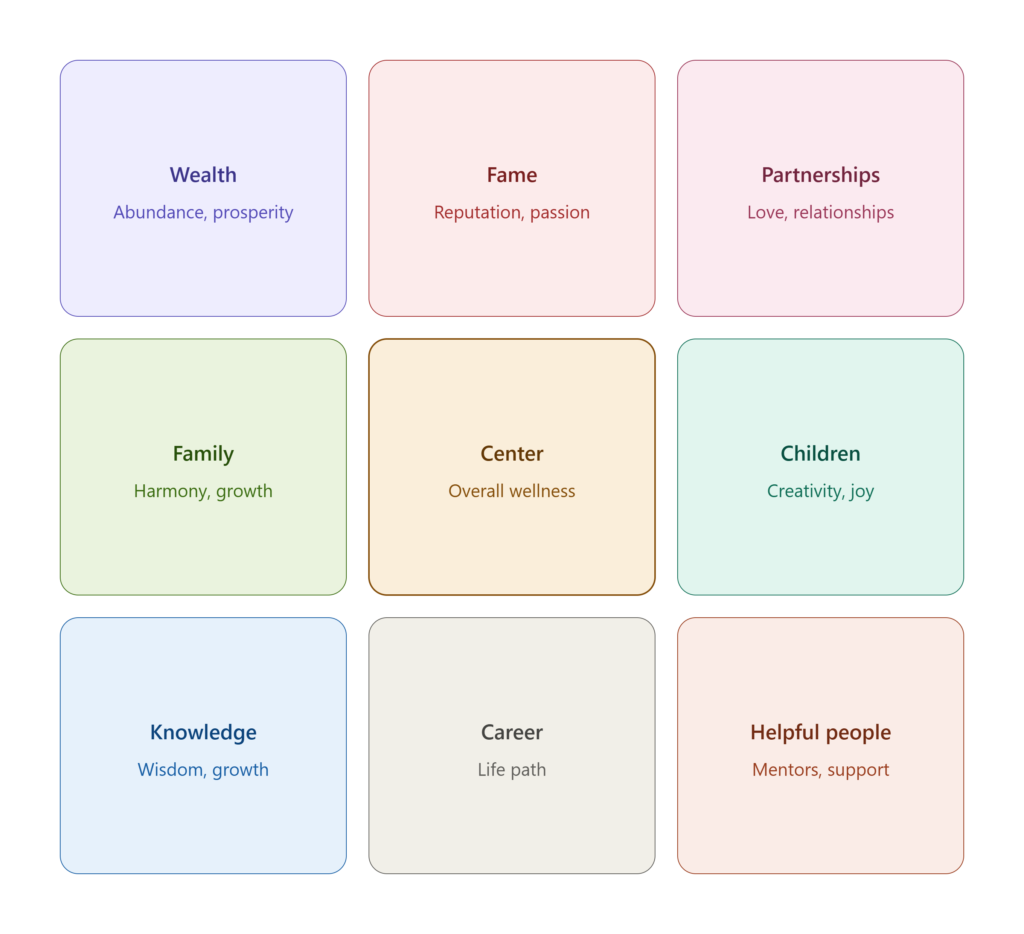
The Bagua Areas
Start integrating the bagua and Feng Shui into your daily life by focusing on one to three areas that require attention. Avoid tackling everything simultaneously, as it may lead to overwhelm. Enhance energy and flow by applying Feng Shui tips in those specific spaces.
| Bagua Area (Gua) | Core Focus & Life Aspect | Feng Shui Element | Color Palette | Decor Shapes & Silhouettes | Season | Gua Number |
| Family (Zhen) | Family harmony, community & fresh starts | Yang Wood | Emerald green, teal, vibrant blue | Tall, rectangular, columnar forms | Spring | 3 |
| Wealth (Xun) | Financial growth, abundance & prosperity | Yin Wood | Deep violet, royal purple, plum | Vertical, sleek, tall shapes | Spring | 4 |
| Health (Tai Qi) | Center balance, grounding & overall wellness | Earth | Warm terracotta, muted yellow, sandy brown | Flat, low-profile, square shapes | Seasonal Transitions | 5 |
| Helpful People (Qian) | Mentorship, networking & safe journeys | Yang Metal | Metallic silver, slate gray, pewter | Circular, spherical, rounded accents | Autumn | 6 |
| Creativity & Children (Dui) | Artistic joy, self-expression & completion | Yin Metal | Pure white, polished metallics | Orb-like, curved, smooth circles | Autumn | 7 |
| Knowledge (Gen) | Wisdom, skill-building & inner growth | Yang Earth | Midnight blue, dark indigo | Sturdy, flat, square structures | Seasonal Transitions | 8 |
| Fame (Li) | Personal visibility, passion & reputation | Fire | Crimson red, scarlet, bold burgundy | Triangular, pointed, angular shapes | Summer | 9 |
| Career (Kan) | Life trajectory, ambition & professional growth | Water | Ink black, deep charcoal | Wavy, fluid, undulating lines | Winter | 1 |
| Partnerships (Kun) | Romance, marriage & self-nurturing | Yin Earth | Soft rose, blush pink, warm nude | Flat, square, broad bases | Seasonal Transitions | 2 |
Five Elements of Feng Shui
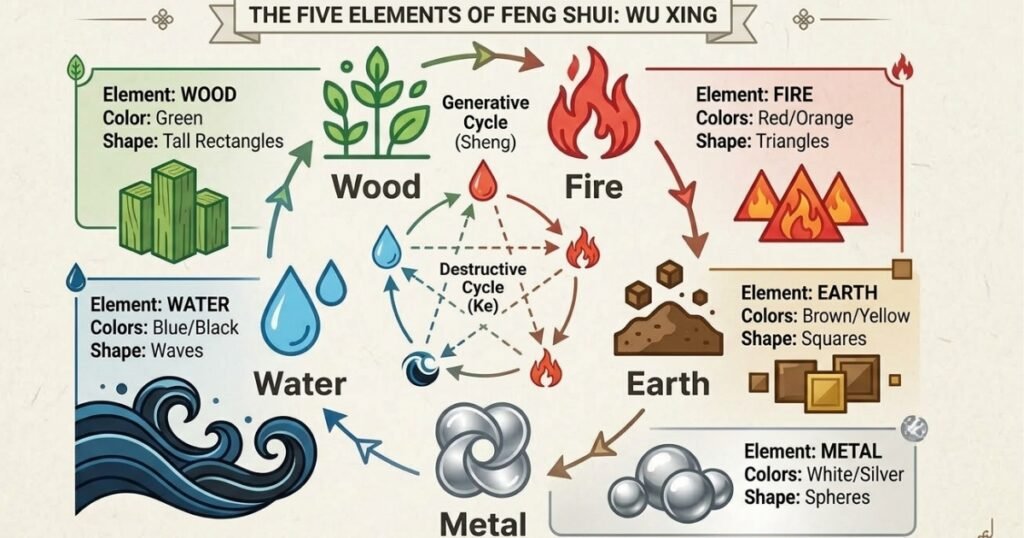
In the Taoist tradition, the Five Elements, Wood, Fire, Earth, Metal, and Water, are an important part of Feng Shui. Each element is linked with certain colors, shapes, and qualities that can influence the feel of a space. For example, you can bring the Water element into a living room or home office through deep blue curtains, artwork, or other decor. (Some Feng Shui schools suggest limiting Water elements in bedrooms, so approaches differ.)
- Wood: Represents growth, vitality, creativity, and new beginnings. Shown via plants, green hues, and tall rectangular shapes.
- Fire: Represents passion, high energy, inspiration, and visibility. Shown via bright lighting, candles, red colors, and triangles.
- Earth: Represents stability, nourishment, grounding, and self-care. Shown via stones, crystals, ceramics, and earth tones/squares.
- Metal: Represents precision, mental clarity, order, and logic. Shown via metallic finishes, white/gray colors, and round shapes.
- Water: Represents calm, career flow, intuition, and deep emotion. Shown via fountains, mirrors, black/dark blue colors, and wavy lines.
Feng Shui Basics For Home
Feng Shui is about arranging your space so energy, or “chi,” can flow freely. A few small changes can make your home feel calmer and more balanced.
The Basics
- Map your space: Stand at your front door facing in, and mentally split your home into a 3×3 grid. Back-left is wealth, back-center is fame, back-right is relationships.
- Declutter: Clutter blocks energy flow. Clear one area at a time.
- Keep paths open: Don’t block hallways or doorways with furniture.
- Fix broken items: Repair or replace anything broken, especially mirrors.
- Add plants: Soft-leafed plants like jade or pothos bring calm energy.
- Use natural light: Open curtains during the day; use mirrors to spread light.
- Balance the five elements: Wood, fire, earth, metal, and water should all appear somewhere in your home.
By Room
- Wealth corner (back-left of home or room): Add purple, green, or gold accents. Keep it clutter-free. A plant or small water feature works well.
- Home office: Desk in commanding position, facing the door if possible. Keep the surface clear; add a plant.
- Feng Shui bedroom layout: Bed in commanding position, away from the door line. Limit electronics, use soft lighting and calm colors, avoid storing clutter underneath.
- Feng Shui Living room: Arrange seating in a circle or U-shape for easy conversation. Keep pathways clear and mix in natural textures.
FAQs
How is Feng Shui used in interior design?
Feng Shui in interior design relies on decluttering spaces, maximizing daylight, and styling with harmonious colors and natural elements like bamboo or glass. It enhances well-being by choosing healthy plants instead of thorny ones, keeping mirrors clear, and avoiding broken items. It optimizes bedrooms by using headboards and keeping the area beneath beds completely clear.
What are the do’s and don’ts in Feng Shui?
Do keep your home clean, pathways open, and important furniture in a comfortable position with a clear view of the door. Don’t let clutter, broken items, or blocked doorways take over your living space.
What are common Feng Shui mistakes?
Common mistakes include placing furniture directly in line with doors, blocking walkways, keeping too much clutter, and using poor lighting. A simple, organized layout can make your space feel more comfortable and inviting.
Note: Feng Shui is a traditional Chinese practice. Its benefits are based on cultural tradition and personal comfort rather than scientific evidence.