
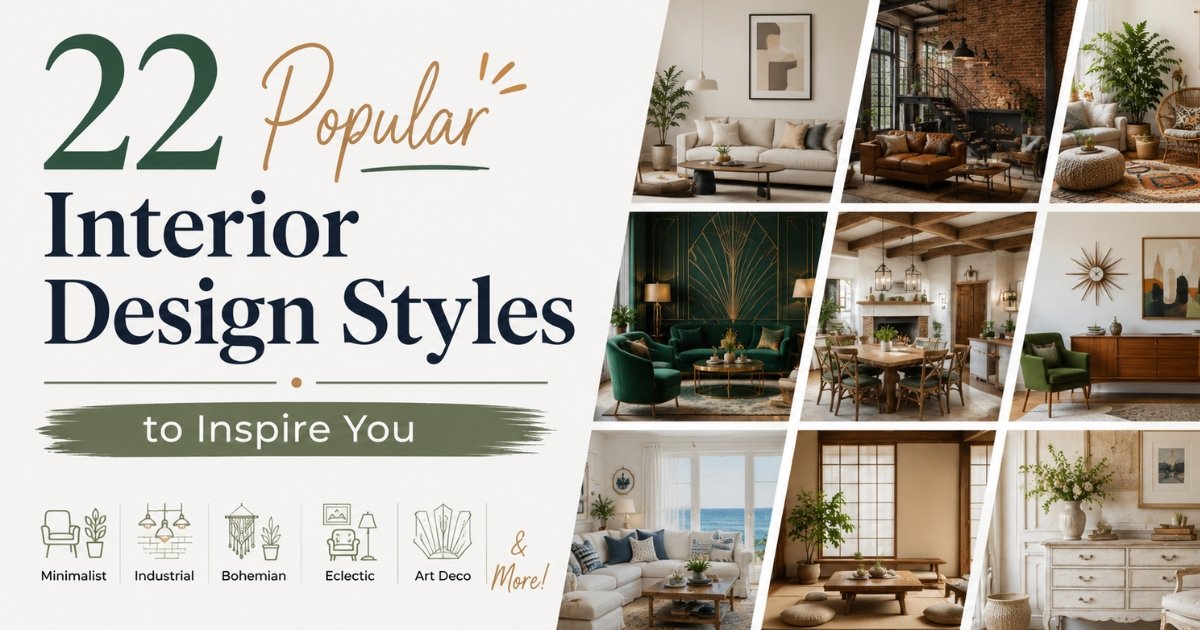
The right interior design styles can transform not just a room, but your entire mood and productivity. With a multitude of textures, shapes, and colors available, choosing the perfect design can feel overwhelming. This article explores 22 iconic types of interior design styles, showcasing how they reflect individual tastes and personalities while enhancing the architecture and overall environment of your space.
Quick Checklist Before Choosing Your Style
- Think about how you actually live in the space. A style that photographs well but can’t survive a dog, kids, or daily cooking will wear thin fast.
- Set a real budget range before you fall in love with a look, since some styles like Art Deco and French Country lean expensive while others like Scandinavian and minimalist scale down easily.
- Check your natural light. Dark, moody palettes read very differently in a room with little sun than they do in one that’s flooded with it all day.
- Consider your climate and region, since coastal and Mediterranean palettes were built for bright, warm settings and can feel out of place in a cold, gray winter.
- Decide how much maintenance you’re willing to take on, because vintage and bohemian pieces often need more upkeep than sealed, factory finished contemporary furniture.
- Test a style in one room first instead of committing your whole home to it, especially with bold choices like maximalism or an industrial loft look.
- Look at your architecture before you fight it. An older bungalow leans naturally toward traditional or vintage, while an open, modern build leans toward contemporary or industrial.
1. Minimalist interior design
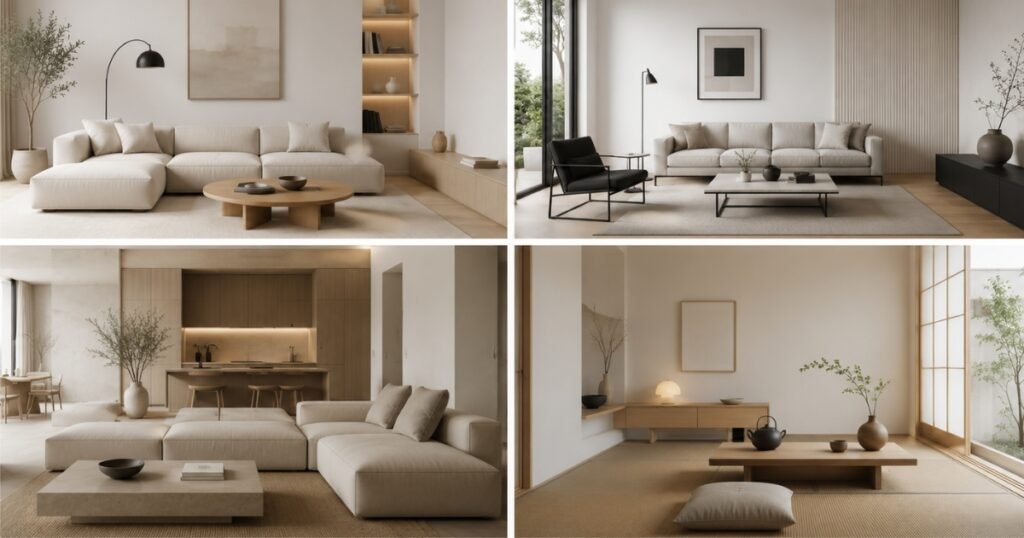
Minimalism is the style people reach for when they’re tired of mess making decisions harder than they need to be. It’s less about owning nothing and more about owning exactly what earns its place.
Clean line furniture defines the look, with pieces cut in straight edges and no extra ornamentation so the eye has nowhere disorganized to land. The palette stays neutral, built from whites, soft grays, and warm beiges that keep a room visually quiet. Negative space is treated as a real design feature instead a gap to fill, and multi function pieces like a storage ottoman or an extendable table earn their keep by doing more than one job. Surfaces tend to stay matte and flat, which keeps the whole room from feeling busy.
2. Industrial interior design
Industrial style borrows its identity from old factories, mills, and warehouses that got converted into homes. Exposed brick, left unpainted and visible, sets the tone, often paired with raw concrete floors or countertops kept in their natural gray finish. Furniture frames and light fixtures usually appear in blackened steel, a matte black metal that feels sturdy rather than decorative. Edison style lighting adds warmth back into the room, with visible filament bulbs hung from exposed cords or pipes. Reclaimed wood shows up throughout as tabletops and shelving built from salvaged barn or factory timber.
3. Bohemian interior design styles
Layered textiles carry most of the personality here, with overlapping rugs, throws, and pillows in patterns that don’t need to match. Macrame details, like hand knotted wall hangings and plant holders, add texture without weight, while rattan furniture brings in natural fiber tones through woven chairs and shelving. A global textile mix pulls fabrics from different regions and eras into one space, and trailing plants soften every hard edge in the room.
Boho suits creative households, rental apartments since it’s easy to add without renovating, and anyone who dislikes matching furniture sets. Start small with one patterned rug and a cluster of plants before layering in more texture.
4. Eclectic interior design styles
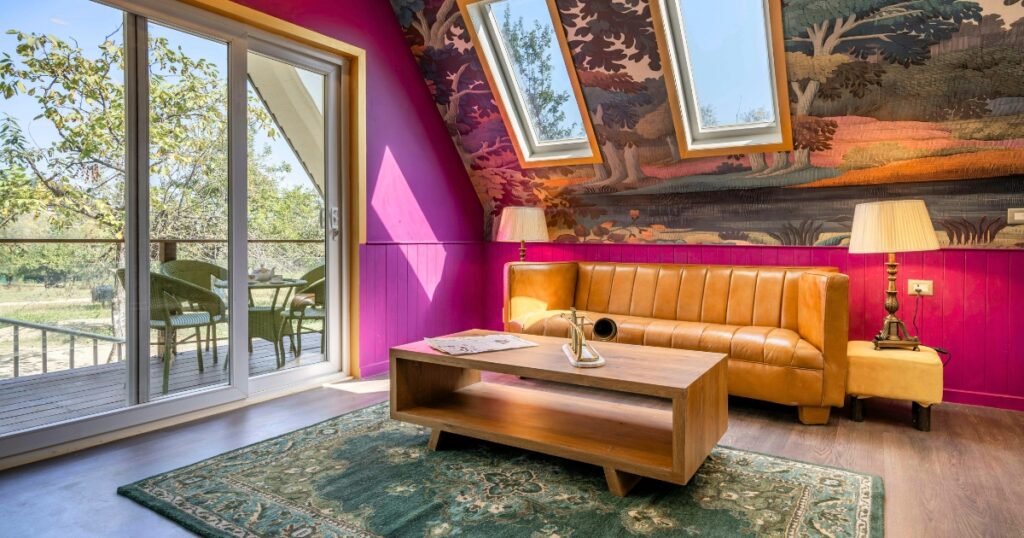
Eclectic style is bohemian’s more disciplined cousin. It mixes eras and origins too, but with an eye for balance rather than pure accumulation.
Curated contrast is the core idea, like pairing a modern sofa with an antique side table on purpose. Every eclectic room needs a statement anchor piece, one bold item such as a sculptural chair, that the rest of the space quietly supports. Mixed metals in brass, chrome, and iron sit side by side instead of matching, and a gallery wall combining framed art, mirrors, and objects reads as one visual block rather than a scattered collection. The furniture itself often includes unexpected pairings, like a mid century lamp set next to a rustic bench, chosen with real intention.
5. Art Deco interior design styles
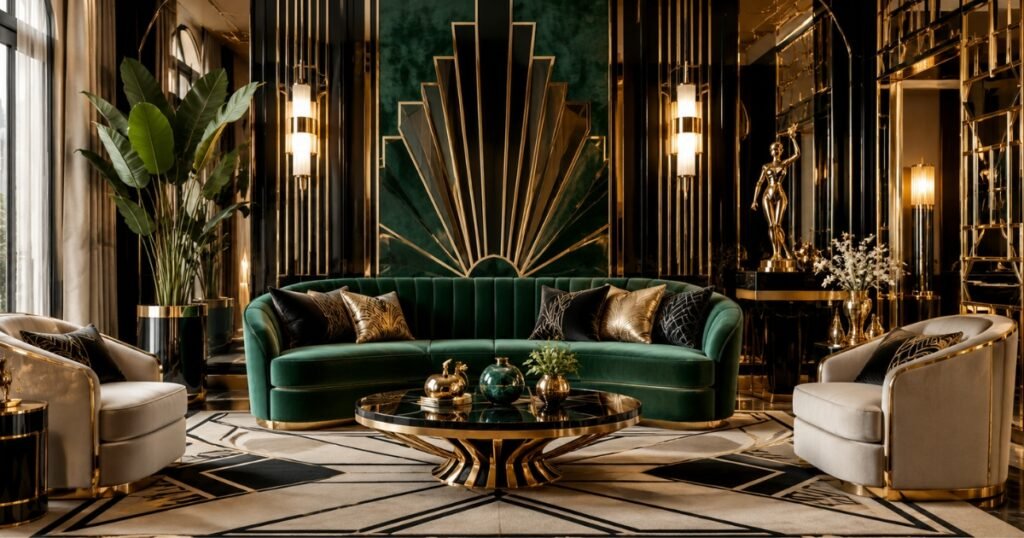
Art Deco carries the glamour of the 1920s and 1930s, the era of old Hollywood, ocean liners, and skyscraper lobbies. Geometric sunburst patterns, including fan and chevron motifs, show up on rugs, mirrors, and headboards. Surfaces lean toward lacquered finishes, a high gloss coating on cabinets and tables that catches the light. Brass accents in gold toned metal trim appear on furniture legs and fixtures, while velvet upholstery in deep jewel tones covers sofas and chairs. Mirrored furniture rounds out the look, using reflective surfaces to add drama and bounce light around the room.
Art Deco fits formal living rooms, entryways, and powder rooms where a bit of theater is welcome. A single lacquered console table with brass hardware can introduce the style without overwhelming a whole room.
6. Vintage interior design styles
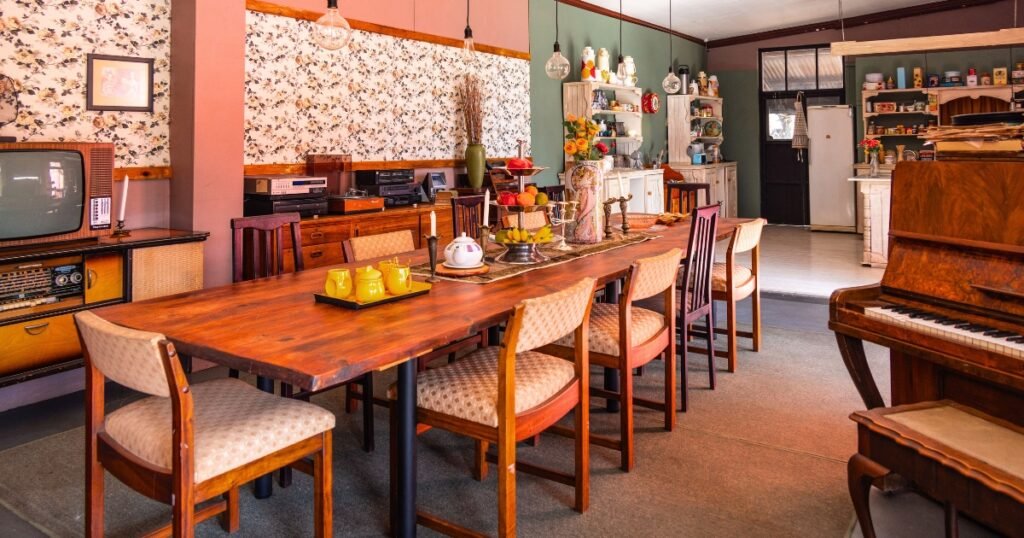
Vintage style is built on real, aged pieces, not reproductions, chosen because they’ve already lived a full life somewhere else. Restored furniture anchors the look, refinished but kept true to its original era rather than modernized. The palette stays soft, built from pastels like pink, mint, and butter yellow. Floral upholstery in printed fabric patterns typical of mid twentieth century homes adds warmth, while estate sale finds like one of a kind lamps, frames, or ceramics bring genuine history into the room. Patina finishes, where brass or wood is allowed to show its age rather than being polished smooth, tie the whole look together.
This style suits homeowners who enjoy thrifting and don’t mind a slower, more patient furnishing process. Start with one true antique piece and build newer furniture around it rather than the other way around.
7. Retro interior design styles
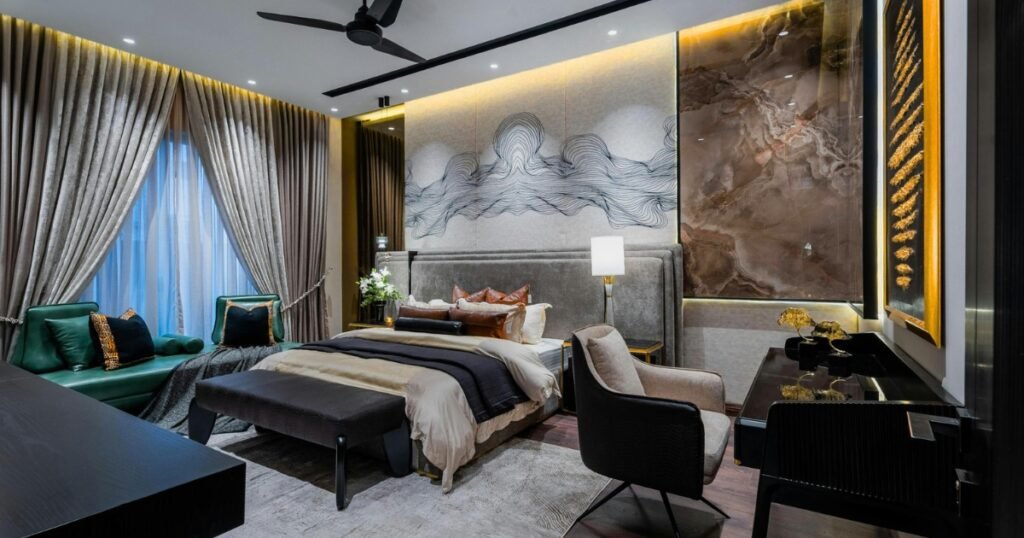
Retro pulls specifically from the 1950s through the 1970s. It’s playful, colorful, and unapologetically nostalgic. Atomic age shapes, like starburst clocks and boomerang shaped tables, are instant signals of the era. Kitchen chairs and stools often appear in vinyl and chrome, bright colored seats paired with shiny metal legs. Bold color blocking in mustard yellow, avocado green, and burnt orange fills large flat areas of the room, while shag textures show up as thick, plush rugs in saturated colors. Graphic wallpaper, with repeating geometric or floral prints, usually covers just one accent wall to keep the look from feeling overwhelming.
Retro suits kitchens, home bars, and rec rooms where a bit of fun outweighs formality. One bold wallpaper wall paired with modern furniture keeps the look current instead of costume like.
8. Rustic interior design
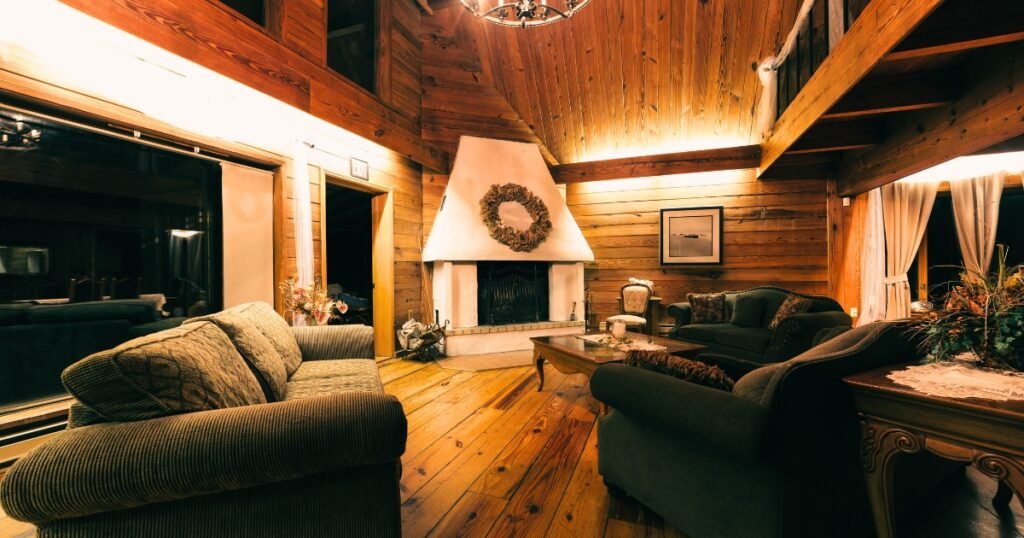
Rustic style is grounded, literally. It leans on raw wood, stone, and natural texture to feel like a cabin even inside a city apartment.
Exposed beams left visible across the ceiling set the architectural tone, often paired with a stone fireplace built from rough cut stone as the room’s focal point. Live edge wood tables and shelves keep the natural, uneven edge of the tree intact rather than sanding it away. Wool textiles, including chunky knit throws and plaid patterns, add warmth, and wrought iron fixtures in black metal give the hardware and lighting a handmade look.
The style works well for cabins, lake houses, and homes in wooded or mountain regions. A single reclaimed wood coffee table and a wool throw can create a similar atmosphere in a smaller city space
9. Coastal interior design
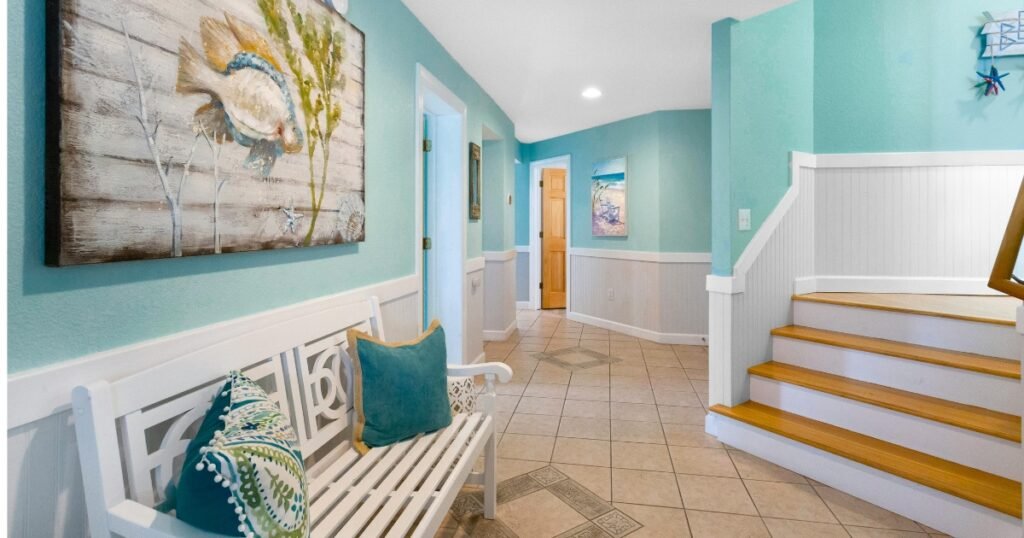
Coastal style, sometimes called nautical, is built around light, air, and the sense that a beach is somewhere nearby, even if it’s not. Weathered wood furniture with a bleached or driftwood finish is the backbone of the look. Rope details, woven into mirror frames or lamp bases, add texture, while striped textiles in navy and white or sand and white patterns keep the palette playful.
The overall color scheme draws from sea glass tones, soft blues, seafoam greens, and sandy neutrals, and linen slipcovers on sofas and chairs keep everything feeling loose and breathable. Coastal suits beach houses obviously, but also sunrooms and bathrooms anywhere that want a fresh, breezy feel. Swap heavy curtains for linen ones and add one striped textile to start the shift.
10. Mediterranean interior design
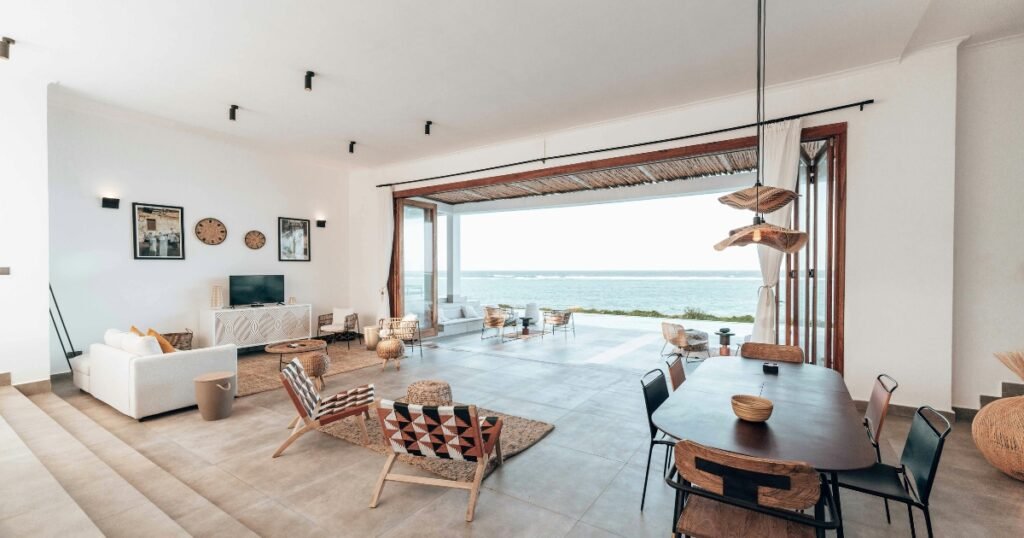
Mediterranean style channels the coastal towns of southern Europe. It’s sun baked, textured, and built for warm climates. Terracotta tile, warm and clay colored, often left slightly uneven, defines the flooring. Wrought iron detailing appears in decorative black metal on railings and light fixtures, while stucco walls bring a textured, hand troweled plaster finish to the architecture.
The palette leans on olive and ochre tones, earthy greens and warm yellows pulled straight from the landscape, and arched doorways add a rounded, architectural softness between rooms. This works well in warm climate homes, sunrooms, and outdoor adjacent living spaces. Terracotta pots, a textured accent wall, or wrought iron light fixtures can bring the mood indoors without a full renovation.
11. Scandinavian interior design
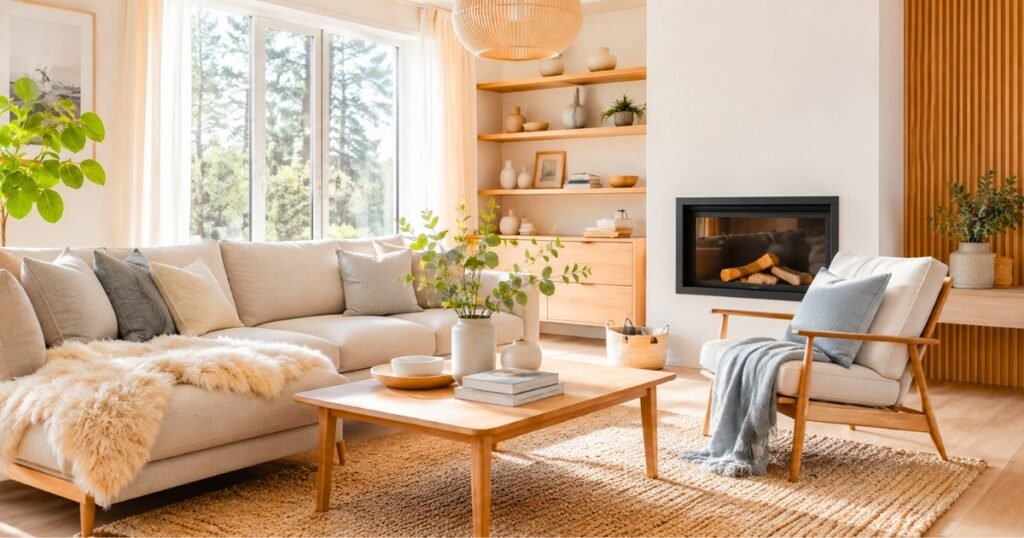
Scandinavian style, often shortened to Scandi, comes from Nordic countries where long winters made light and warmth a design priority. Blonde wood, pale and unstained, covers floors and furniture throughout. Hygge textiles, soft wool throws and sheepskin accents, are added purely for comfort, and the furniture itself follows a rule of functional simplicity, designed to be useful first and decorative second.
This Color scheme stays soft, built from whites, light grays, and dusty blues, while sculptural lighting in simple, artful lamp and pendant shapes doubles as decor on its own. Scandinavian suits small apartments and cold climate homes that need to feel bright and cozy at the same time. Swap dark wood furniture for pale wood and add one chunky wool throw to shift the mood quickly.
12. Contemporary interior design
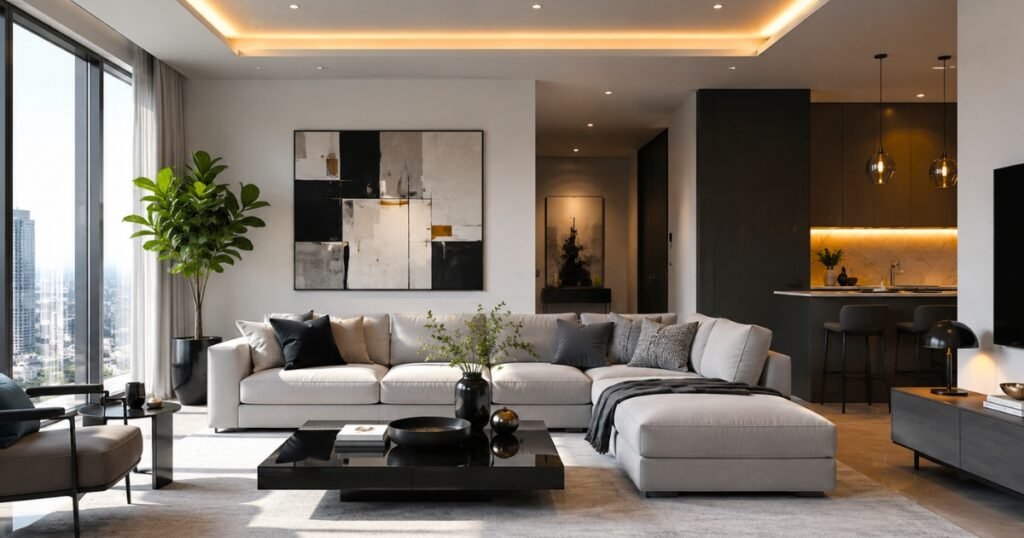
Contemporary style isn’t tied to one era. It’s whatever is current, which means it shifts every decade while keeping a few core habits intact.
Sleek silhouettes define the furniture, smooth and uncomplicated shapes with nothing extra added on. The shades are mostly neutral with one strong accent color or piece of artwork breaking it up. Open floor plans connect living, dining, and kitchen spaces into one continuous area, while statement lighting in sculptural pendant or floor lamp shapes acts as a focal point. Mixed textures, like smooth leather next to matte wood and glass, keep the room from feeling flat.
13. Zen interior design styles
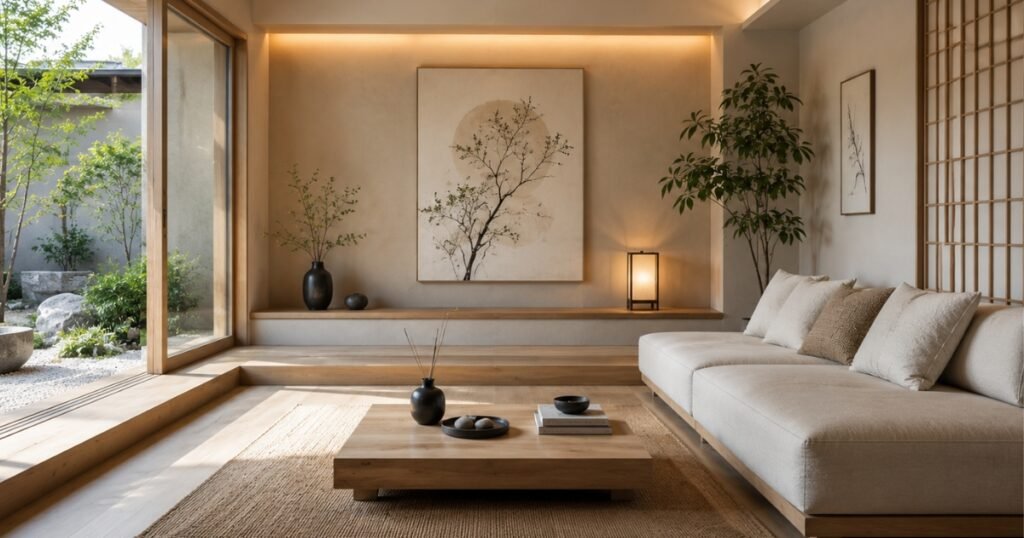
Zen style draws from Japanese design principles, and its goal isn’t really decoration at all, but stillness. Low profile furniture, set close to the floor, gives the room a grounded feel, while natural wood tones, left unstained or only lightly finished, keep materials honest. Screens inspired by traditional Japanese paper and wood room dividers filter light softly instead of blocking it.
Small water features, like tabletop fountains, add ambient sound, and minimal ornamentation, just one or two meaningful objects rather than many, keeps the whole space quiet. Zen suits bedrooms, meditation corners, and bathrooms meant for unwinding. Removing extra furniture and adding one natural wood element, like a low bench, does most of the work.
14. Farmhouse interior design
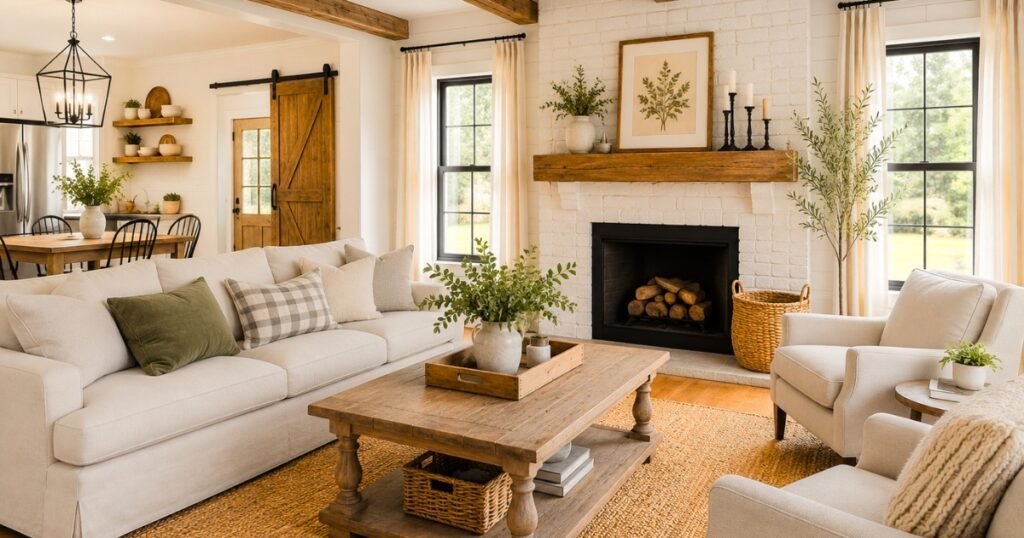
Farmhouse style takes the practicality of old agricultural homes and softens it for everyday living. Shiplap walls, horizontal wood paneling usually painted white, are the style’s clearest signature. Apron front sinks, deep and exposed at the front, bring a rustic character into the kitchen, and distressed wood furniture, finished to look intentionally worn, softens the whole room.
Fabric patterns lean toward gingham and ticking stripes, classic country prints, while galvanized metal accents in raw silver finish show up as buckets, light fixtures, and hardware. This suits family homes, kitchens, and properties with some rural or suburban character. A shiplap accent wall and a distressed wood dining table are the fastest way to introduce the look.
15. Mid Century Modern interior design styles
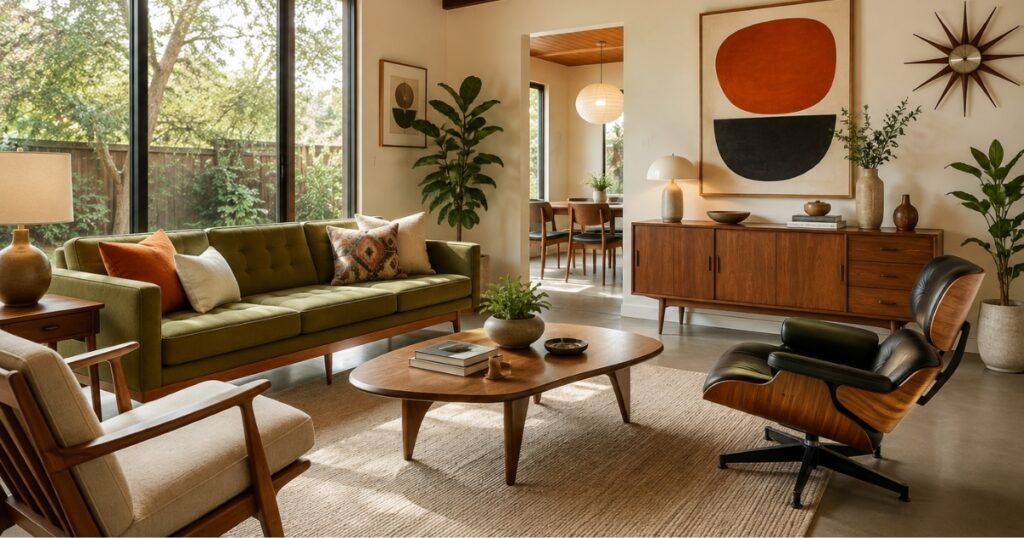
Mid Century Modern refers specifically to the design boom of the 1940s through the 1960s, prized for furniture that still looks fresh today. Tapered wood legs, angled outward and usually finished in walnut or teak, are one of the style’s most recognizable details. Furniture favors organic curves, rounded silhouettes on chairs and sofas rather than sharp corners, and bold accent colors like mustard, teal, or burnt orange show up in small, controlled doses. Molded plastic chairs, a single shell seat popularized in this era, and geometric rugs with clean, repeating shapes complete the look.
Mid Century Modern suits living rooms and home offices where owners want a timeless, design forward look. One iconic chair shape can anchor an entire room’s identity.
16. Traditional interior design
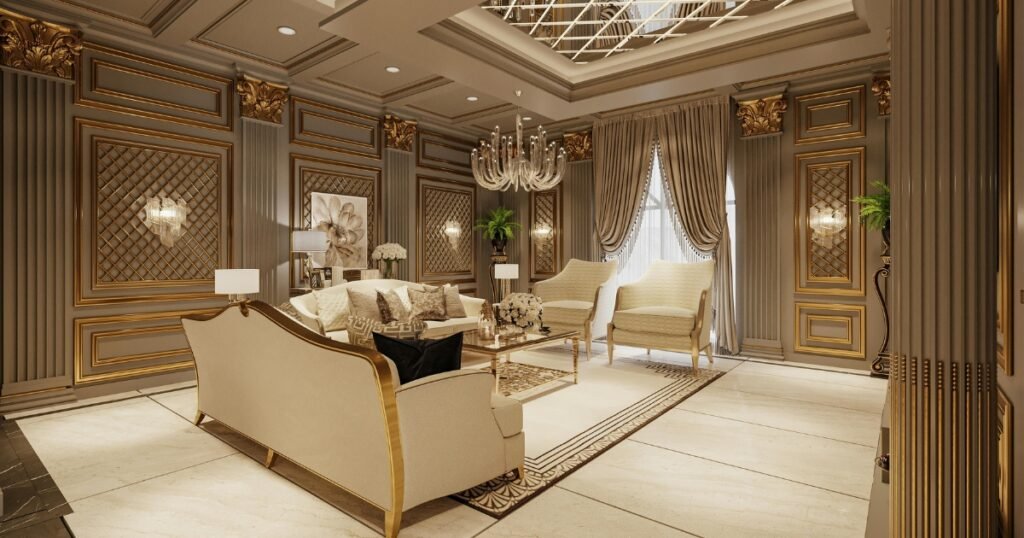
Traditional style leans on classic, time-tested design principles rather than passing trends. It is the look many people picture when they imagine a formal American home.
Ornate wood furniture, featuring carved details on tables, chairs, and cabinetry, sets the tone. The palette is rich, with deep reds, navy blues, and forest greens. Symmetrical layouts arrange furniture and decor in balanced pairs, creating a sense of order. Damask and toile patterns, classic printed fabrics with historical roots, appear on upholstery and curtains, while crown molding along the ceiling adds a polished, formal finish.
17. Transitional interior design
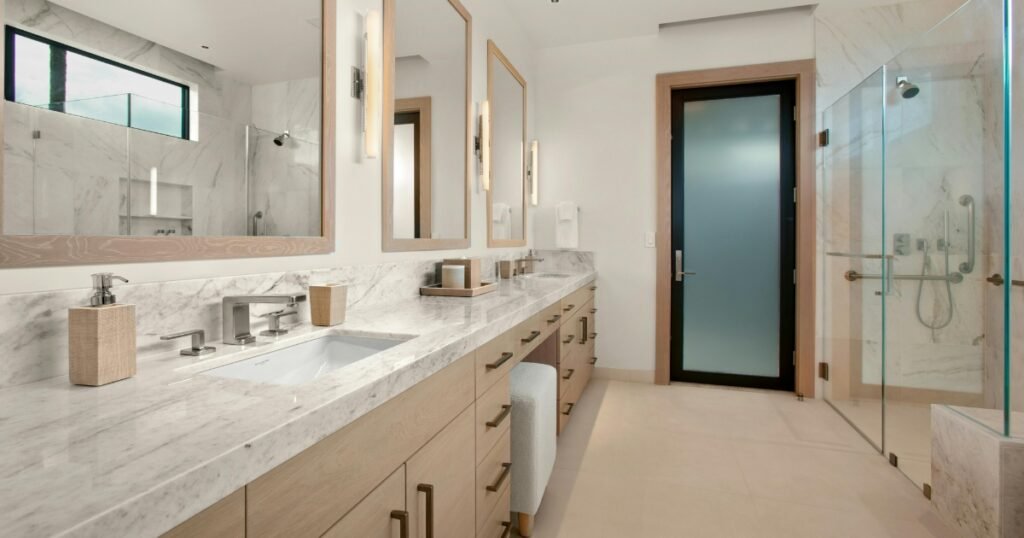
Transitional style sits deliberately between traditional and contemporary, borrowing comfort from one and simplicity from the other.
The color tones is neutral at its base, built from warm grays, taupes, and creams. Furniture keeps classic silhouettes but strips away the heavy ornamentation you’d see in a purely traditional room. Textural layering, mixing linen, wool, and leather, adds depth without relying on pattern, and metal accents in brushed nickel or soft brass stay understated rather than ornate. A softer, less rigid version of symmetry still ties the room together visually.
This style suits people who want a home that feels current but not cold, and classic but not fussy. It’s a safe, resale friendly choice for anyone unsure which direction to commit to.
18. Maximalist interior design
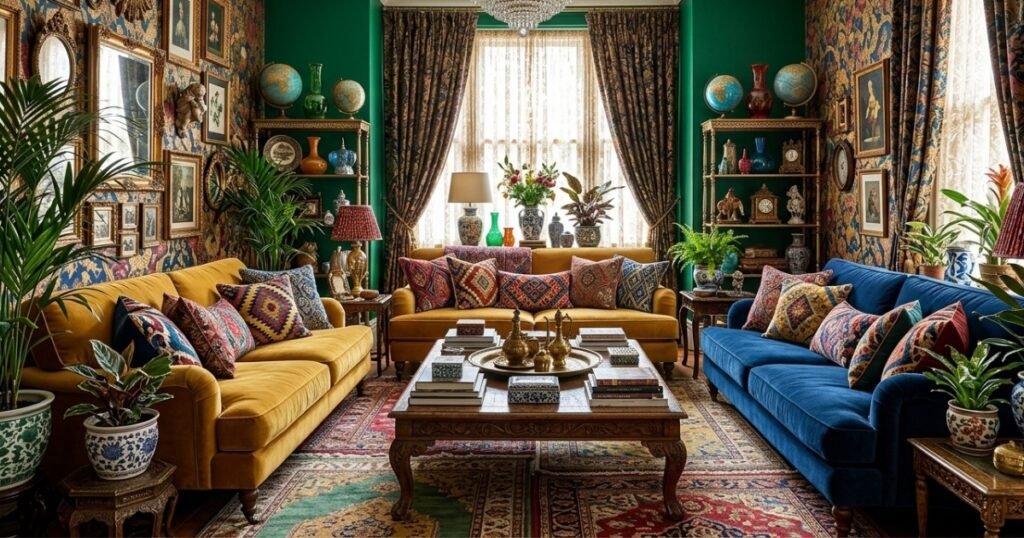
Maximalism is minimalism’s opposite. It’s more pattern, more color, more personality, entirely on purpose. Design clash is the defining habit here, deliberately mixing florals, stripes, and geometrics in one room rather than avoiding it. Color runs saturated, with jewel tones like emerald, sapphire, and ruby used generously rather than sparingly. Gallery style walls hold dense arrangements of art, mirrors, and objects, while layered rugs, several overlapped at once, build texture and color depth on the floor. Collected objects, books, ceramics, and travel finds, stay out on display rather than tucked away.
19. Japandi interior design
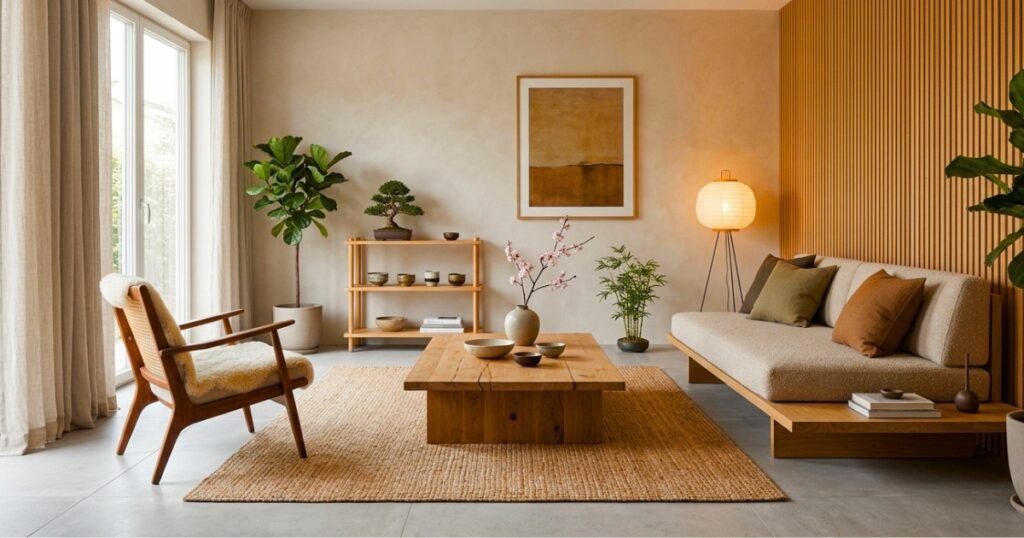
Japandi blends Japanese minimalism with Scandinavian warmth, taking the calm of one and the coziness of the other. Natural wood tones, light and warm, run across furniture and flooring alike. This combination features a muted and earthy, built from soft clay, sage, and off white. Furniture sits low and grounded, close to the floor with a stable, quiet presence, while handcrafted ceramics, imperfect and artisanal, appear as the room’s main decoration. Countertops and shelves stay mostly clear, giving each object room to breathe.
20. French Country interior design
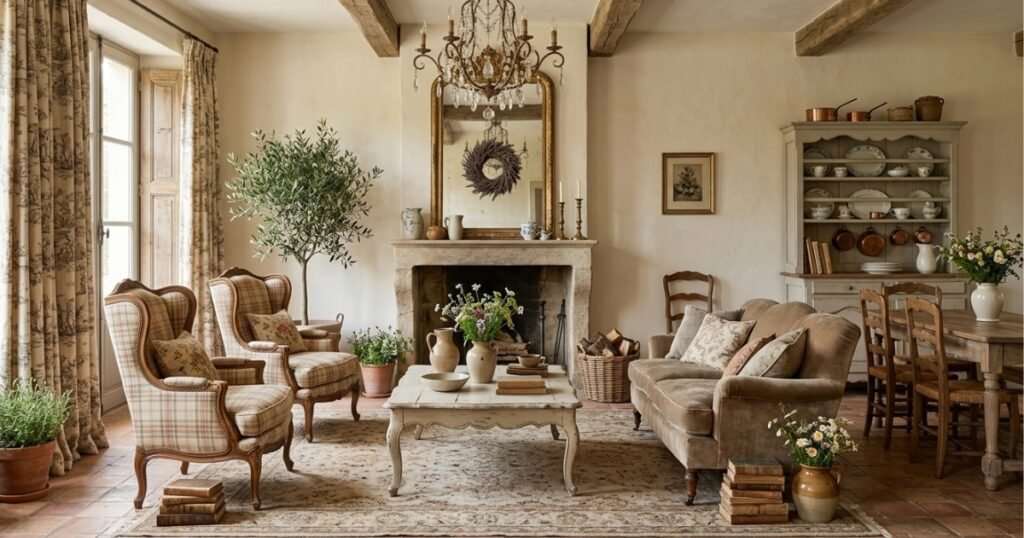
French Country style borrows from rural farmhouses in southern France. It’s romantic, a little worn, and full of texture. Toile fabric, printed with pastoral scenes, covers curtains and upholstery throughout. Furniture often appears weathered, with a soft, aged painted finish rather than a polished one, while wrought iron chandeliers in ornate black metal light the room from above. The palette leans on lavender and sage accents, muted purple and green used sparingly, and linen and lace textiles bring in a soft, natural, delicate finish.
21. Small space interior design
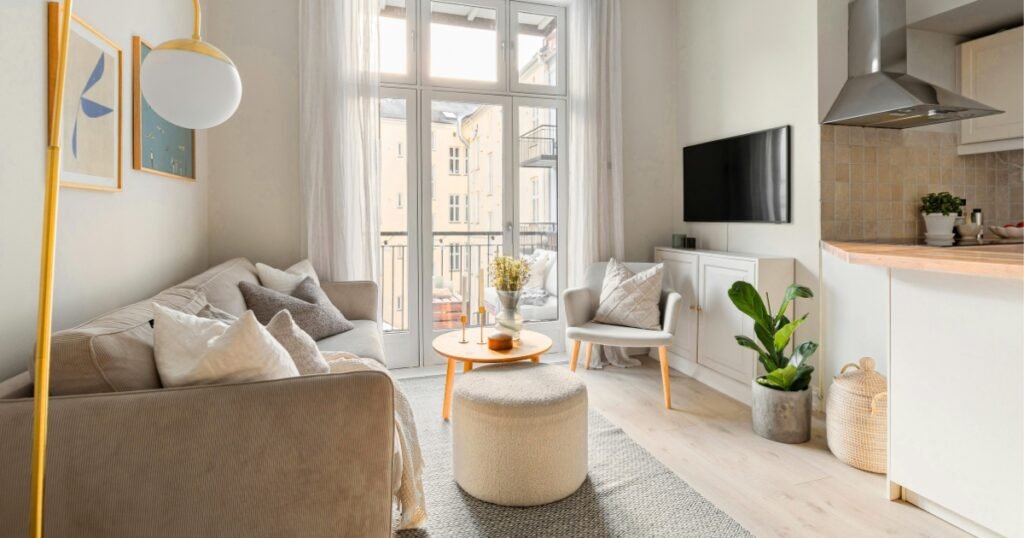
Not every style scales down easily. Small apartments and starter homes need approaches built specifically around limited square footage. Vertical storage, tall shelving that uses wall height instead of floor space, is one of the most effective tools here. Multi purpose furniture, like a daybed that doubles as a sofa or a table that folds flat, earns its place by doing double duty. Mirrors, placed strategically, make rooms feel larger than they are, and a light, reflective palette in pale walls and furniture bounces available light around the room. Rugs are often used to visually divide one open room into separate functional zones.
This approach suits studio apartments, tiny homes, and city rentals where every square foot has to earn its place. Minimalist and Scandinavian styles tend to adapt to small spaces most naturally.
22. Budget friendly interior design Styles
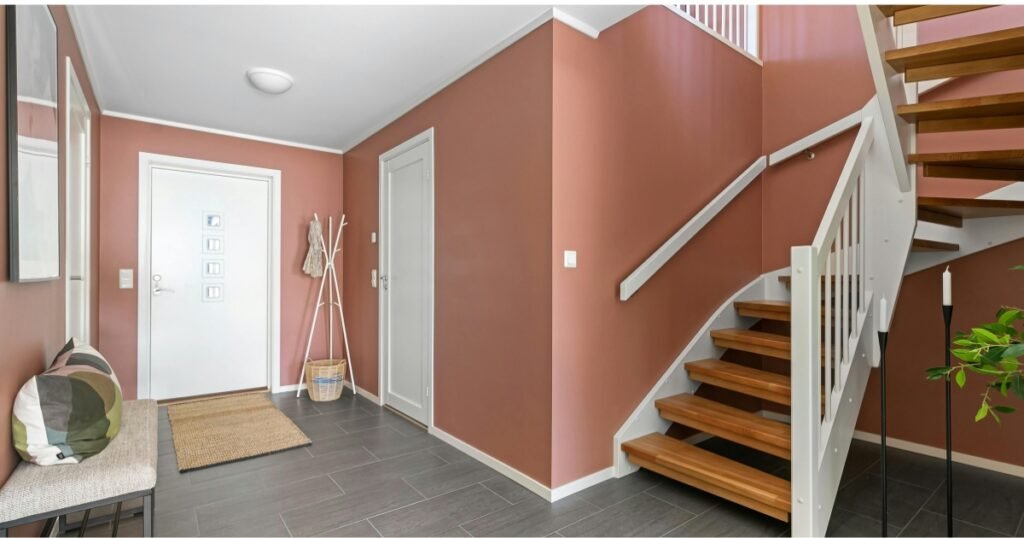
A style doesn’t need a big budget to look intentional. Some of the most affordable looks are also some of the most popular right now. A thrifted mix, combining secondhand furniture with a few new key pieces, is common in bohemian and eclectic rooms. Paint first updates, a fresh coat of paint used to shift a room’s whole mood, remain one of the cheapest ways to change a space.
DIY textiles, like no sew curtains or reupholstered cushions using affordable fabric, add character without much cost, and open box or floor model furniture from stores clearing display stock can offer real savings. A statement piece strategy, spending on one standout item while keeping everything else simple, stretches a budget the furthest. Scandinavian and minimalist styles tend to be the most budget friendly since they rely on fewer, simpler pieces rather than expensive statement furniture.
How We Curated These Interior Design
We didn’t just pull a list from memory. We cross checked what’s actually trending in U.S. home searches, design publications, and real renovation projects happening right now. First, we mapped out the styles Americans search for most, then grouped them by visual identity so nothing overlapped. Next, we pulled real defining features for each one, colors, materials, and furniture shapes, as opposed to vague descriptions. We made sure to represent a mix of budgets, room types, and climates so the list works for a small city apartment as much as a suburban house.
Tips for Making Your Interior Design Style Stand Out
- Pick one dominant style and let other influences support it, rather than competing with it equally.
- Repeat a color or material at least three times in a room so the eye reads it as intentional, not accidental.
- Layer your lighting across overhead, task, and ambient sources instead of relying on one ceiling fixture.
- Edit before you add. Removing three things often improves a room more than buying a fourth.
- Bring in one living element, whether it’s a plant or fresh flowers, since real texture reads differently than styled objects.
- Let one piece of art, a rug, or a chair be the thing you’d save first in a fire, and build the room’s confidence around it.
FAQs
What are the most popular interior design styles in the U.S. right now?
Scandinavian, Japandi, contemporary, farmhouse, and mid century modern are among the most searched and applied styles in American homes today, thanks to their flexibility across budgets and home types.
Which interior design style works best for small apartments?
Minimalist, Scandinavian, Japandi, and contemporary styles adapt best to small spaces, since they rely on light palettes, multi purpose furniture, and open visual space rather than dense decor.
What’s the difference between bohemian and eclectic style?
Bohemian style leans into layered, collected textures and global influences with a relaxed feel, while eclectic style is a more curated mix of eras and pieces, like Art Deco or mid century, chosen with deliberate contrast in mind.
Which interior design styles are the most budget friendly?
Scandinavian, minimalist, farmhouse, and contemporary styles tend to be the easiest to achieve affordably, since they favor fewer, simpler pieces and paint based updates over expensive statement furniture.
Conclusion
There’s no single correct interior design style, and that’s really the point of having so many to choose from. The right one is simply the one that makes a room feel like a place you want to be in, whether that means the calm of Scandinavian minimalism, the warmth of French Country, or the layered personality of bohemian and maximalist spaces.