Dining Table Centerpiece Ideas for a Beautiful Home
A large farmhouse table can feel unfinished when its centerpiece is too small, too cluttered, or out of step with the room. The right arrangement can make it an attractive part of your home while keeping it practical as a place to enjoy meals. Explore centerpiece ideas using natural greenery, fresh flowers, elegant candles, and thoughtfully chosen accessories without relying on expensive decor to create a welcoming, well-styled setting.
15 Beautiful Dining Table Centerpiece Ideas
1. Fresh Flower Arrangements

Fresh flowers add natural beauty and color to your dining table.
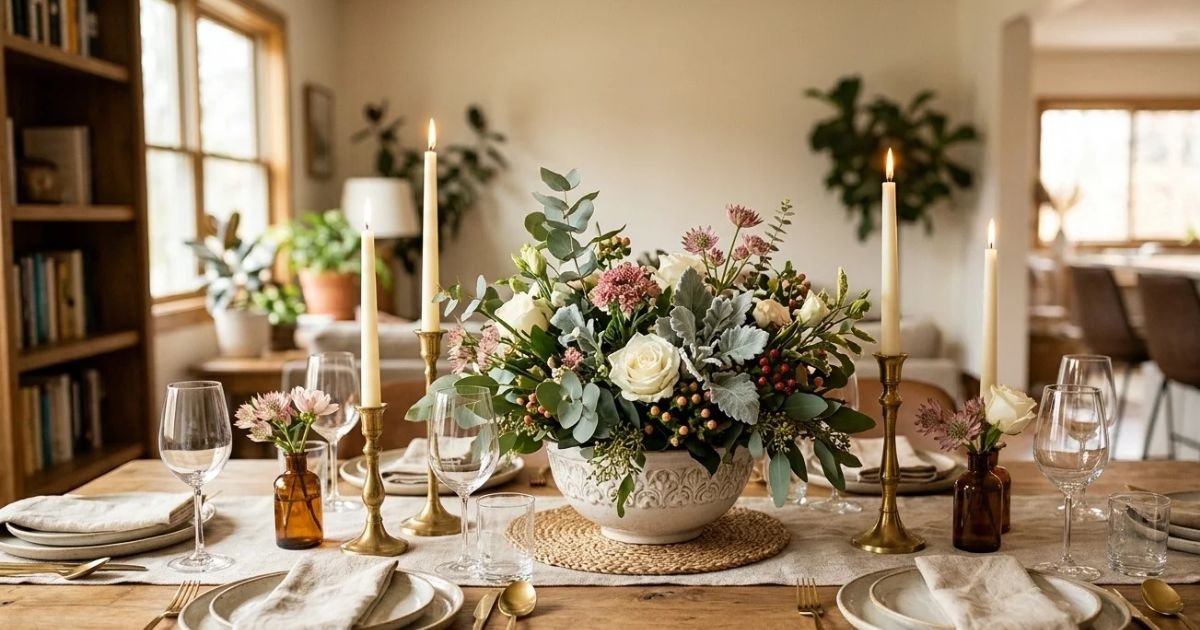
A dining room can feel more inviting with one simple finishing touch: fresh flowers. Whether your furniture calls for a pop of color or a softer look, seasonal blooms in a ceramic, glass, or stone vase can bring personality to the space. Explore easy arrangement ideas from roses and tulips to hydrangeas and find flowers that complement your dining area.
2. Decorative Tray Centerpieces
Decorative tray centerpieces bring small accessories together into one intentional arrangement. Choose a wooden, marble, metal, or woven tray to suit your room; in farmhouse interiors, a wooden tray can complement the relaxed, natural look, while marble or metal designs offer a different finish.
Keep the display balanced with a small vase, a candle, and one or two decorative objects. The tray gives these pieces a defined place and makes the arrangement easy to move when you need the surface for something else. Vary the objects’ heights and leave a little open space so the centerpiece feels composed rather than crowded.
3. Elegant Candles and Candle Holders
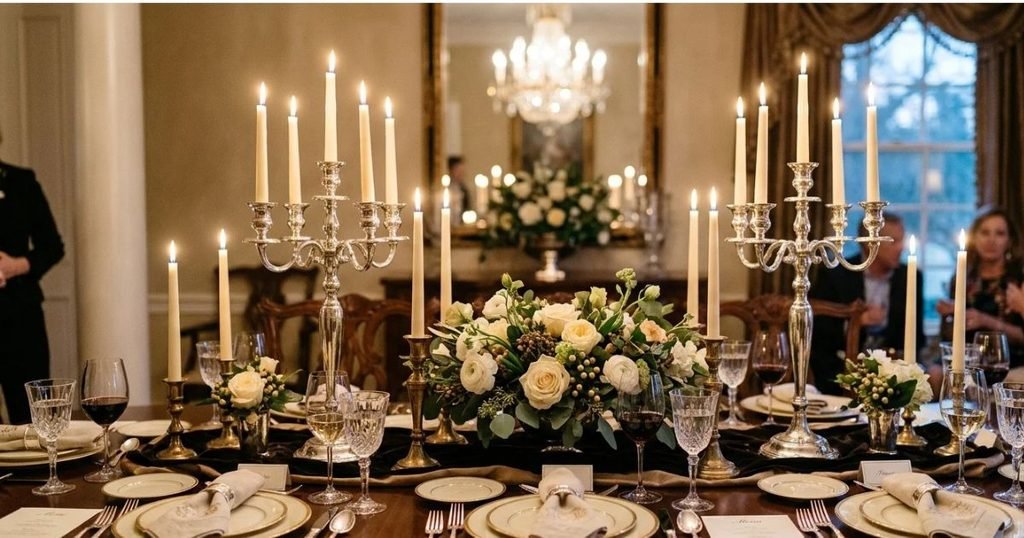
Elegant candles and candle holders can bring warmth and structure to a family gathering without crowding the table. Choose holders in brass, glass, ceramic, or black metal to complement the room’s style, then group candles with a small vase or arrange them on a decorative tray. Keeping the display contained makes it easier to leave space for serving dishes and place settings.
For dinner, unscented candles provide a gentle glow without adding fragrance to the meal. Flameless LED candles are another option, especially when you want candlelight without an open flame. Mix heights or materials for visual interest, while keeping the arrangement balanced and practical for the gathering.
4. Modern Sculptural Centerpieces
If you prefer a modern dining room, a sculptural centerpiece can add artistic interest without requiring several decorative accessories. Look for abstract shapes, curved ceramic objects, carved wooden pieces, or metal sculptures that complement your furniture. A single interesting object can create a strong focal point while keeping the rest of the table clear.
Neutral shades such as white, beige, black, and soft gray work well in contemporary interiors. You can also introduce a bold color if your dining room has a simple color scheme. Consider the size of your table before selecting a sculpture so that it looks proportionate and leaves enough room for plates and serving dishes.
5. Green Branches and Eucalyptus
Green branches and eucalyptus bring an easy, organic focal point to a modern dining room. Arrange a few stems in a simple vessel, keeping the shape open so the greenery complements rather than overwhelms plates and serving dishes. A restrained arrangement also pairs well with contemporary interiors, where natural texture can soften clean lines.
For a balanced tablescape, echo the stems’ curves with curved ceramic objects or metal sculptures, and let soft gray work as a quiet backdrop. Keep the surrounding decor simple to give the greenery room to stand out as a sculptural centerpiece. From there, repeat one material or color in nearby accents to create a cohesive setting.
6. Decorative Bowls with Seasonal Fruits
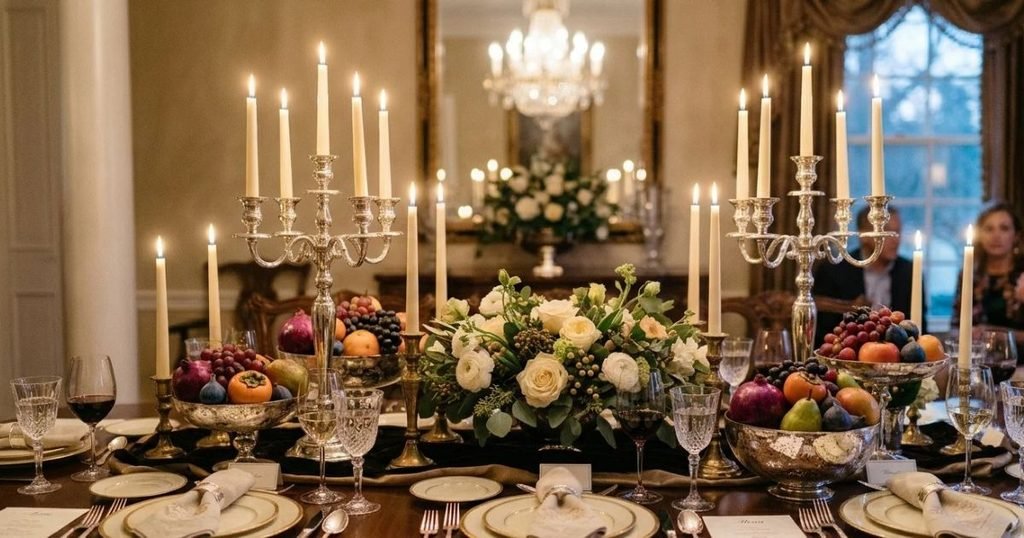
A decorative fruit bowl can be both a practical accessory and an easy way to add seasonal color to a kitchen or dining room. Choose a wooden, ceramic, or stone bowl that suits your style, then fill it with apples, pears, oranges, or lemons. A simple bowl works well in farmhouse and rustic kitchens, while a clean-lined design can complement a modern space or a neutral dining room.
Keep the display fresh by removing overripe pieces as you notice them. Arrange the remaining fruit loosely so each piece is easy to reach, and switch the selection with the season. The bowl stays useful for everyday snacking while giving your countertop or table a small, natural focal point.
7. Woven Baskets for a Rustic Look
Woven baskets bring an easy rustic touch to a comfortable, farmhouse-inspired dining space. Rattan, seagrass, and natural wicker designs pair attractively with wooden tables, adding texture while keeping the look relaxed and welcoming.
Use a shallow basket as a centerpiece or to gather seasonal accessories. For a simple, lived-in arrangement, add a small potted plant or decorative greenery. Natural materials work well alongside other wooden accessories, helping the dining area feel cohesive without making the table setting look overly styled.
8. Stylish Ceramic and Glass Vases
Color and texture shape how a vase feels in a room. White and beige ceramic can give a display a lighter appearance, while smoky glass adds a deeper, more translucent note. Consider the surrounding palette when choosing between them: a quiet neutral vase can blend in, while a contrasting finish can draw attention to the arrangement.
A textured ceramic vase brings tactile detail even when its color is understated. Pair its surface with simpler materials nearby to keep the look balanced, or group it with smooth glass for a contrast in finish. These choices make it easier to select a vase that complements both the flowers and the space around it.
9. Potted Plants and Small Greenery
Potted plants can bring color and texture to a dining area without taking over the table. On a compact table, choose succulents or compact foliage plants, and keep the arrangement low enough to leave room for place settings and conversation. A larger dining surface can accommodate a fuller grouping or a more substantial centerpiece.
For a coordinated look, choose matching pots, or use terracotta pots for a warm, natural accent. If live plants aren’t practical, quality artificial plants offer another way to add greenery; select realistic-looking varieties and keep the display modest so the dining area still feels open.
10. Table Runners with Pillar Candles
Table runners paired with pillar candles create a relaxed centerpiece for family dinners and casual gatherings. Choose a runner with a natural appearance, then arrange candles in sturdy decorative holders to add height and keep each flame contained. Small accents of greenery can soften the look, but place them well away from the candles and any other open flame.
Before lighting the candles, check that the runner and nearby decorations are clear of the flames, and never leave burning candles unattended. For a similar look without an open flame, use flameless pillar candles alongside the greenery and holders.
11. Dried Flowers for Long-Lasting Decor
Dried flowers bring lasting texture to a dining room without the routine care of fresh blooms. Pampas grass, dried lavender, and bunny tails each add a different shape and feel, making them easy to mix into dried arrangements that suit rustic and minimalist dining rooms alike.
Place an arrangement in a vase as a simple centerpiece or accent, and enjoy the natural detail without regular watering or replacement. For a balanced look, let one variety take the lead and use the others to add subtle contrast.
12. Coffee Table Books with Decorative Accents
Coffee table books can anchor a display while adding color and personality. Stack two or three books to create a simple base, choosing covers that complement the room without competing with its other accents.
Keep the arrangement edited: place a small vase or candle on or beside the stack, and leave some of the table clear. A restrained mix helps the books stand out and keeps the surface practical, without relying on traditional flower arrangements.
13. Minimalist Centerpieces for Small Tables
For a small table, choose a centerpiece that adds a focal point without taking over the surface. A simple glass container or low ceramic bowl keeps the look minimal and leaves room for plates, glasses, and serving dishes.
A compact decorative bowl can work well, too, especially when you keep the surrounding surface clear. Avoid oversized decorations or layering several accessories together; a single, low-profile piece gives the table a finished look while keeping it practical for everyday use and meals.
14. Seasonal Dining Table Decorations
A seasonal centerpiece makes it easy to refresh your dining table without changing everything around it. Start with a simple base, such as a tray or a neutral runner, then add a few festive accessories that suit the time of year. In autumn, small pumpkins, dried leaves, and earthy tones bring a natural warmth to the table.
For winter, try greenery and candleholders; for summer, choose light colors and fresh-looking accents. Keep the arrangement low enough for easy conversation, and swap out a few pieces as the seasons change. With a flexible foundation, you can create a centerpiece that feels in step with the season.
15. Unique Decorative Objects and Artifacts
Unique decorative objects and artifacts bring character to a room when their materials and shapes complement one another. Pair a handmade ceramic piece or ceramic sculpture with a wooden bowl to balance smooth, sculptural forms with warm, natural texture. A vintage bowl can add a sense of history, while a carved wooden ornament introduces detail without competing for attention.
For a collected look, vary the objects’ heights and finishes, and leave some open space around each piece. An artistic metal accessory can add contrast alongside ceramic and wood; repeat its finish elsewhere in the room if you want the arrangement to feel connected. Move pieces around until each one is visible and the grouping feels balanced, rather than crowded.
How to Choose the Right Dining Table Centerpiece
Choose a dining table centerpiece that suits the table’s size and shape. A low, compact arrangement can leave more room on a smaller table, while a longer table may look balanced with a linear centerpiece or a few coordinated pieces. Keep the arrangement low enough for diners to see one another across the table.
Consider material and style, too. Wood, glass, ceramic, and metal can each complement different finishes and textures in the room. Match the centerpiece to the dining room’s decoration by echoing a color or material already in the space, so it feels connected without competing with the table.
Consider Your Dining Table Size and Shape
Choose a centerpiece that feels proportional to your dining table. A substantial arrangement can suit a larger surface, while a smaller table often looks better with a simple focal point. Keep accessories from becoming oversized or crowding the place settings, so the table remains comfortable to use.
Rectangular tables offer more flexibility in how you arrange decor. Try one simple centerpiece in the middle, or use a few coordinated, low-profile pieces along the center. Either way, leave enough open space for diners to see across the table and for serving dishes to fit.
Match Your Centerpiece with Your Dining Room Style
Match your centerpiece to the materials and character of your dining room. In a space with warm wood or brass accents, elegant candle holders and a classic flower arrangement can reinforce a traditional feel. Ceramic and glass pieces offer a simple way to echo existing finishes without making the table feel crowded.
Traditional spaces can also suit sculptural accessories, glass vases, or simple ceramic pieces. Choose a centerpiece that complements the room’s shapes and finishes, then leave enough open table space for dining. With those details in balance, the centerpiece can feel like a natural part of the room.
Conclusion
A thoughtfully chosen dining table centerpiece can bring warmth and personality to a room while still leaving space for everyday meals. The best choice is one that suits your style, fits your table, and works with how you use the space. Start by clearing the table, then try one simple arrangement and adjust its size and height until it feels both inviting and practical.
FAQ
1. What does “15 Dining Table Centerpiece Ideas to Beautify Your Home” cover?
This article shares 15 lovely dining table centerpiece ideas to make your dining area look more inviting. From fresh flowers to candles and decorative vases, there are plenty of simple ways to make your table look beautiful.
2. How many centerpiece ideas are included?
There are 15 dining table centerpiece ideas in the article, giving you different ways to decorate your table and refresh your dining space.
3. Are the ideas intended for dining tables?
Yes, all the ideas are meant for dining tables. You can use them to add a little charm and make your dining area feel more welcoming.
4. Does the page explain how to make each centerpiece?
The article mainly shares decorating ideas and suggestions for arranging different items. You can use these tips to create your own centerpiece at home.
5. Does it list materials or supplies for the ideas?
Some common items include fresh flowers, candles, vases, decorative trays, greenery, and table runners. You can use what you already have or pick up a few new pieces.
6. Are the ideas suited to a particular home style?
No, the ideas aren’t limited to one style. Whether your home has a modern, rustic, traditional, or minimalist look, you can find a centerpiece that suits your space.
7. Are there options for different table sizes?
Yes, you can adjust these ideas to fit your table. Small arrangements work well on compact tables, while larger tables have more room for bigger displays.
8. Does the page include budget or seasonal suggestions?
Yes, you can try these ideas with both simple and affordable decorations. Fresh flowers, seasonal greenery, and candles are easy ways to change your table’s look throughout the year.