
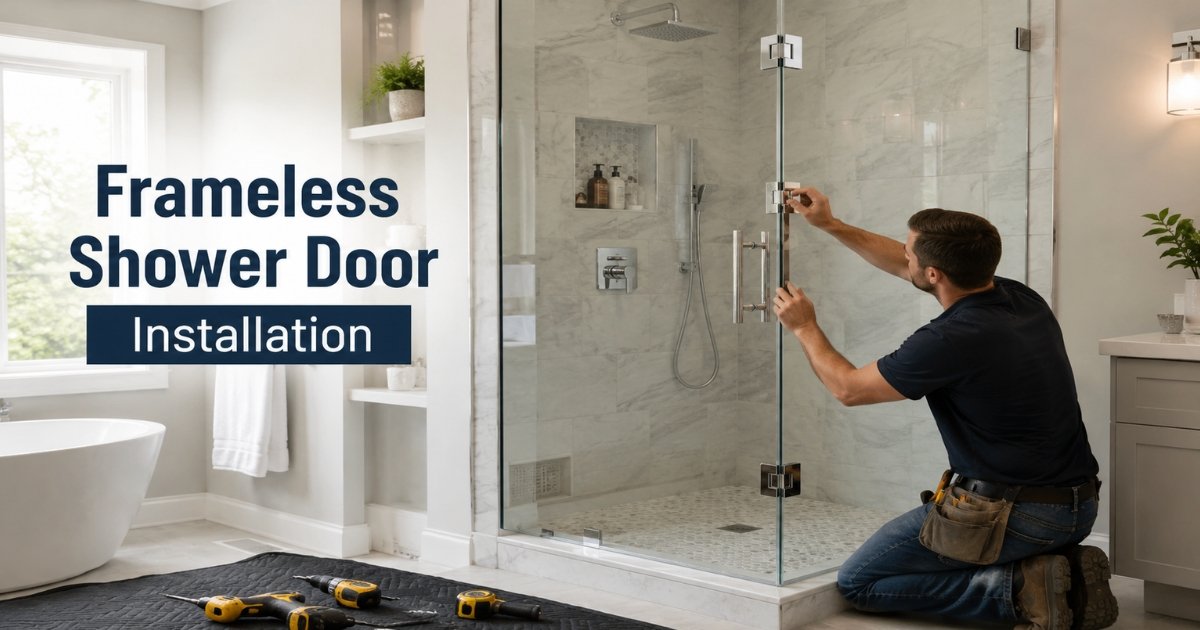
Frameless shower doors installation offers an elegant solution that eliminates bulky frames, enhancing the aesthetic appeal of your bathroom. By opting for this sleek design, you are not just elevating the look of your space; you are also improving water control, ensuring that splashes remain contained. The seamless glass creates a sense of openness, making the area feel larger while providing a modern touch that complements various decor styles.
Frameless glass door installation requires careful planning and accurate measurements. Start by accurately measuring your shower space, then proceed with careful positioning and securing of the hinges and glass panels. Sealing and leak control are important to avoid any accidental drips, making the right caulking material essential. For the DIY enthusiast, this project is not only rewarding but also allows you to combine style and functionality in a way that fits your unique vision.
Frameless Glass Shower Door Installation
A glass shower enclosure modernizes your bathroom by replacing bulky metal frames and curtains with a clean, open look. Using ⅜” or ½” tempered glass with glass-to-glass hinges and clips, these frameless systems provide a sleek aesthetic while highlighting your custom interior tile work. Each panel is custom-fitted, making it easy to accommodate unique layouts and keep maintenance simple.
Half-Wall Integration Installing an enclosure over a half wall serves as a stylish privacy divider while allowing natural light to filter through, making smaller bathrooms feel significantly more spacious.
Kits and accessories for complete shower kits simplify DIY installation by providing all essential components, including panels, hinges, and handles, at a fraction of contractor costs.
Shower Door Hardware & Handles: Handles provide a solid grip for opening and closing the door, typically available as back-to-back pull handles or space-saving handles with integrated towel bars.
U-Channels & Support Bars: U-channels fit glass panels flush against the tile wall, while overhead support bars stabilize freestanding glass for maximum rigidity.
Glass Shower Door Seals & Sweeps: Clear vinyl or magnetic glass shower door seal strips attach to the door’s edges to keep water inside the shower enclosure and off your bathroom floor.
Door Adjustment & Maintenance Precise door alignment during installation is critical to prevent water leaks and ensure smooth movement. If purchasing from stores like Lowe’s or Home Depot, opt for adjustable hinges. Calibrating the hinge adjustment screws allows for quick corrections, saving time and hassle down the line.
Frameless Shower Installation: Typical Components & Hardware Requirements
Selecting reliable shower door hardware is essential for structural integrity, long-term performance, and leak prevention:
Shower Door Hinges: Crafted from stainless steel or brass, high-quality hinges withstand constant moisture and temperature changes without corroding. Always match hinge ratings to your door’s weight and thickness, and combine them with compatible screws, wall brackets, and sealants to stop leaks.
Glass Clamps: Also known as shower door clamps, these anchor stationary panels securely to the floor, walls, or ceiling. They are available in stainless steel, aluminum, and heavy-duty plastics to provide essential support.
Rollers & Tracks: Essential for sliding doors, rollers minimize friction for smooth operation (nylon for quiet, lighter doors; metal for heavy-duty setups). Tracks provide structural support—lightweight aluminum handles general use, stainless steel resists corrosion, and self-lubricating options cut down on maintenance.
Handles & Knobs: Designed for easy gripping, these come in back-to-back pull styles or combination units that integrate a towel bar to save wall space.
U-Channels & Support Bars: U-channels mount fixed glass panels flush against tile, while overhead support bars stabilize freestanding panels to prevent shifting or wobbling.
Glass Shower Door Seals & Sweeps: Made from clear vinyl or magnetic strips, a glass shower door seal attaches directly along the vertical and bottom edges of the glass door. Installing a proper shower door seal strip ensures water stays inside the shower enclosure and off your bathroom floor.
Types Of Shower Doors
Sliding Shower Doors
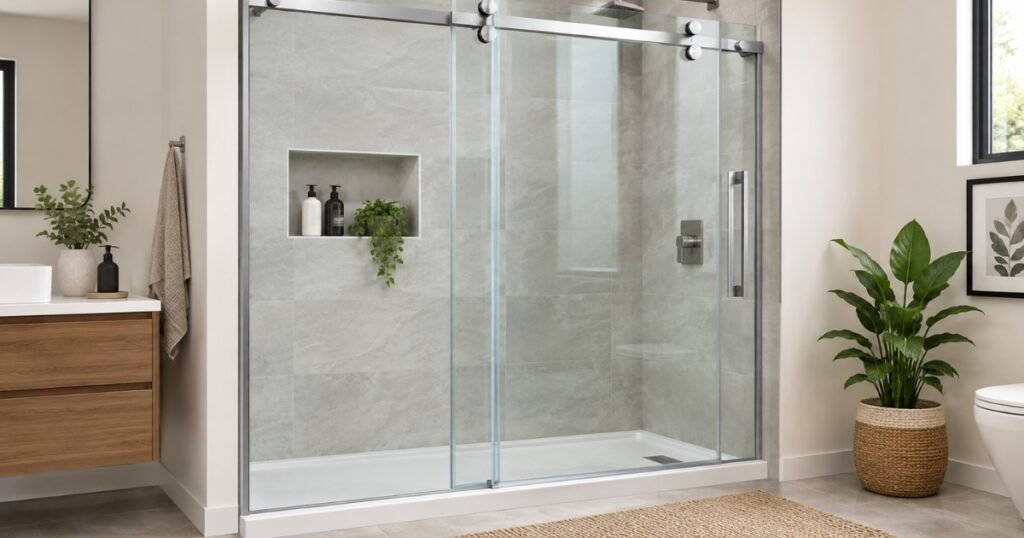
Sliding glass shower doors feature a space-saving design where a moving panel glides smoothly past a stationary panel along a top track. Ideal for bathtubs, corner layouts, and standalone showers, they maximize floor space without intruding into the room. Available in hardware finishes ranging from modern chrome to brushed brass, these systems can be customized with built-in towel bars to deliver both function and sleek style.
Fixed Shower Door
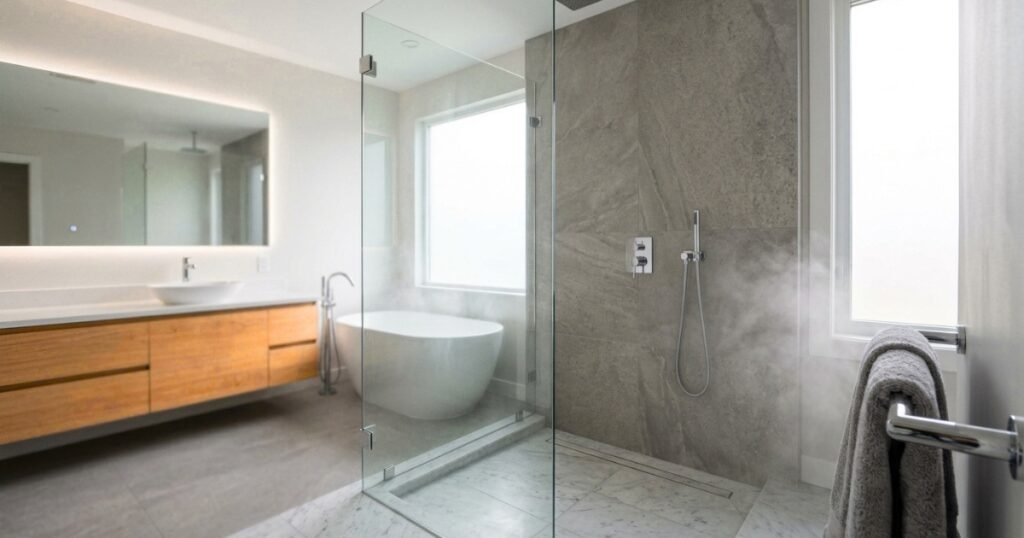
Constructed with a single stationary glass panel mounted directly to the wall or floor, this design operates without any moving parts. Because the panel remains completely immovable, it requires zero door swing clearance, making it an ideal space-saving option for compact layouts. Apart from creating a sleek, minimalist divider, fixed panels can be customized with textured or frosted glass to add privacy while maintaining an open, light-filled bathroom design.
Single Shower Door
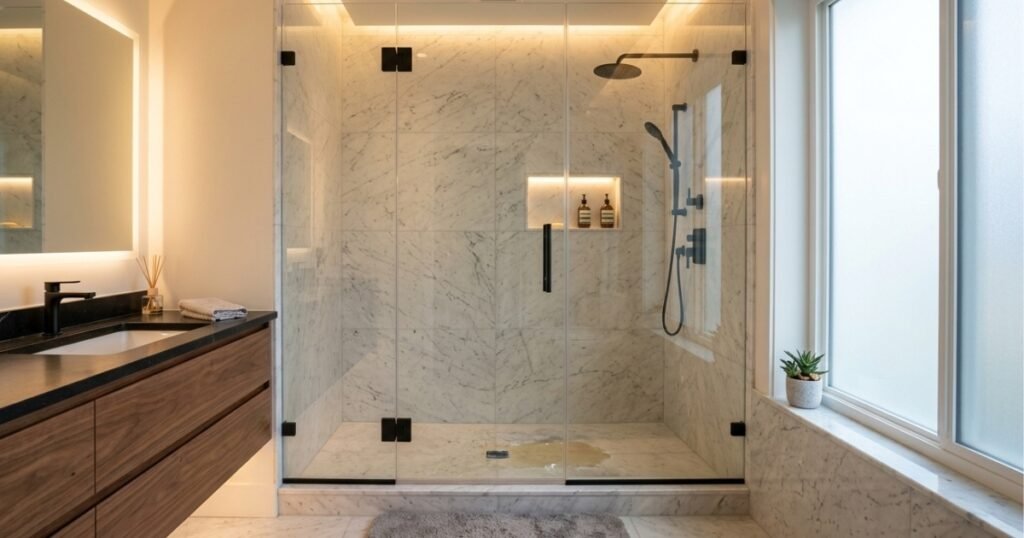
Featuring one standalone glass panel, this style operates on a heavy duty swinging hinge to maximize accessibility in tight layouts. Ideal for compact bathrooms, they require minimal hardware and can be installed directly onto tile walls or combined with fixed glass panels. Their streamlined design reduces mold and grime buildup for easy maintenance, while options like rain or frosted glass offer extra privacy without blocking natural light.
Bypass Shower Doors Frameless
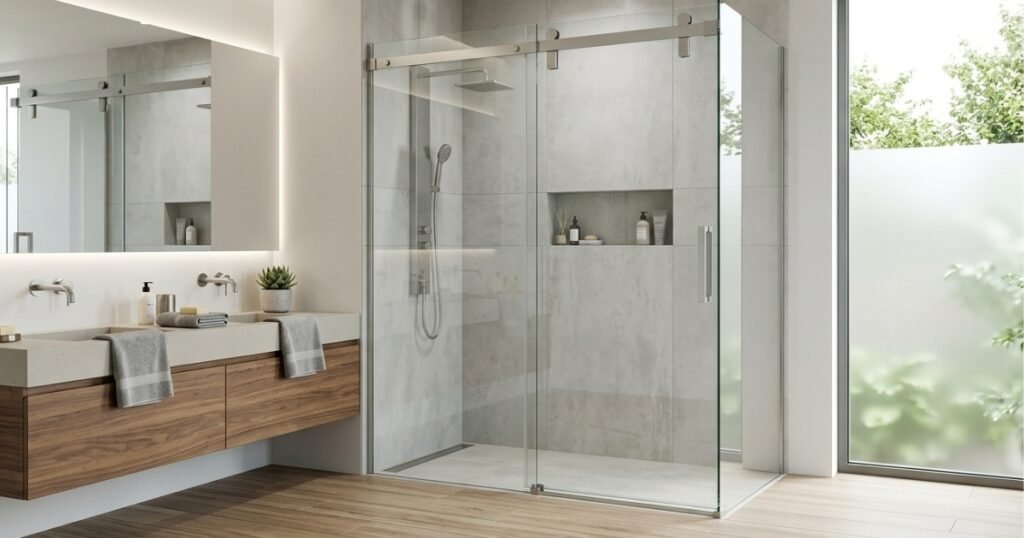
Bypass doors feature dual-sliding glass panels that glide effortlessly along top tracks, making them a space-saving solution for bathtub setups and compact bathrooms where swinging doors are not practical. For full custom setups, these systems can form a complete five-sided enclosure featuring two finished shower walls, two glass side panels, and the main sliding door creating a seamless, watertight space. Available in crystal-clear glass for an open look or textured panels for added privacy, bypass doors offer easy entry and access while maximizing usable floor space.
Corner Shower Door Replacement
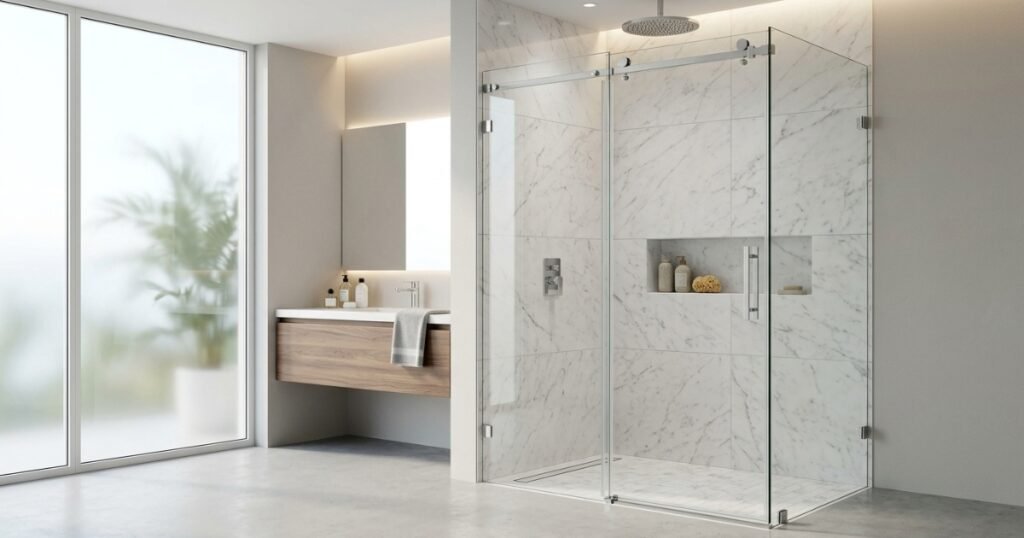
Corner shower doors are specifically designed to maximize unused corner space, making them the ultimate space saving solution for smaller bathrooms. Available in configurations like Neo angle or 90 degree square enclosures including popular standard sizes like 32″ x 32″, these systems create a sleek, visually appealing bathing area without taking up valuable floor space. Whether installed directly on tiled floors or integrated over a half wall, using a precise glass shower door seal along the edges ensures a watertight fit that keeps your bathroom dry and stylish.
Semi-Frameless vs. Frameless Shower Doors
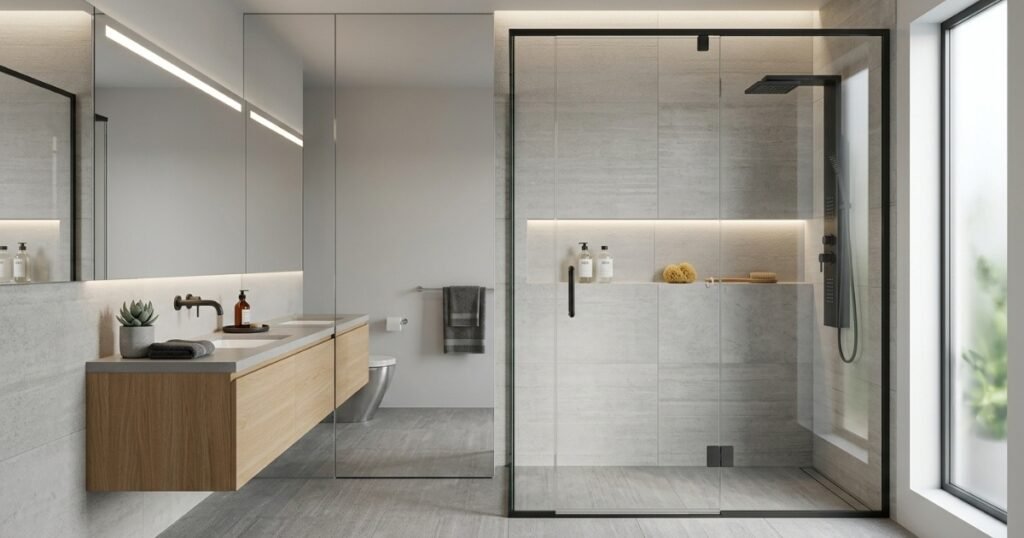
Semi frameless shower door installation strike an ideal balance between the sleek aesthetic of a frameless design and the reliable support of a framed enclosure. Featuring a minimalist profile with a low profile metal frame along key structural points, this style enhances stability while maintaining a modern, open look.
The primary distinction lies in the framing: while full frameless setups rely entirely on heavy glass and clamps, semi frameless options utilize slim perimeter framing for extra support and reliable leak protection. By offering straightforward installation and reduced material costs, these enclosures present a budget friendly alternative for homeowners who want a contemporary shower design without breaking the bank.
Framed Shower Doors
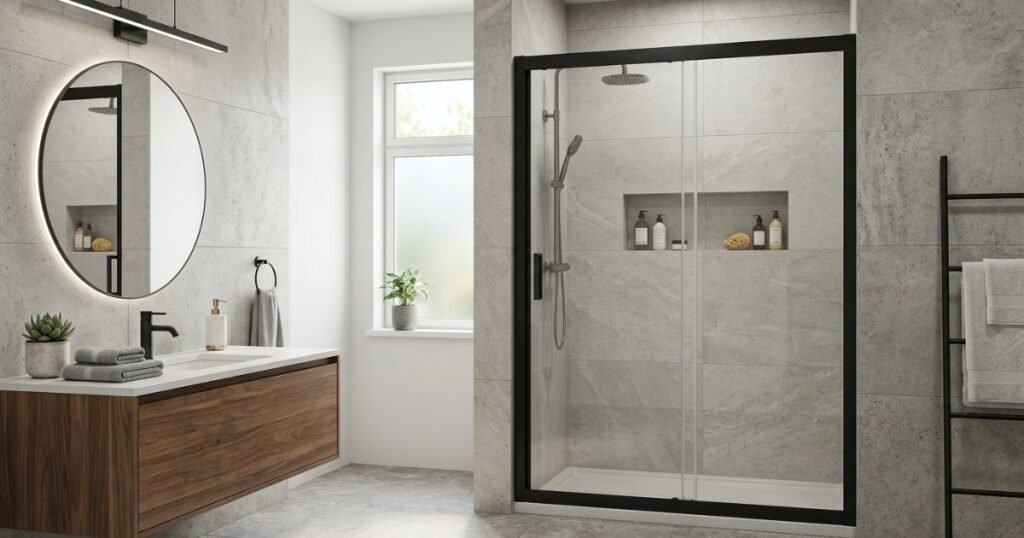
Framed shower doors represent the traditional, time tested standard for bathroom design, offering exceptional structural strength at an accessible price point. A solid metal perimeter completely surrounds the glass panels, providing maximum stability and smooth operation across sliding, hinged, and pivot mechanisms.
Integrated components like drip rails and sweeps effectively channel water back into the basin, ensuring superior leak protection for a dry bathroom environment. Available in timeless hardware finishes such as brushed nickel, polished chrome, and matte black, framed doors adapt easily to any aesthetic while serving as a budget friendly, DIY friendly solution for bathroom upgrades.
Glass Bathroom Shower Enclosures
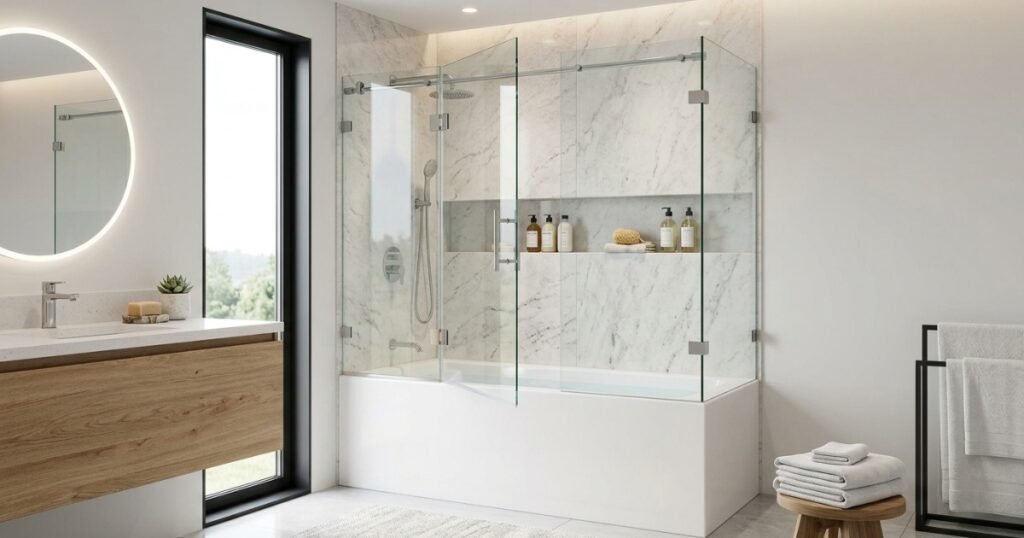
Frameless glass bathtub enclosures offer a sleek, modern upgrade that opens up the bathroom and maximizes light flow. By replacing traditional shower curtains with clear tempered glass, these enclosures make small spaces feel larger while showcasing custom wall tile and decorative accents. Glass surfaces naturally resist mold and mildew growth, making daily cleaning and routine maintenance much simpler.
For more practical advice on maintaining your space, explore these 7 ultimate bathroom cleaning tips and guides to keep your glass shining. For added privacy without sacrificing style, homeowners can choose frosted or etched glass options, creating a stunning focal point when paired with targeted lighting and built in shelving.
Pivoting Shower Door
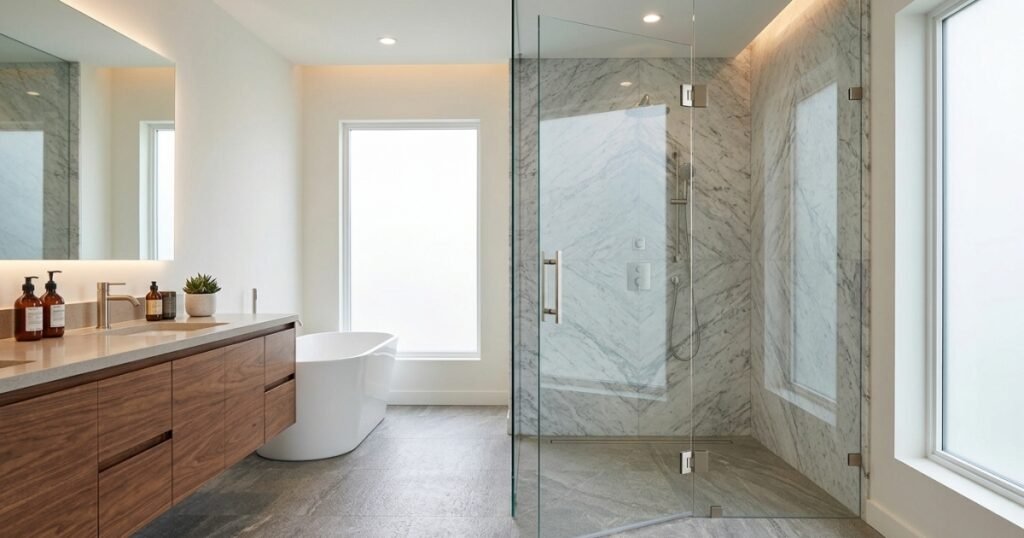
One of the key components that elevate its performance is the pivoting shower door seal, designed to create a watertight barrier. This innovative seal minimizes water leakage, ensuring your bathroom stays dry while making clean-up a breeze.
The installation of a pivoting shower door track assembly kit can significantly enhance your shower experience. Investing in a quality track assembly not only supports the smooth operation of the door but also prolongs its lifespan. For those with a space constraint, such as in a 900mm shower area, these kits offer customizable solutions that can fit snugly, maximizing your available space without compromising on style.
Hinged Shower Door
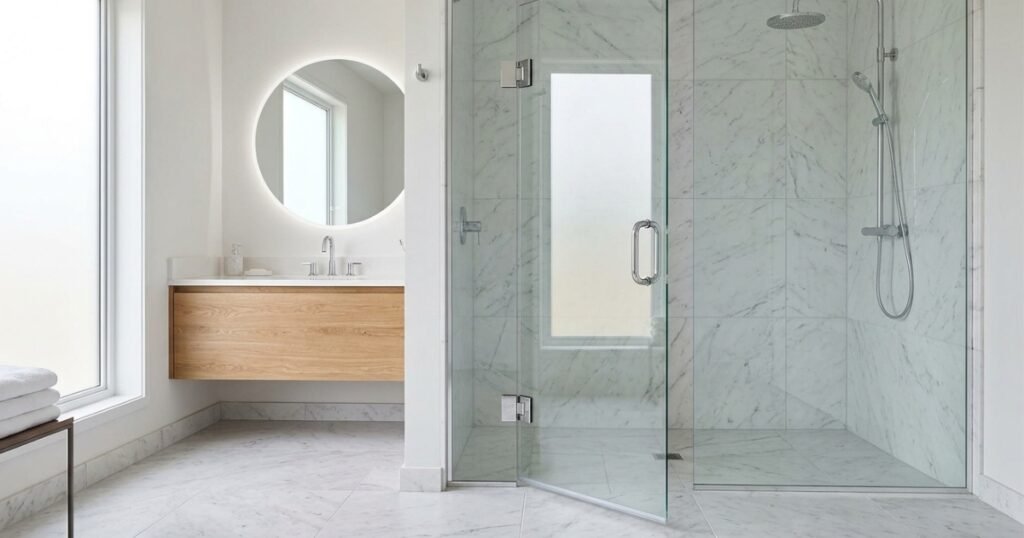
Hinged shower doors feature a clean, versatile design that mounts directly to a wall, fixed glass panel, or structural frame. These doors utilize specialized side mounted hinges to open outward or inward based on preference, allowing homeowners to customize the layout to fit their space. Because the swing direction is fixed once installed, clear clearance planning is essential to ensure the door opens smoothly without interfering with vanity cabinets or fixtures.
Unlike pivot systems that require top and bottom clearance, side hinges create a streamlined visual profile that highlights custom tile work while providing a wide, unobstructed entry into the shower.
Bi-Fold Shower Doors
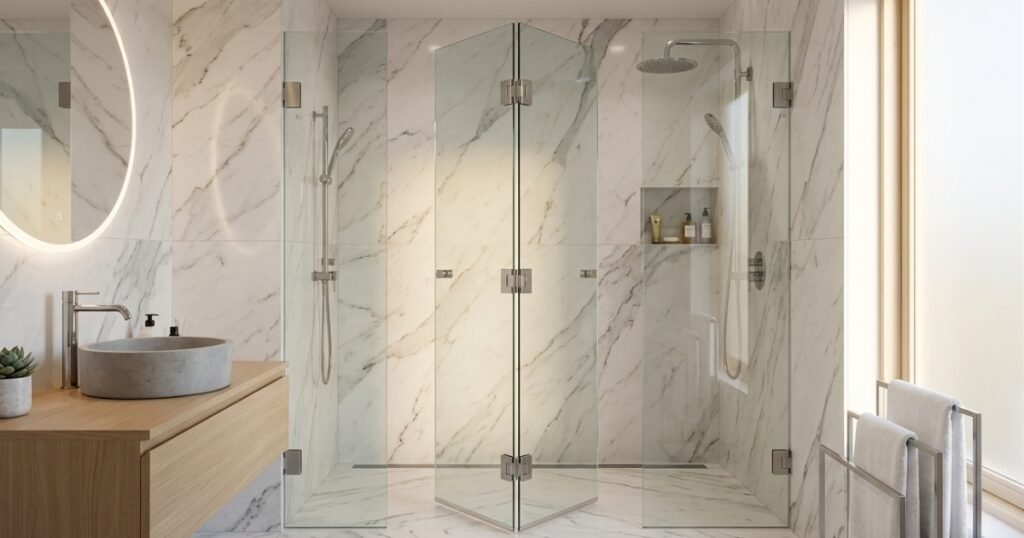
Bi fold shower doors offer a smart, space saving solution by utilizing a folding panel mechanism that glides inward toward the hinged side. This unique hybrid design creates a wide entryway without requiring outward clearance, making it an ideal choice for compact layouts, tight corners, or ensuite bathrooms. Installed with durable top and bottom tracking to ensure smooth operation, bi fold systems maximize floor space while maintaining a low profile aesthetic.
Typically structured within clean framed borders, these doors feature minimal seams where grime can accumulate, simplifying maintenance and providing a neat upgrade for space conscious designs.
Partial Tub Shower Enclosures
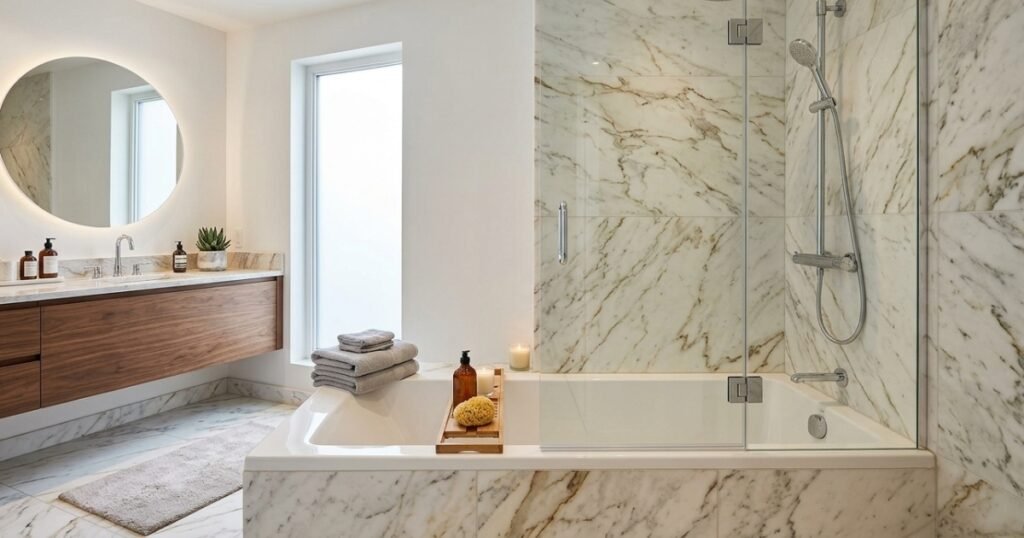
Installing a partial tub shower enclosure offers a cost effective yet sophisticated method for upgrading standard bathtubs. This layout utilizes a stationary frameless glass screen mounted along the tub rim, effectively partitioning the bathing space from the rest of the room. Positioned near the fixtures to contain water splash, the fixed panel preserves an open, airy feeling throughout the bathroom.
Homeowners can select straight, gently curved, or custom cut glass shapes to complement their space, making this minimalist approach a sleek, easy to maintain alternative to full enclosures.
Final Thought on frameless glass door installation
A frameless glass shower enclosure gives any bathroom a modern, elegant upgrade, blending style with everyday function. Yes, precise measuring and installation take effort, but the payoff is a spacious, contemporary look with better natural light and easier cleaning.
FAQs About Frameless Shower Doors Installation
How thick should the glass be for a frameless shower door?
Frameless shower doors commonly use glass around 3/8-inch to 1/2-inch thick, depending on the door size, hardware, and installation requirements.
How do I stop water from leaking out of my shower?
Installing clear polycarbonate sweeps and strike seals along the bottom and side edges of the glass is the most reliable way to keep water inside and your bathroom floor dry.
Do I need a professional to install a frameless shower door?
Skilled DIYers can attempt it, but the glass is heavy and fragile, which brings real safety risks. For most homeowners, hiring a professional installer is the safer choice.
What if my bathroom walls aren’t perfectly plumb?
Walls that aren’t perfectly vertical can be handled with specialized hinges or custom-cut channels designed to compensate for the slant.
How do I keep the hardware finish looking new?
Wipe the hardware down regularly with a soft, damp cloth and skip harsh, acidic cleaners. This simple habit prevents oxidation and keeps the metal finish looking fresh.