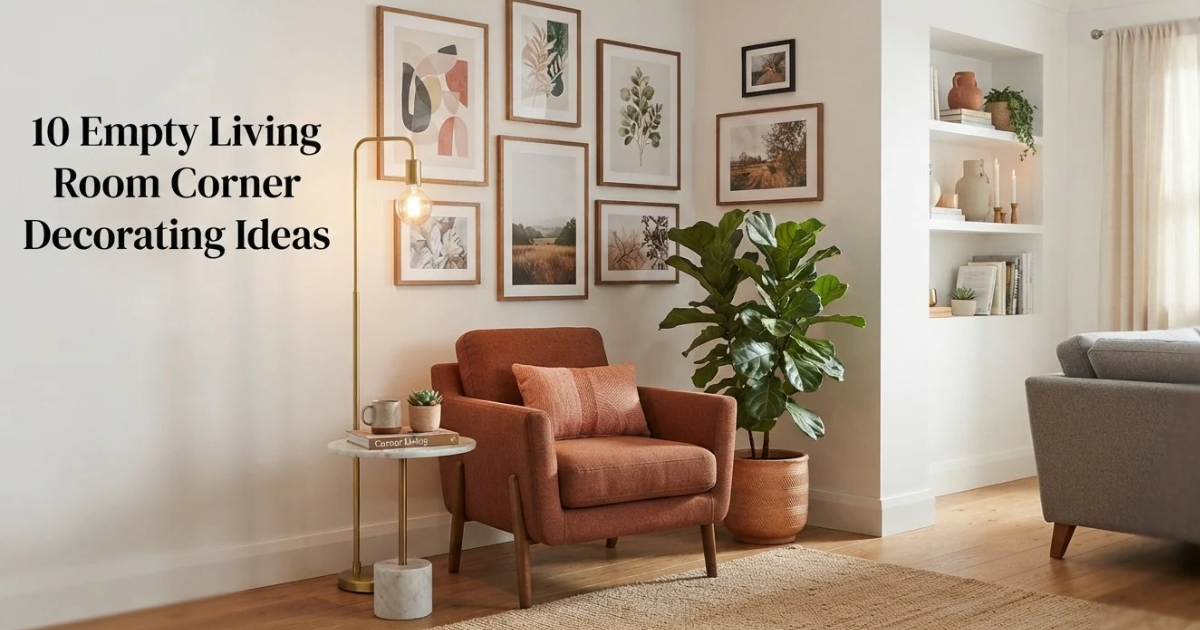
10 Empty Living Room Corner Decorating Ideas
An empty living room corner can make a well-used space feel unfinished, but filling it with random décor may create unnecessary clutter. The best solution depends on what your room needs: a place to read, a touch of greenery, or a practical feature that fits a small space. This guide shares 10 Living Room Corner decorating Ideas for turning unused corners into purposeful parts of your living room.
We explore options such as a compact reading nook, a layered plant display, or thoughtfully chosen lighting and storage, with an emphasis on using what you have and keeping the area visually calm. You’ll find inspiration for different layouts and styles, plus simple ways to make each corner feel connected to the rest of the room.
1. Create a Cozy Reading Nook in an Empty Corner
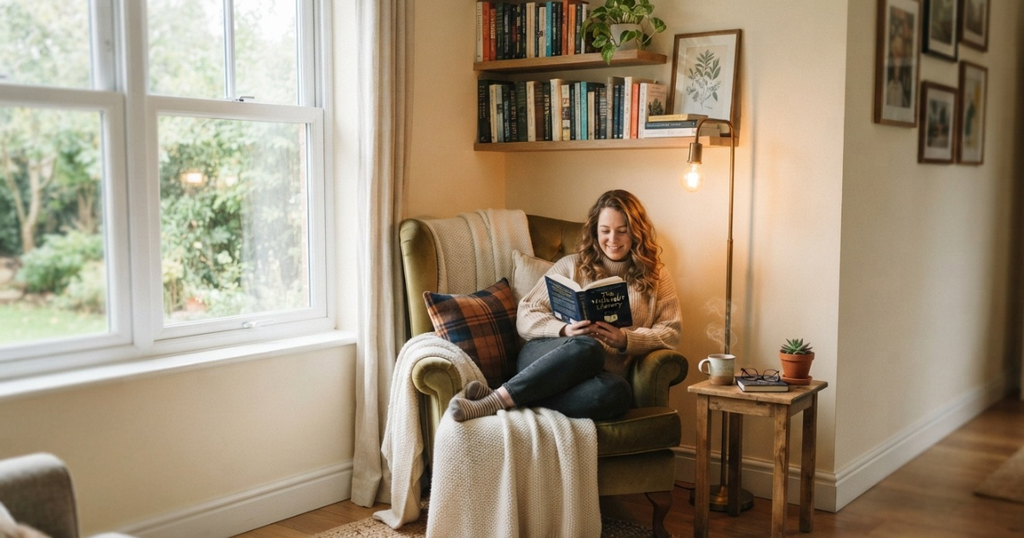
An empty corner can become a comfortable reading spot with just a few well-chosen pieces. Start with an accent chair that fits the available floor space, leaving enough room to sit down and stand up without moving other furniture. A compact side table can hold a book, a drink, or a reading lamp, while a soft throw adds warmth.
Position the chair where the light works well for reading, whether that’s near a window or beside a floor lamp. Keep the setup simple so the corner feels inviting rather than crowded. Once the essentials are in place, add a cushion or a small footrest to make your nook feel more personal and comfortable.
Add a Comfortable Accent Chair
Add a comfortable accent chair to create a welcoming spot for reading, relaxing, or taking a break. In a smaller room, a compact lounge chair can offer a place to sit without overwhelming the space. For extra support, choose a cushioned armchair that suits your room’s layout and everyday needs. These living room corner decorating Ideas can help make an unused area more comfortable and practical.
Finish the seating area with a couple of decorative pillows and a soft throw blanket. These simple layers make the chair feel inviting and help it connect with the rest of your décor. Place it near a lamp or side table if you have room, creating a comfortable corner that feels intentional rather than crowded.
Include a Small Side Table and Floor Lamp
Pair a small side table with a floor lamp to create a useful, coordinated look without crowding the living room. Choose a table with enough surface area for a drink, a book, or a remote, then place it within easy reach of a sofa or chair.
Set the floor lamp beside the table to provide light where it’s needed while keeping the tabletop clear. To tie these pieces into the rest of your living room furniture, repeat a finish, color, or material already in the space. The result is a practical corner that feels considered; adjust the lamp’s position to suit how you use the seating area.
2. Decorate Empty Corners with Indoor Plants
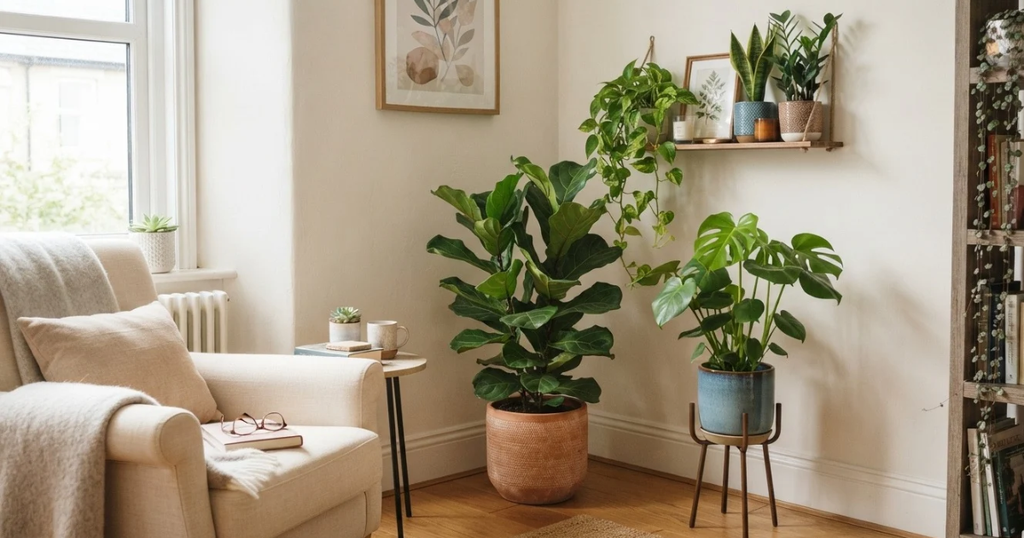
Empty corners can feel unfinished, but a large plant can give them a deliberate focal point. Choose a variety suited to the corner’s light and available space, then set it in a stable planter that complements the room. A tall silhouette can add height without requiring furniture, while its foliage brings a softer visual presence. These living room corner decorating ideas can help bring greenery and character to unused spaces.
For a beautiful indoor garden, combine natural colors with different leaf shapes, such as broad and slender foliage, to create contrast without relying on bright accents. Leave enough room around the plant so its form remains visible and the corner feels considered rather than crowded.
Use Tall Plants to Fill Empty Spaces
Use tall plants to fill empty spaces between furniture and flooring, especially in corners or beside low-profile pieces. An areca palm can bring height and a fuller outline to an area, while a fiddle-leaf fig offers an upright, sculptural shape. Choose a spot where the plant has room to sit without blocking a walkway or crowding furniture. These living room corner decorating Ideas can help you add greenery and make better use of unused spaces.
Consider the floor and finishes when selecting a pot: a container can keep the arrangement understated, while a contrasting texture can make the plant feel like a design feature. Keep the plant’s mature size in mind, and leave clearance for leaves and care.
3. Add a Stylish Floor Lamp for Extra Lighting
Add a stylish floor lamp to turn an unused living room corner into a source of additional lighting. Choose a modern, traditional, or industrial design that complements your existing furniture and finishes. A lamp beside a reading chair can brighten tasks, while a sculptural silhouette adds visual interest.
Layer Lighting for a Cozy Feel
Layer lighting for a cozy feel by combining ceiling lights with table lamps, rather than relying on one bright source. Use ceiling lights for general visibility, then place a table lamp near a reading chair or beside the bed, where it provides useful light without creating glare. Choose warm white bulbs to soften the effect. Adjust lights separately so the room can shift from illumination to a relaxed evening atmosphere.
4. Create a Beautiful Corner Gallery Wall
A blank corner wall can become an attractive decorative feature with a carefully arranged gallery wall. Combine frames in different sizes and finishes to add variety while keeping the display cohesive through a shared color palette or subject.
Lay out the frames on the floor first, then adjust their spacing until the arrangement feels balanced. Hang the largest piece near the center of the grouping and build outward, letting the layout follow the corner’s shape. Step back to check the composition before adding the final pieces. These living room decorating corner ideas can help you create an attractive gallery wall in an unused space.
Display Framed Artwork and Family Photos
Displaying framed artwork and family photos together works best when the arrangement feels considered rather than overcrowded. Choose a few meaningful pieces, then leave enough space between frames for each image to stand out and the wall to feel calm.
Balance artwork sizes by mixing larger frames with smaller ones in a deliberate grouping, keeping their edges or centers aligned where possible. A consistent frame finish can also help varied images feel connected. Step back as you arrange the pieces and adjust spacing until the display has a clean appearance and feels cohesive. These living room corner decorating Ideas can help you create a balanced and attractive wall display.
Try a Mix of Different Frame Sizes
Combining large and small frames can create a more interesting gallery wall. Start by placing the largest frame near the center and arrange smaller pieces around it. Before hanging anything, lay the frames on the floor to test the arrangement and check the spacing,
5. Place a Small Console Table in the Corner
A small console table can make an unused corner feel intentional without taking up much floor space. Choose a narrow design that fits comfortably against the wall and leaves enough room to move around it.
Style the surface with a few decorative accessories, such as a table lamp, a small bowl, or a framed photo. Keeping the arrangement simple helps the corner feel polished rather than crowded. For a cohesive look, echo a color or material already used elsewhere in the room. These living room corner decorating Ideas can help you create a stylish and well-organized display.
Decorate with Table Lamps and Accessories
A balanced display pairs a table lamp with a few accessories that vary in height and shape. Place the lamp to one side, then arrange a decorative vase and framed photograph nearby, leaving enough open space for each piece to stand out.
Keep the arrangement cohesive by repeating a color or material, while mixing silhouettes for visual interest. Step back and adjust the spacing so the display feels considered rather than crowded.
6. Make an Empty Corner Functional with a Small Desk
Make an empty corner useful by adding a small desk and a comfortable chair. Choose a compact workspace that fits the area without blocking walkways or crowding nearby furniture. A simple layout can help the corner feel intentional while keeping essentials within reach.
Use this spot as a quiet place for reading, writing, or focused tasks. Keep the desktop clear and add only what you need, such as a lamp or notebook. With a few practical choices, an overlooked corner can become a comfortable place to work or pause.
Use Wall Shelves Above the Desk
Use wall shelves above the desk to keep frequently used items close without crowding the work surface. Floating shelves make use of vertical wall space and can hold books, notebooks, or small supplies, helping the area feel more organized and comfortable.
Place shelves within easy reach, while leaving enough room to work beneath them. Group everyday essentials together and reserve higher shelves for items you need less often, so your desk stays clear and your setup remains practical.
7. Add a Decorative Accent Chair or Egg Chair
A decorative accent chair or egg chair can complement your existing sofa while making the seating area feel more inviting. Choose a style that works with the room’s overall look, then place the chair where it adds a comfortable spot to sit without crowding the layout.
For a cohesive arrangement, consider how the chair’s shape, color, and materials relate to the sofa. An accent chair can bring a subtle point of contrast while helping the seating area feel thoughtfully put together.
Create a Relaxing Seating Area
Create a relaxing seating area by placing a small rug beneath the chair. The rug helps define the spot and gives it a sense of separation from the surrounding room.
Set the chair at a slight angle rather than squarely against a wall. This simple arrangement can make the area feel more inviting and give you a comfortable place to pause, read, or unwind.
8. Display a Large Sculpture or Statement Decor Piece
A large sculpture or statement decor piece can give minimalist living rooms visual interest without adding clutter. Choose an object with a silhouette, then let it occupy a spot—beside a console, near an empty wall, or in an open corner. Leave breathing room around it so its shape remains the focus. Keep nearby surfaces simple; this contrast makes the piece feel intentional and gives the room a focal point.
Choose a Unique Decorative Sculpture
A unique decorative sculpture gives a room a focal point and reinforces its style. Consider a low pedestal to raise a ceramic figure, or choose an artistic floor piece that adds presence without competing with furnishings.
A large abstract sculpture can bring shape and movement to an open area. Before choosing, check its scale against the room and allow clear space around it. The right piece feels considered, not crowded.
9. Install Floating Shelves in an Empty Corner
An empty corner can become a simple display area with a few floating shelves. Install them vertically to use wall space without adding the visual bulk of a bookcase, which can make a small room feel crowded. Before drilling, check the wall type and locate studs or use anchors rated for the shelf’s load.
Display Books and Decorative Items
Display books and decorative items with a light touch. Too many accessories can make a shelf feel crowded and distract from the pieces you want to highlight. Leave some open space so each item has room to stand out.
Combine books with small plants and framed pictures for a simple, varied arrangement. Use books to add height or create a base for a small object, then place a plant or picture nearby to soften the display. Adjust the arrangement until it feels balanced, and remove anything that makes the shelf look busy.
10. Decorate an Empty Corner with a Large Mirror
A large mirror offers a simple, modern way to make an empty corner feel intentional. Lean or hang one where it can reflect light and nearby furnishings, helping the room feel more open without adding visual clutter.
Choose a clean frame that suits the room, and leave enough breathing space around the mirror so it reads as a focal point rather than a crowded add-on in an otherwise quiet area.
Use a Full-Length Floor Mirror
A full-length floor mirror can brighten a living room and make it easier to check an outfit. Choose a frame that matches your living room’s style, whether understated or decorative, and consider how its size will fit the wall space.
For a full-length mirror leaning against a wall, follow the manufacturer’s instructions and place it on a stable, level surface. Keep it clear of walkways, then adjust its position to reflect light or a view without creating glare.
Place the Mirror to Reflect Natural Light
Place a mirror where it can reflect natural light into a dim or unattractive area, such as a shadowed corner. Angling it toward a window can help spread daylight through the room and make the space feel brighter.
Use the reflection to draw attention to an attractive feature, such as indoor plants, rather than a cluttered or blank spot. Check the view from the main seating or entry point, then adjust the mirror until it reflects the feature you want to highlight.
Conclusion
An empty living room corner is an opportunity to add function and personality without crowding the rest of the space. The best choice depends on what your room needs: a reading spot, extra storage, greenery, or a more balanced layout. Start by measuring the corner and noting its light, nearby outlets, and traffic flow. Then choose one idea, keep scale in mind, and build around a piece you already own. Small, thoughtful changes can make the room feel more complete.
FAQ
1. What are the 10 decorating ideas for an empty living room corner?
The brief provides the topic but does not list the 10 ideas. Specific suggestions can’t be confirmed from the information provided.
2. Which idea works best for a small living room?
The brief doesn’t include room sizes or compare ideas, so it doesn’t identify an option for small spaces. Measure the corner before choosing furniture or decor.
3. What can I put in a living room corner?
The brief doesn’t specify items to use. Consider the room’s layout and how you want the corner to function before selecting anything.
4. How can I decorate a corner without making the room feel crowded?
No layout or spacing advice is included in the brief. Check how much floor space is available and keep pathways clear when planning the area.
5. Should I choose furniture or decorative accents?
The brief doesn’t say which approach to take. Choose based on whether you want the corner to serve a practical purpose or primarily add visual interest.
6. How do I choose an idea that suits my living room?
The brief doesn’t provide style, color, or budget guidance. Use your existing furnishings and available space as planning considerations.
7. Do the ideas require a large budget?
Budget information is missing from the brief, so the cost of any idea can’t be stated. Set a spending limit before shopping.
8. What details should I check before decorating?
The brief doesn’t include measurements or product recommendations. Measure the corner and note nearby furniture, outlets, and walkways before deciding what to add.