15 DIY Balcony Makeover Ideas for a Cozy Space
Limited floor space can make a balcony feel more like a storage spot than a place to unwind. With beautiful plants, space-saving furniture, and a few thoughtful touches, even a small outdoor area can become a cozy place to enjoy morning coffee.
Explore these 15 small balcony makeover ideas for creating an inviting space that works with the room you have. These simple balcony design ideas can help you make the most of your outdoor space.
1. Keep Your Small Balcony Simple and Clutter-Free
A simple, clutter-free balcony feels easier to use and more inviting. Even a decent-sized balcony can feel cramped when too many chairs, planters, and accessories compete for floor space, so start by deciding how you want to use the area and keep only what supports that purpose.
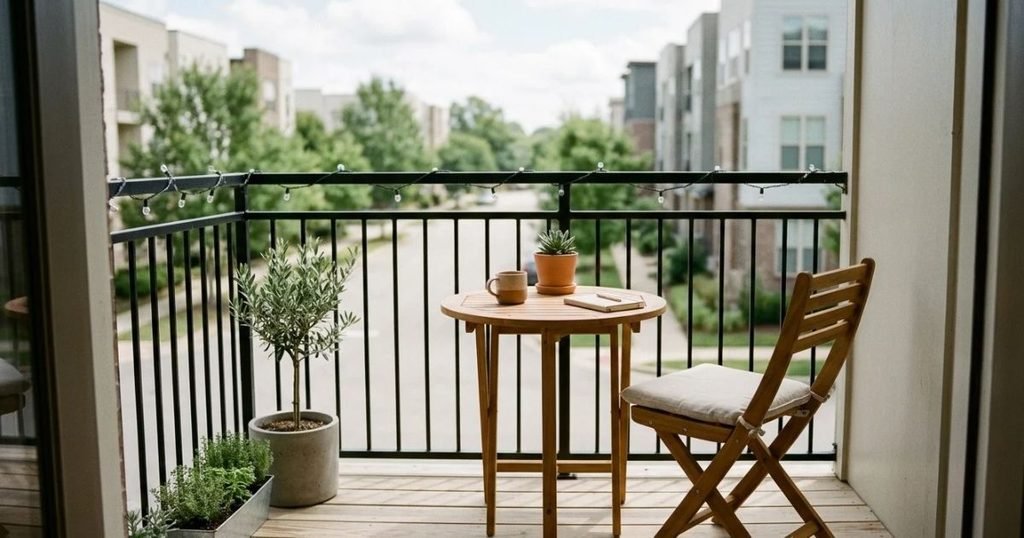
Choose a few useful pieces and leave a clear path through the space. If you need storage items, look for options that serve more than one purpose, such as a bench with room inside for cushions. Keeping the layout open helps your balcony feel calm without sacrificing everyday function.
Remove Unnecessary Furniture and Decorations
Take a look at everything currently placed on your balcony. If you have old chairs, empty pots, broken decorations, or unused storage boxes, remove them to create more room. Keep a few useful items, such as a comfortable chair, a small table, and one or two decorative pieces. This simple change can make your balcony look more organized without spending money on new furniture.
Use a Minimal Design to Make the Space Feel Bigger
A minimal design can make a small outdoor space feel more open. Choose light colors for larger surfaces, such as furniture or a rug, and leave clear areas of floor visible. Open space helps the layout feel less crowded, while a simple palette creates a calm, cohesive look.
Choose furniture that fits the space without blocking walkways, and keep accessories to a few matching pieces. Cushions and planters can add comfort and greenery; a rug can define a seating area. Use each item with purpose, and the space can feel finished without feeling full.
2. Choose Space-Saving and Foldable Furniture for Small Balcony Ideas
On apartment balconies, choose compact furniture that fits the available floor area without making the space difficult to move through. A folding chair or a small table can provide a place to sit or set down a drink, then fold away when you need more open floor space.
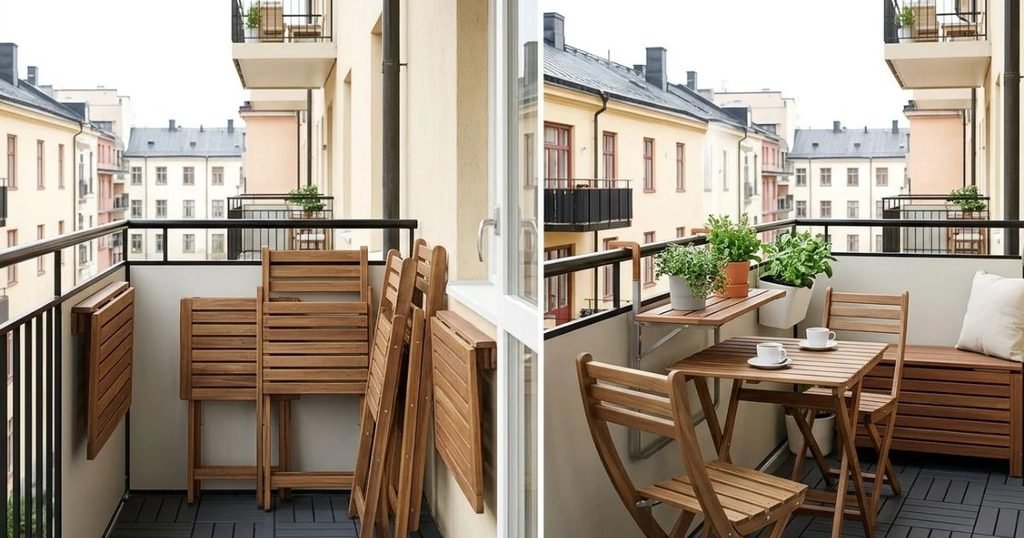
On apartment balconies, choose compact furniture that fits the available floor area without making the space difficult to move through. A folding chair or a small table can provide a place to sit or set down a drink, then fold away when you need more open floor space.
Measure the balcony before shopping, and check both the furniture’s dimensions in use and how much room it needs to fold or store. Large outdoor sofas can take up much of a small balcony, so consider a slimmer seating option that better suits the space. A few well-sized pieces can make the balcony comfortable while keeping it flexible for everyday use.
Plan a Layout for a Long and Narrow Balcony
For a long, narrow balcony, arrange furniture along one side to keep the walkway clear. A slim bench, folding chairs, or a small bistro table can make better use of limited space without making the area feel crowded. Keep larger items near the wall and leave enough room to move around comfortably.
Choose Durable Materials for Outdoor Furniture
When choosing balcony furniture, consider materials that can handle outdoor conditions such as sunlight, rain, and humidity. Teak and cedar are popular wood options because they naturally resist moisture, while powder-coated aluminum is lightweight and helps resist rust. Synthetic wicker is another practical choice for outdoor seating because it is designed to handle changing weather conditions.
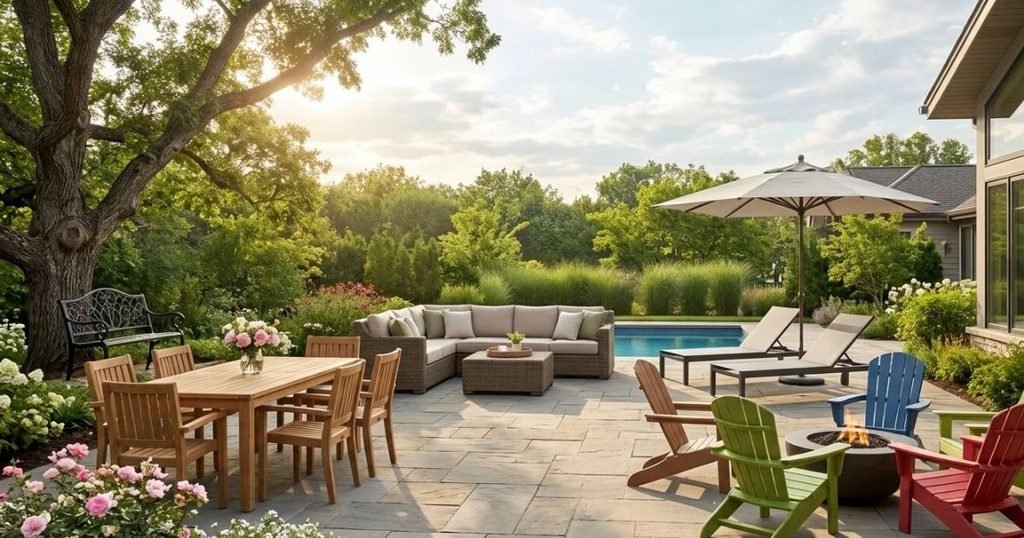
Also, look for outdoor cushions made with weather-resistant fabrics and use furniture covers when pieces are not in use. These simple precautions can help protect your furniture and keep it in good condition for longer.
Use Folding Chairs and Compact Tables
Folding chairs and compact tables make it easier to adapt a small outdoor area when guests visit. Choose chairs that fold flat for storage, and look for weather-resistant materials suited to your space. A compact table can provide a place for drinks or snacks without taking up more room than needed.
For an even smaller footprint, consider a wall-mounted table that folds down when it’s time to entertain and folds away afterward. Pair it with a few folding chairs, and you can create a practical gathering spot without leaving furniture in the way between visits.
Try Multifunctional Furniture for Extra Storage
Try multifunctional furniture to make the most of a small patio or porch. A storage bench can provide a place to sit while keeping outdoor essentials tucked away, helping reduce clutter without adding a separate storage unit.
For more flexibility, pair the bench with a side table that can hold drinks or gardening supplies. Choose pieces that suit your available space and the items you want to store, then keep frequently used essentials easy to reach.
3. Create a Cozy Balcony Seating Nook
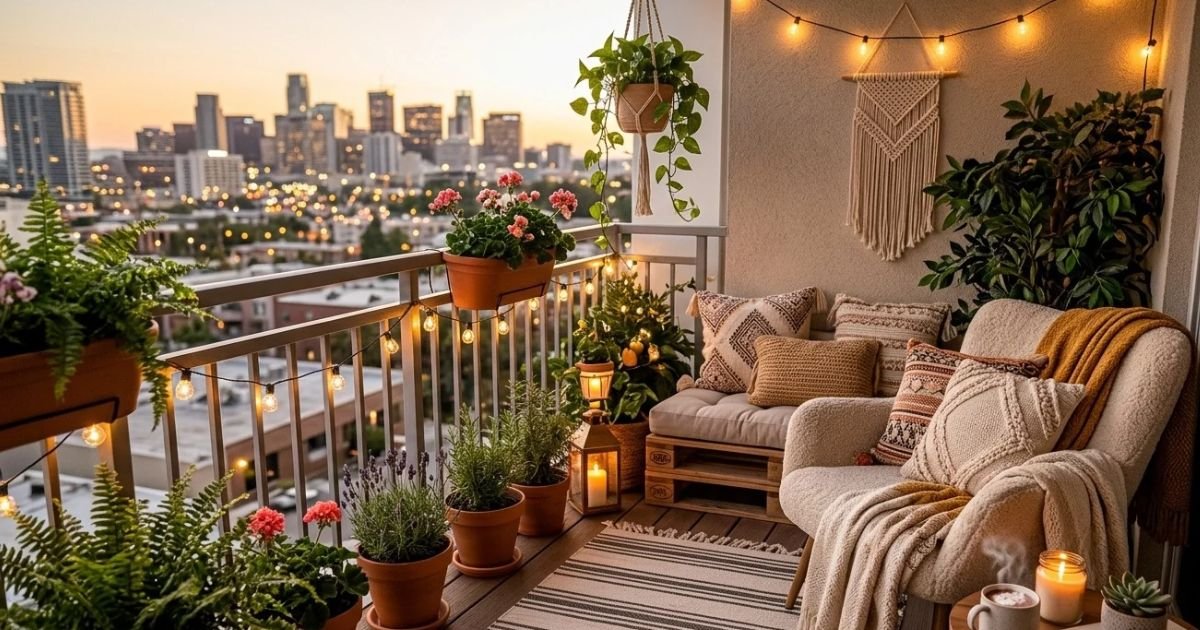
A comfortable seating corner can turn your balcony into a relaxing place where you can enjoy your free time. You do not need a large outdoor sofa to create this setup. A compact bench, a single lounge chair, or a cushioned floor seat can work just as well. Add a few soft cushions and a small side table to make the area more inviting. Position the seating where you can enjoy natural light or a pleasant outdoor view.
Add a Small Bench With Comfortable Cushions
narrow bench can add a comfortable place to sit without crowding the center area. Choose a design that fits along a wall or at the edge of the space, and keep it separate from other furniture pieces so the layout stays flexible.
Look for built-in compartments to tuck away small items, and add outdoor cushions for a softer seat. Leaving the center area clear helps preserve room to move and keeps the bench from making the space feel cluttered.
Make a Relaxing Reading Corner
A small reading nook can make cooler days feel more inviting. Place a cushioned bench near a wall to create a comfortable spot that feels separate from the rest of the room, even when space is limited. Add pillows or a throw for extra softness, keeping the seat clear enough for a book and a cup of tea.
For a pleasant atmosphere, hang string lights nearby to add a gentle glow as daylight fades. Keep a reading lamp within reach for focused light, and choose a small side table or basket to hold a few essentials. Together, these simple touches turn an unused corner into a relaxing place to settle in with a good book.
4. Turn Your Balcony Into a Mini Garden
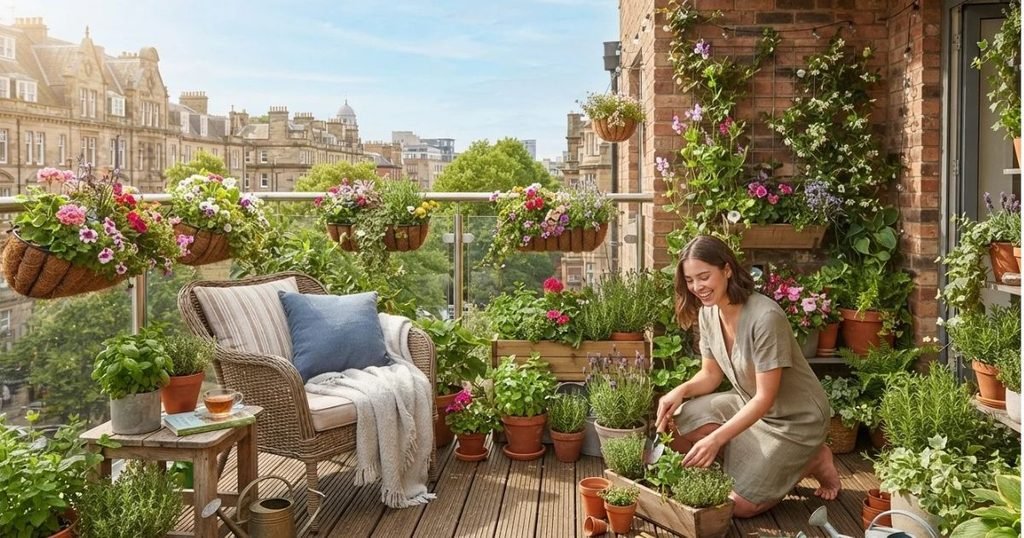
A small balcony can feel like a fresh, inviting garden when you make thoughtful use of its space. These Balcony Makeover Ideas include arranging shelves against a wall for compact pots, adding hanging baskets overhead, and using railing planters to grow greenery along the perimeter. These vertical options leave more room to move while bringing plants into view at different heights.
Place a few well-chosen pots where they can soften an empty corner or frame the seating area. Keep the layout easy to navigate, and group containers so the balcony feels considered rather than crowded. With a mix of shelves, hanging baskets, railing planters, and well-placed pots, even a modest outdoor space can become a welcoming mini garden.
Select Plants According to Sunlight
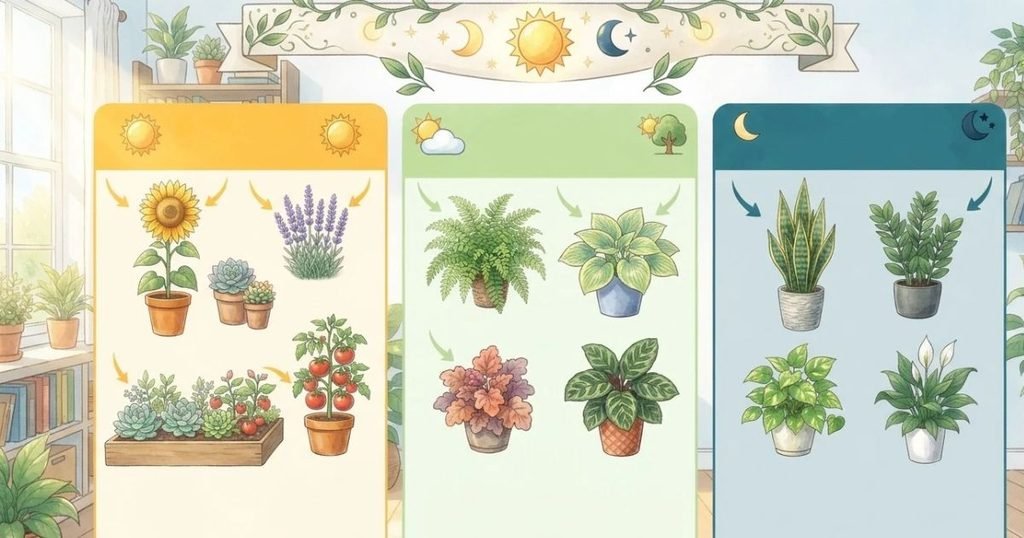
Check how much direct sunlight your balcony receives before buying plants. Choose sun-loving plants for bright areas and shade-tolerant varieties for balconies with limited sunlight. This helps plants grow better and keeps your mini garden healthy.
Add Potted Plants and Colorful Flowers
Add visual interest to your balcony with potted plants and colorful flowers in different-sized pots. Grouping containers of varied heights creates a layered look, while flowering plants bring seasonal color. Choose varieties suited to the sunlight your balcony receives, whether it gets full sun, partial sun, or mostly shade.
For leafy greenery, pothos and spider plants can be options to consider; check their light needs against your balcony’s conditions before choosing a spot. Arrange the pots where plants have room to grow, and make sure each container has drainage so excess water can escape. A mix of foliage and flowers helps create a display that feels full without relying on one kind of plant.
5. Use Balcony Railings for Hanging Planters
Balcony railings can free up floor space for seating and walking, especially on narrow balconies. Hanging baskets add color at eye level, while railing planters can hold herbs or compact flowers without taking up room below.
Before installing anything, check that the railing and planter brackets are suitable for the intended load, including the weight of wet soil and plants. Secure each planter according to its instructions, and position it so it won’t obstruct doors, walkways, or the view. If you’re considering several large pots, confirm the railing can support them rather than assuming its appearance indicates its capacity.
Decorate Railings With Greenery
Decorating railings with greenery starts with choosing a spot that suits the plants. Check how much sunlight the railing receives, then select small flowers that match those conditions. Compact plants can add color without taking up as much space as larger arrangements.
Windy weather calls for extra attention to stability: use railing planters designed to fit your railing, secure them according to the manufacturer’s directions, and avoid overhanging arrangements that could catch the wind. Keep the display clear of handholds and pathways, and check the planters regularly so your flowers stay secure as the weather changes.
6. Add a Privacy Screen for a More Relaxing Space
A privacy screen can make an outdoor space feel more relaxing by blocking unwanted views from neighboring windows, walkways, or nearby seating areas. Place it where privacy matters most—such as beside a patio dining area—rather than enclosing the entire space.
Bamboo panels offer a natural-looking screening option. Choose a panel style with some spacing between the pieces to soften sightlines while still allowing natural light and airflow. Before installing, consider how the screen will look from both inside and outside, and check local rules that may apply to fences or outdoor structures.
Keep Your Balcony Safe for Pets
If you have pets, secure balcony railings with pet-safe mesh to prevent accidental falls. Keep furniture away from open edges and avoid placing toxic plants where pets can reach them.
Use Bamboo Screens or Outdoor Curtains
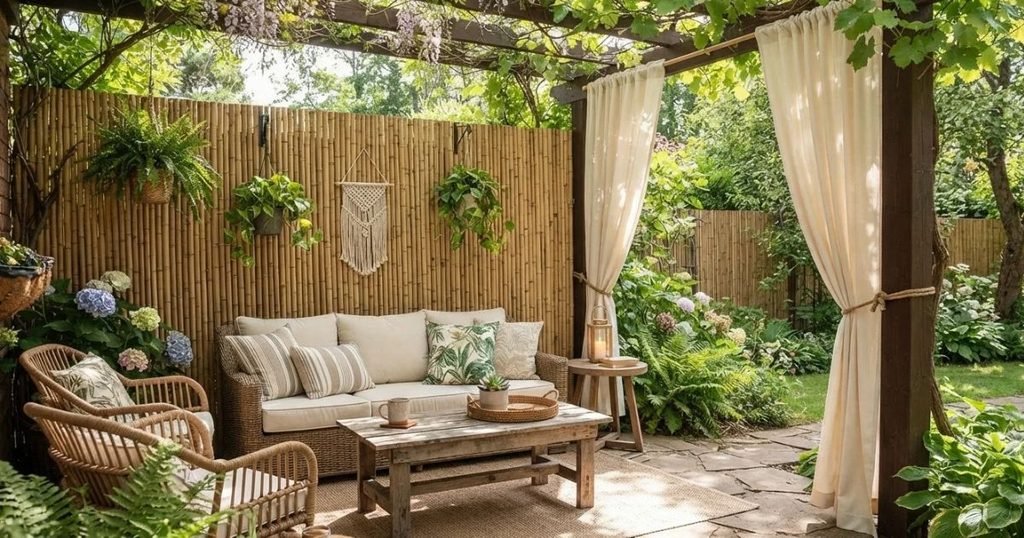
Bamboo screens and outdoor curtains can give a seating area a more private, sheltered feel without making it seem fully enclosed. Use a screen to create a defined boundary, or hang curtains where you’d like the option to open up the space when privacy isn’t needed.
For outdoor curtains, choose weather-resistant fabric suited to your climate and follow the care instructions to help keep it looking its best. Place panels where they can be drawn around the seating area, while leaving enough space to move through comfortably. Pairing privacy with easy access makes the space more inviting for everyday use.
Create a Natural Privacy Wall With Plants
Tall plants can provide privacy while adding greenery to your balcony. Use planters with bamboo, ornamental grasses, or other suitable upright plants to create a natural screen. If floor space is limited, consider a vertical planter or trellis with climbing plants. Make sure the plants are suitable for your climate and balcony conditions. This idea works well when you want privacy without using a solid screen.
7. Add an Outdoor Rug to Make the Balcony Cozy
Choose a weather-resistant balcony rug made for outdoor use, especially if it will be exposed to rain or damp conditions from time to time. Check the care instructions and let the rug dry fully after it gets wet to help prevent unwanted odors.
Before laying it down, make sure it doesn’t cover balcony drains or other drainage areas. Keeping water able to flow away helps the rug and the balcony dry between occasional exposures to wet weather.
8. Upgrade Your Balcony Flooring With Deck Tiles
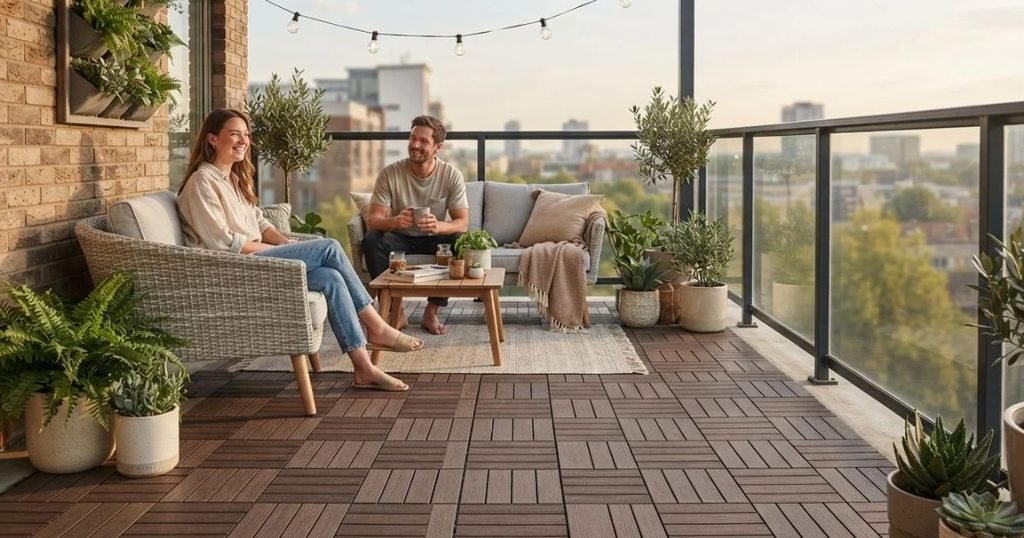
Interlocking deck tiles can give plain balcony flooring a more finished look without requiring you to remove the existing floor. Before choosing tiles, check that the surface is sound, level, and suitable for installation, and confirm there’s enough clearance at doors and other thresholds.
Clean the existing floor and let it dry, then arrange the tiles according to the manufacturer’s instructions. Pay attention to drainage and leave any required gaps so water can move as intended. A careful fit helps create a neat surface and makes it easier to plan around balcony edges, corners, and fixtures.
Check Your Balcony’s Weight Limit
Before adding deck tiles or heavy outdoor furniture, check your balcony’s weight limit. Planters, wet soil, furniture, and flooring materials all add weight to the structure. If you live in an apartment, check with building management before making major changes, especially when adding heavy materials.
Install Interlocking Wooden Deck Tiles
Start with a firm, level surface that is clean and free of loose debris. Before laying the tiles, confirm that the product is designed for your location and follow its instructions for the subfloor and any required clearance for drainage. Choose tiles made from outdoor-rated wood to suit exposure to the elements.
Align the first tile and press its interlocking base into place, then connect each tile to the next, keeping the rows straight as you work. Trim only if the manufacturer permits it, and check that all edges are securely connected. Once the surface is assembled, inspect it for uneven spots before placing furniture or using the deck.
9. Create a Warm Atmosphere With Balcony Lighting
Thoughtful lighting can make a balcony feel more welcoming after sunset. Start with the layout: use the railing for outdoor-rated string lights or compact fixtures, and add wall-mounted lighting where it can brighten seating without shining directly into your eyes. Choose a warm color temperature for a softer feel, and check that every fixture is rated for outdoor use.
For an even, comfortable glow, combine a main light with smaller accents rather than relying on one bright source. Low-voltage or solar lights can help define the edge of composite deck tiles, while lanterns or portable LED lamps add a cozy touch near a chair or table. Keep cords and fixtures clear of walking paths, and place lights so they highlight the space without creating glare.
Hang String Lights Around the Railing
Hang warm-white string lights around the railing to give a small balcony a café-style feel. Their soft glow adds ambiance without taking up floor space, making them a practical decorative choice for compact outdoor areas.
Attach the lights securely along the railing, keeping the strand neat and clear of walkways and doors. Choose lights rated for outdoor use, and follow the manufacturer’s instructions for installation and power. A simple line around the railing creates a relaxed, inviting look without making the space feel busy.
Use Solar Lanterns and LED Lights
Solar lanterns and LED lights can create a soft decorative glow without making outdoor spaces feel overly bright. Place lanterns along a patio edge or near seating, and use LED lights to highlight a table, planter, or pathway. A few focused accents can help define the space while keeping the overall effect gentle.
For a flame-free accent, battery-powered LED candles offer another option for tables or sheltered corners. Choose lighting based on where it will be used, and follow the product’s instructions for placement and care. Solar and battery-powered options can also reduce the need to plan for electrical wiring, while wired fixtures may suit locations where a permanent setup is preferred.
10. Add Shade With an Umbrella or Outdoor Awning
An umbrella or outdoor awning can make a seating corner more comfortable by blocking direct sun. Before choosing one, consider local weather conditions, including how much wind the area gets and whether the shade needs to be taken down or retracted when weather changes.
Check the manufacturer’s guidance for use and care. These shade options are useful for open balcony design, especially in areas that receive direct sunlight. Look for outdoor shade fabric suited to your needs, and compare its care instructions, color options, and coverage.
Position the shade to cover the seats during the hours you use them most, while leaving room to move around the area. A well-placed umbrella or awning can help define the seating corner and make it easier to enjoy the space.
Choose a Compact Balcony Umbrella
Choose a compact balcony umbrella that fits your seating area without blocking doors, walkways, or railings. Check the open and closed dimensions before buying, and position the base on a stable, level surface so the umbrella is less likely to tip or obstruct foot traffic.
Follow the manufacturer’s instructions for securing and operating the umbrella, including its wind guidance. The product’s specific wind limit was not provided, so check the manual or contact the manufacturer; close and secure the umbrella as directed when conditions approach its stated limit. Keep the canopy clear of overhead fixtures and nearby objects, and make sure it is fully secured when not in use.
11. Turn Your Balcony Railing Into a Small Breakfast Bar
On a narrow apartment balcony, a railing-mounted shelf can create a small breakfast bar without taking up floor space. Choose a slim surface that fits the railing and leaves room to move, then pair it with compact stools that can tuck away when you’re done. Before buying, check that the mounting system is compatible with your railing and follow the manufacturer’s installation instructions.
Keep the setup simple: a couple of place settings and a mug or two may be all the surface can comfortably hold. Measure the available width and depth, and make sure the stool height works with the bar. With those details in place, an unused stretch of railing can become a handy dining spot for breakfast or a quick coffee.
Install a Space-Saving Balcony Bar Table
A railing-mounted bar table can add a useful surface to a small balcony without taking up floor space. Before choosing one, measure the railing and check that the table’s mounting system is designed to fit its shape and dimensions. Also confirm the manufacturer’s stated weight limit and any installation requirements.
Install the table according to the product instructions, tightening and checking each connection as directed. Make sure the surface sits level and does not obstruct doors, walkways, or access to the railing. A well-fitted bar table can make room for meals, drinks, or a few potted plants while keeping the balcony open.
12. Play With Colors and Patterns
Play with a few complementary colors to give the space a cheerful feel without making it visually busy. Choose one brighter shade as the focal point, then pair it with one or two colors that work well alongside it. Simple balcony decoration ideas, such as colorful cushions and coordinated accessories, can make the space feel more inviting
Repeat those colors in small touches, such as pillows, artwork, or accessories, to create a sense of cohesion. Keeping larger surfaces more neutral can help brighter shades stand out while leaving the overall look balanced.
Use Coordinating Materials and Textures
Combine two or three materials, such as wood, metal, and wicker, to create a balanced balcony design. Repeating similar finishes and textures helps the space look neat and well-planned.
Match Your Balcony With Your Indoor Decor
Treat your balcony as an extension of your home by repeating one or two indoor colors or materials outdoors. Matching cushions, rugs, or furniture finishes can create a connected look and make the space feel more inviting.
Add Colorful Cushions and Decorative Accessories
If you want a more cheerful balcony, use colorful cushions, outdoor throws, and decorative pots. Blue, terracotta, yellow, and green can bring interest to a simple seating arrangement. You do not need to replace all your furniture to change the look. A few new cushion covers or colorful planters may be enough to refresh the space. Choose outdoor-friendly fabrics that are easy to clean and maintain.
13. Decorate Balcony Walls With Stylish Details
Balcony walls provide useful decorating space that often goes unnoticed. Instead of filling the floor with extra accessories, use vertical surfaces to display plants, artwork, and small decorative pieces. Wall-mounted shelves, hanging baskets, and weather-resistant decorations can make the area feel more personal.
Just avoid adding too many items, as crowded walls can make a small balcony feel busy. Select decorations that can handle outdoor conditions and attach them securely. Thoughtful balcony decoration can add personality without taking up valuable floor space.
Add Macrame Hangings and Outdoor Wall Art
Macrame hangings and outdoor wall art can bring personality to plain walls on a porch, patio, or balcony. Their woven textures and relaxed designs add a bohemian look, while wall art can introduce color or a focal point without taking up floor space.
For outdoor use, choose weather-resistant materials and check product care instructions before hanging. Place each piece where it suits the space, and use mounting hardware appropriate for the wall surface and the item’s weight. A few thoughtfully chosen accents can make an outdoor area feel more finished without overwhelming it.
Use Vertical Shelves for Plants and Decorations
Use vertical shelves to display plants and decorations without taking up much floor space. Narrow shelving can fit into small areas, while a staggered arrangement gives small pots room to stand out. Group pots by size or color, and leave a little space between them so the display feels balanced rather than crowded.
Place heavier objects on lower shelves and check that each shelf is suited to the items you plan to display. Keep plants and decorations within easy reach, especially when you need to water or rearrange them. A thoughtful mix of pots and accents can turn a narrow shelf into a useful focal point.
14. Add a Storage Bench to Save Space
A storage bench can save space by combining seating with a place to put cushions and gardening tools. Choose a weather-resistant bench suited to your outdoor area, and check its dimensions so it fits without blocking a walkway or door.
Use the storage compartment to keep frequently used items close at hand and off the ground. Before placing heavy objects inside or on the bench, check the manufacturer’s weight limits; weather resistance alone doesn’t indicate how much weight it can support.
Store Outdoor Cushions and Gardening Supplies
Before storing outdoor cushions, make sure they’re clean and completely dry. Trapped moisture can contribute to mold and unpleasant smells, so give cushions time to air out after rain or washing. Store them in a dry, covered spot, and avoid packing them tightly if they’re still damp.
Sort gardening supplies by type to make them easier to find and protect. Smaller waterproof storage containers can keep items such as plant gloves together and shield them from moisture. Check containers and stored items periodically, and let anything damp dry fully before putting it away.
Keep Everyday Balcony Essentials Organized
Keep everyday balcony essentials organized by giving each item a designated place. Store watering cans near the plants, and group gardening supplies such as gloves, hand tools, and plant ties in a small weather-resistant container or basket.
Use vertical space with hooks or a compact shelf when your balcony layout allows, while keeping walkways clear and frequently used items easy to reach. A quick reset after watering or tending plants helps keep the area tidy and comfortable for everyday use.
15. Personalize Your Balcony With DIY Decor
A DIY balcony makeover is a simple way to personalize your outdoor space while making it more useful. You can give plain plant pots a fresh look with exterior paint, simple patterns, or coordinated colors. Group pots of different sizes together to create a decorative display, and choose finishes that complement your outdoor furniture.
Add useful accessories as well as decorative touches. A small tray can keep gardening tools or drinks close at hand, while a handmade cushion cover can bring color to a chair. Before starting a project, consider how much sun and rain your balcony gets, and choose materials suited to those conditions. A few thoughtful creative updates can make the balcony feel more like your own.
Give Old Furniture a Fresh Look
Refresh secondhand balcony furniture with outdoor-rated paint and new cushions. A simple makeover can give an old bistro set a fresh look without the cost of buying new furniture.
Repurpose Wooden Pallets for Budget-Friendly Furniture
Wooden pallets can become budget-friendly outdoor seating with a little preparation. Choose sturdy pallets without splinters, protruding nails, or signs of damage, then clean and sand them before use. Stack or arrange them to create a bench or low lounge, and add weather-resistant cushions for a more comfortable place to sit. Secure stacked pieces so they stay in place, and check that the finished seating feels stable before using it.
For a smaller DIY decorating project, turn a pallet or a few boards into plant stands or small tables. A simple coat of outdoor-appropriate paint or stain can help the piece suit your space; follow the product directions and let it dry fully. Arrange the finished projects together to make a coordinated patio corner, or keep each one simple and let your plants and cushions add color.
How Can You Make a Small Balcony Look Bigger?
A small balcony can look bigger when its layout feels open and uncluttered. Keep furniture low and avoid placing bulky items where they block natural light from the home or crowd the view. A clean layout gives each piece room to breathe and makes the available floor space easier to see.
Choose compact furniture that suits the balcony’s dimensions, such as folding chairs and a wall-mounted table. When you’re not using them, folding pieces can be tucked away to clear the floor. Make use of vertical space for plants with wall-mounted planters or shelves, keeping greenery off the main walking area. Together, these choices help the balcony feel more spacious without sacrificing useful seating or a place to grow plants.
Conclusion
A small balcony can feel like a true extension of your home when you make every choice work harder. Focus on one practical upgrade, such as comfortable seating, layered lighting, or a few well-placed plants, and build from there. These Balcony Makeover Ideas can help you create a comfortable outdoor space that suits your needs.
Measure your space before you shop, then choose pieces that fit your routine and leave room to move. These ideas can also inspire a practical front balcony design India homeowners can adapt to their available space.
FAQs
What is this guide about?
This guide explores 15 creative makeover ideas to transform a small balcony into a cozy, stylish, and inviting outdoor space.
How many ideas does the guide include?
The guide features 15 small balcony makeover ideas, including space-saving furniture, creative lighting, and decorative touches.
Are the ideas suited to small balconies?
Yes. These ideas are designed for small balconies, helping homeowners and apartment dwellers make the most of limited outdoor space.
Does it recommend specific furniture?
Yes. Folding chairs, compact bistro sets, and small outdoor benches can help create a comfortable seating area without overcrowding the balcony.
Does it include plant or decor suggestions?
Yes. Potted plants, hanging planters, outdoor rugs, string lights, and decorative cushions can add color, warmth, and personality to a small balcony.
Are the ideas renter-friendly?
Many ideas are renter-friendly, including portable furniture, removable decor, freestanding planters, and battery-operated lighting. These options allow renters to personalize their balconies without making permanent changes.
What budget should I plan for?
The budget depends on the furniture, materials, and accessories you choose. Simple updates, such as adding cushions, plants, or string lights, can be affordable, while larger furniture or flooring upgrades may cost more.
Are the ideas tailored to a particular US climate or region?
The ideas can work in different US climates, but choosing weather-resistant furniture, suitable plants, and durable materials based on local weather conditions will help create a comfortable and long-lasting balcony.