11 Practical Tips on How to Organize a Closet for a Clutter-Free Space
A closet should save you time, not cost you time. Yet for many people it turns into a pile of clothes, loose accessories, and things that were never meant to live there. If you have ever wondered how to organize a closet without spending a fortune or an entire weekend, this guide walks you through a clear process you can follow at your own pace.
Whether you have a roomy walk in or a narrow reach in, the same basic principles apply. You will sort what you own, choose the right closet solution, and set up a layout that fits the way you actually get dressed.
How to Organize Closet: Start With a Clean Slate
The most reliable way to begin is to take everything out. If you are wondering how to organize your closet, start by seeing everything you own and deciding which items you actually use. It sounds like extra work, but seeing your full wardrobe on the bed shows you how much you own and which items you forgot about.

As you sort, ask three simple questions. Does it fit right now? Have I worn it in the past year? Would I buy it again today? Pieces that fail all three can be donated, sold, or recycled. Be honest, but do not rush. A closet that holds only things you like wearing is far easier to keep tidy.
Divide your clothes into five groups: keep, sell, donate, discard, and maybe. This makes sorting easier, especially when you are unsure about certain items. Keep the maybe items separate and review them after a few weeks before making a final decision.
Also Read: How to Plan a Walk In Wardrobe That Makes Better Use of Space
Measure Before You Buy Anything
Many people buy storage first and discover later that it does not fit. Grab a tape measure and record the width, depth, and height of your closet, plus the length of the hanging rod and the spacing between shelves.
These numbers help you decide between simple closet organizers and a full set of closet systems. They also keep you from overspending. A few well chosen pieces often do more than an expensive kit that does not match your space.
Choose the Right Closet Solution for Your Budget
The right storage depends on how much room you have and how much you want to spend. These are the most common options to consider.
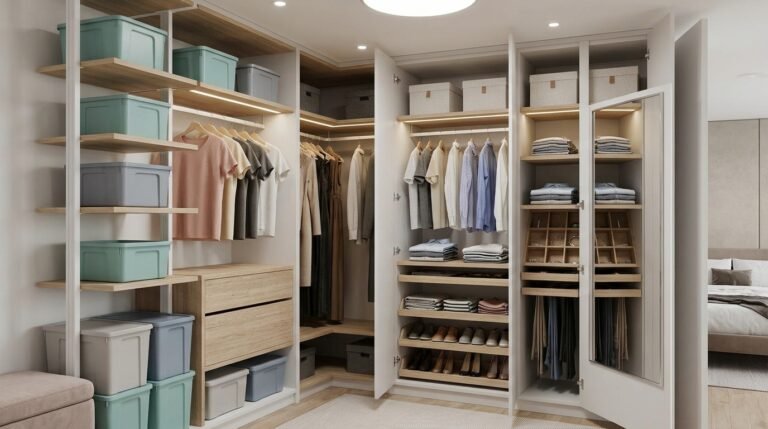
- Closet organizer systems bring rods, shelves, and drawers together in a single unit. Because the parts can be moved around, the setup is easy to adjust whenever your clothing needs shift.
- Closet cabinets keep everything out of sight behind closed doors and give the room a finished, upscale feel. The price is higher, but they suit people who like a clean look or share a bedroom. If your closet is part of a shared space, these bedroom design tips can help you plan the layout of the entire room.
- Closet organizer shelves give you more storage without a big investment. Look for an empty stretch of wall, add a few shelves at different heights, and you have a new home for folded knits, bins, and seasonal items.
- Closet racks, over-the-door hooks, and compact shoe stands can add storage without requiring a full closet renovation.
Organizing a Clothing Closet by Category
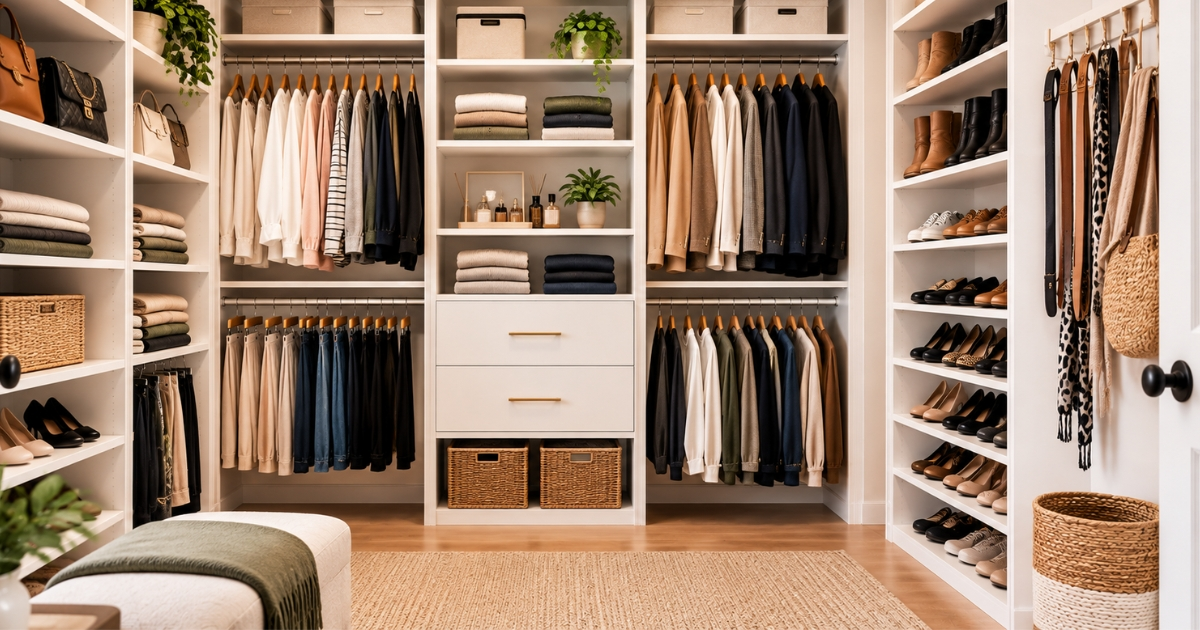
Finding the best way to organize a closet starts with giving every type of clothing its own spot. When all your tops, bottoms, and dresses live in separate sections, finding the right piece takes far less time. When similar pieces sit side by side, you can see your options in seconds, and you notice right away if you own too many of one thing.

Within each category, arrange by color or by sleeve length. This small step makes mornings faster and helps you build outfits without pulling everything out.Consider how frequently you wear each type of clothing. Keep your everyday favorites at an easy-to-reach height, while seasonal items, formal outfits, and clothes you rarely use can be placed on upper shelves or in lower storage areas.
Follow the one-in, one-out rule to prevent clutter from returning. Whenever you bring a new clothing item home, consider donating or removing one you no longer wear. Review your wardrobe every three to six months to keep your collection manageable.
Know What to Fold and What to Hang
Hanging every item is a common closet mistake. Bulky knits can lose their shape on hangers, while fabrics that crease easily look worse when folded. Fold sweaters, tees, denim, and activewear. Hang blouses, dress shirts, dresses, skirts, and tailored jackets.
Using matching slim hangers keeps the rod looking neat and gives you more room for each garment. If you do not have shelves for folded items, a closet shelf organizer or a set of shallow drawers can fill the gap quickly.
For folded clothes, arrange T-shirts and sweaters vertically inside drawers instead of stacking them in tall piles. This makes each item easier to see and access. Non-slip pants hangers can also keep trousers organized while making better use of hanging space.
Handle Shoes Without Losing Floor Space
Shoes can take over a closet floor in no time. Tiered shoe racks, shelf inserts, and over the door holders all help you store pairs vertically instead of spreading them out.
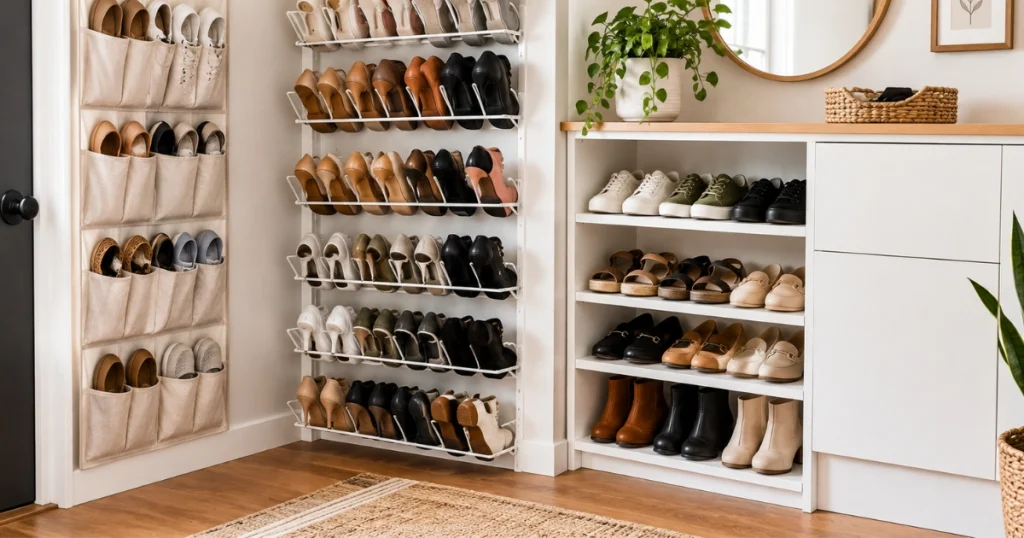
Keep the shoes you wear weekly at the front, and move special occasion pairs to the back or a higher shelf. Clear boxes work well for shoes you want to protect but still want to see.
Tips for Shared and Kids Closets
If you share a closet with a partner, divide the space by side or by shelf so each person has a clear area. For children, lower the hanging rod and place bins at their height so they can put things away on their own. Adjustable closet organizer systems are especially useful here because you can raise rods and shelves as kids grow.
Organization for Small Closet Spaces
Small closets can work beautifully with a bit of planning. When you organize a closet, focus on using every inch efficiently rather than adding more stuff. Install a second rod below the first for shorter garments like shirts and folded trousers. Use the back of the door for hooks, pockets, or a narrow rack. Choose slim hangers to gain extra hanging room.
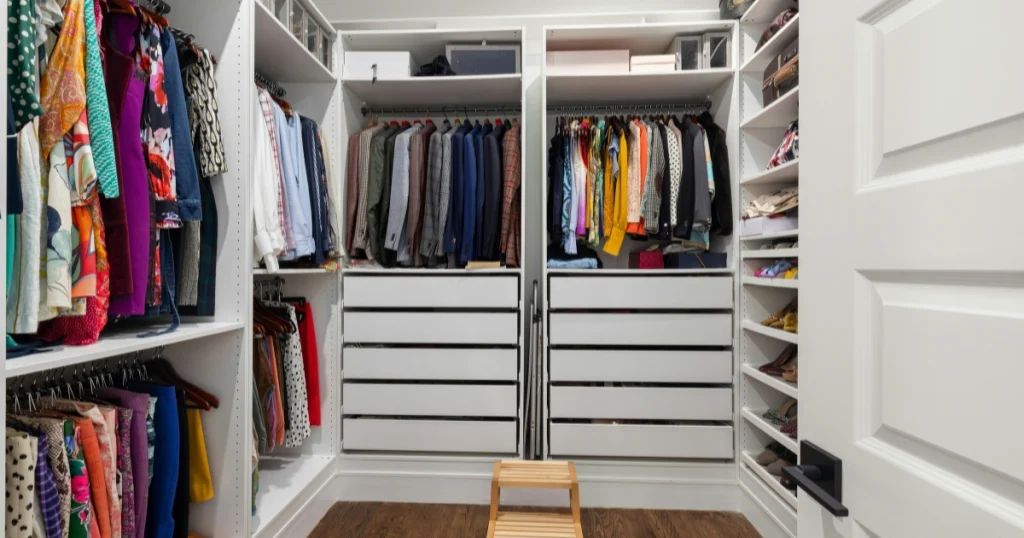
Store off season clothing in labeled bins on the top shelf so that only current clothes stay in easy reach. When organizing small closet spaces, keep the floor as clear as possible. A visible floor makes the whole closet feel larger and easier to move around in.
Smart Closet Storage for Small Items
Belts, scarves, jewelry, hair accessories, and similar items tend to scatter. Give them a defined home using drawer dividers, small baskets, or stackable bins. Clear containers let you see what is inside, and simple labels keep everyone in the house on the same page.
Keep everyday accessories in the top drawers or baskets for quick access. Store special-occasion jewelry, seasonal scarves, and items you rarely use in separate compartments to keep everything neat and easy to find.
Matching felt hangers, drawer dividers, and consistent storage bins can give your closet a neat appearance. Use drawer dividers to separate smaller clothing items and accessories, but avoid adding too many organizers that take up valuable space.
Improve the Lighting
Poor lighting makes even a tidy closet hard to use. Battery powered LED strips or small stick on lights are easy to install and need no wiring. Brighter light helps you match colors correctly and spot items on high shelves.
Closet Organizing Ideas That Make Maintenance Easy
An organized closet only stays that way if you follow simple closet organization tips that make it easy to maintain. A few habits go a long way. Give every category a clear zone so that putting things away takes seconds. Keep a donation bag in the closet and drop in anything you decide you no longer want.
Review your wardrobe at the change of each season, and adjust shelves or rods when your needs change. If you find yourself running out of space again, resist the urge to buy more storage right away. Edit first, then decide whether you truly need another closet organizer.
Set aside 20 minutes each week to return misplaced items, straighten shelves, and check for clothes you no longer wear. Small, regular adjustments can prevent clutter from building up and reduce the need for another major closet cleanout.
Final Thoughts
Learning how to organize a closet is less about perfection and more about creating a system that works for your daily routine. Start by sorting, measure your space, pick a closet solution that fits your budget, and group clothing in a way that makes sense to you. With the right closet storage and a little regular upkeep, your closet can become one of the easiest parts of your home to enjoy.
Frequently Asked Questions
What Is the First Step in Organizing a Closet?
Start by taking everything out of your closet and sorting items into keep, donate, and discard piles. This helps you understand what you need to store before planning your closet layout.
How Often Should I Reorganize My Closet?
Review your closet at the start of each season to remove unused items and keep everything organized. A deeper clean once a year can help prevent clutter from building up.
What Is the Best Closet Organization Solution on a Budget?
You don’t need expensive storage systems to keep your closet tidy. Use matching hangers, inexpensive storage bins, and simple shelf dividers to arrange clothes neatly and make better use of the space you already have.
Are Closet Organization Systems Worth the Cost?
Closet organization systems can be worth the investment if you need customized storage or share a closet. For smaller spaces or basic storage needs, individual organizers may be a more affordable option.