
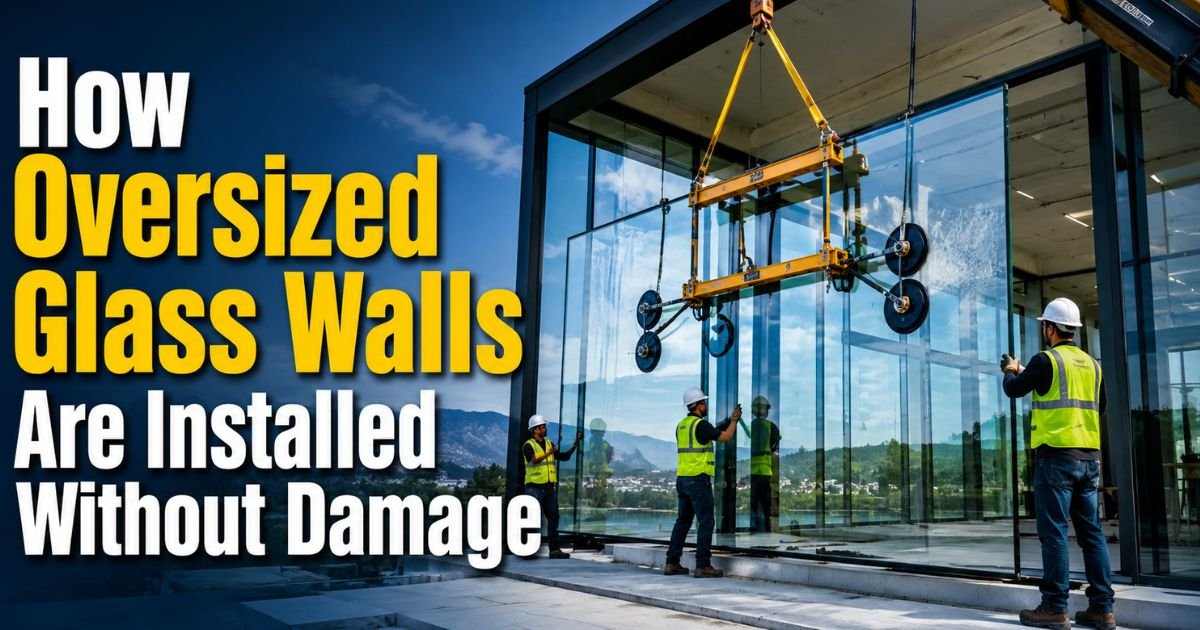
How Oversized Glass Walls Are Installed Safely
Oversized Glass Walls have become a defining feature of modern architecture, bringing more light and openness to commercial and residential spaces. Large glass panels can weigh hundreds or even thousands of pounds, making careful handling essential to prevent damage during installation.
Why Installing Oversized Glass Walls Is So Difficult
Oversized Glass Installation requires careful handling because of the glass’s weight and fragility. Due to these extreme dimensions, using specialized suction lifters and cranes is crucial during the movement. Even small mistakes can lead to damage, making skilled professionals essential. Weather conditions like wind and temperature also affect Oversized Glass Installation, so proper planning and advanced equipment help ensure a safe and precise process. Ultimately, prioritizing these precautions guarantees long-term durability and structural integrity.
Preparing the Site Before Glass Wall Installation
Confirm the Opening and Layout
Before installing a glass wall system, confirm the opening dimensions, wall conditions, and intended panel layout against the project plans and product requirements. Identify any uneven surfaces or obstructions that could affect placement, and resolve discrepancies before installation begins.
Prepare the Work Area
Clear the installation area of furniture, debris, and other obstacles so installers can access the opening and handle glass safely. Protect nearby finishes as needed, and make sure the route for bringing large glass panels to the work area is accessible. Follow the manufacturer’s handling and storage instructions for the specific product.
Coordinate Exterior Work
For exterior glass wall installation, coordinate site access and any related work with the project team before the panels arrive. Confirm that the opening and surrounding construction are ready for the system, and check project-specific requirements with the installer or manufacturer. Once the site is prepared, installation can proceed with fewer avoidable interruptions.
The Rigging Tools That Make It Possible
Key Rigging Tools Shown Above:
- Wire Rope Slings: Used for creating secure, heavy-duty connections between the crane and the load.
- Shackles (D-Shackles & Bow Shackles): The essential U-shaped metal connectors used to link slings, chains, and lifting points together safely.
- Webbing Slings (Polyester Belts): The green and yellow synthetic straps used for lifting delicate or finished materials (like oversized glass) without scratching the surface.
- Turnbuckles: Adjustable rigging hardware used to tension, align, and balance the length of the rigging lines.
- Pulley Blocks (Snatch Blocks): Heavy-duty pulleys used to redirect the path of wire ropes and reduce the force required to lift heavy loads.
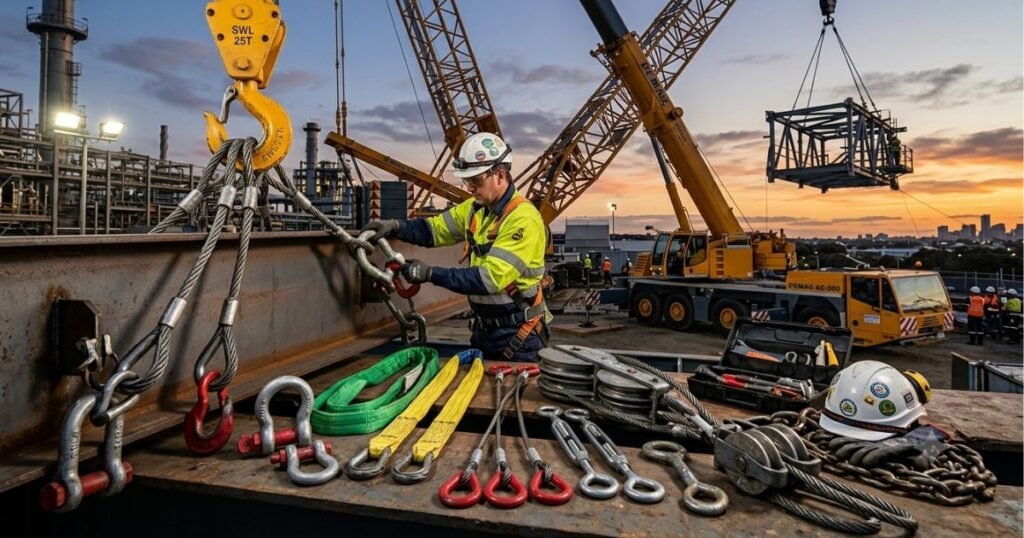
The tools at our disposal can mean the difference between a successful installation of Oversized Glass Walls and a logistical nightmare. The advent of advanced technology has revolutionized how installation riggers approach their craft. Software that simulates load distribution and movement when handling heavy Oversized Glass Walls has emerged as a game-changer, allowing professionals to visualize complex setups before execution.
The rising trend of modular rigging systems is transforming the industry. These adaptable tools afford riggers the flexibility to quickly modify their setups for structural glass projects of any scale. As rigging evolves, integrating smart sensors and IoT technology further enhances reliability during heavy glass handling, making once daunting projects entirely feasible.
How Are Large Glass Panels Lifted Into Position?
Large glass panels are lifted into position with equipment selected for the panel’s size, weight, shape, and installation location. Depending on the job, a crew may use a crane, a glass-lifting machine, or other material-handling equipment fitted with vacuum cups. The cups create a seal against the glass so the panel can be supported and guided without gripping its edges.
Before the lift, the crew plans the route, confirms that the lifting equipment and attachment are suitable, and clears the work area. Workers then raise and maneuver the panel slowly, using tag lines or hand signals when appropriate to help control movement. At the opening, installers align the panel with its frame or supports and secure it according to the project specifications. The method and equipment vary by site, so the lift should be planned and carried out by qualified professionals.
The Installation Sequence
The installation sequence requires precision and careful timing, with each movement planned to ensure seamless integration. It begins by identifying potential challenges before any equipment touches the ground. This initial evaluation guides the installation process and helps address issues that could affect progress later on.
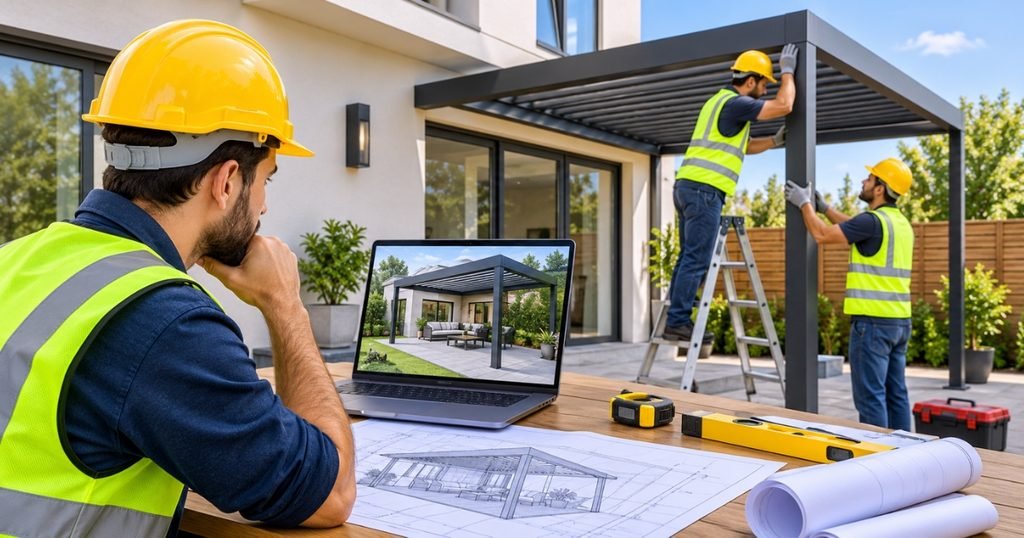
These steps set the stage for everything that follows, with each task depending on the one before it. One missed detail can affect the entire project. By employing advanced technologies like 3D modeling and virtual simulations, teams can visualize the final outcome even before the first screw is tightened, enhancing accuracy and building confidence.
How Glass Panels Are Secured to the Building Structure
Glass panels are secured to a building through a framing or attachment system designed to transfer their weight and other loads to the structure. Depending on the façade design, panels may sit within metal framing or connect at designated points using hardware. The connection details vary by system and must be coordinated with the building structure.
Proper installation depends on following the project’s approved details, including the specified supports, clearances, and sealants. These connections help keep panels in position while accommodating movement between the glass assembly and the building. From there, the surrounding joints complete the enclosure.
Safety Measures During Oversized Glass Installation
When installing oversized glass, safety should always be the highest priority to avoid accidents and injuries. Using specialized tools and equipment, such as suction cups and glass-handling devices, is essential for safe and secure handling. These tools provide a stronger grip, improve control, and enable precise positioning, reducing the risk of slips, breakage, or injury.
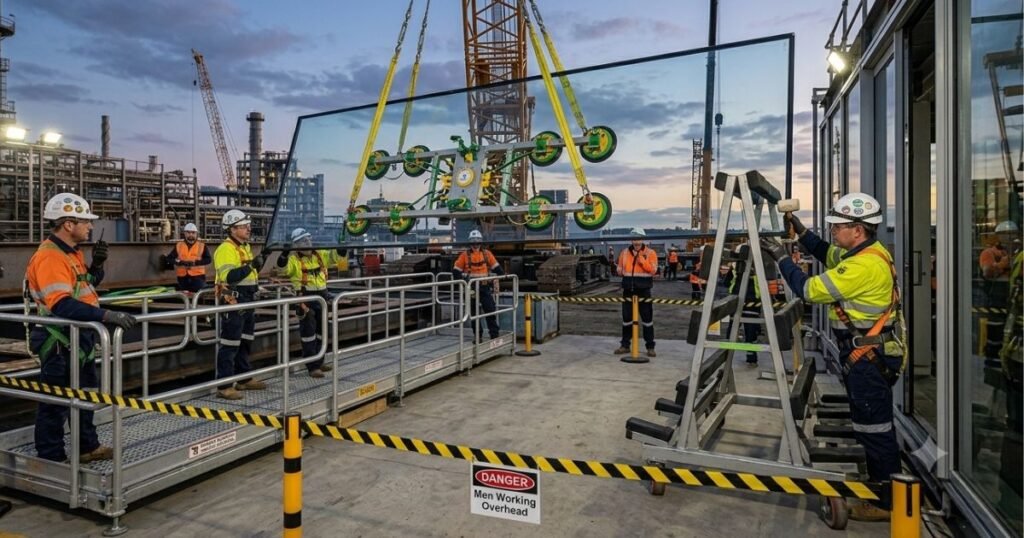
Keeping the installation area free of clutter and potential hazards significantly reduces the likelihood of accidents. Workers should also wear appropriate personal protective equipment (PPE), including gloves, hard hats, and safety footwear, especially when working in confined or challenging conditions.
Establishing a clear communication system, in which workers announce movements, hazards, or changes in positioning, promotes coordination and awareness. This collaborative approach helps prevent accidents and improves efficiency.
How Installers Prevent Cracks and Scratches During Installation
Installers help prevent cracks and scratches by handling each glass panel carefully from delivery through placement. They inspect the glass for visible damage, keep each panel supported during lifting, and avoid dragging it across floors, counters, or other hard surfaces. A clean, clear work area also reduces the risk of grit or tools scratching the glass.
During installation, installers use suitable protective pads and tools, follow the glass handling requirements, and avoid forcing panels into place. Similar care is also important during frameless glass door installation, where proper alignment and careful handling help prevent damage. They check alignment before securing each panel, since correcting a poor fit after installation can cause damage. Once the work is complete, a final inspection can catch marks or chips before the area is handed back.
Common Challenges When Installing Large Glass Walls
Installing a large glass wall takes more than careful placement. The opening must be measured accurately, and the surrounding structure must be able to support the system. Because oversized panels are heavy and difficult to maneuver, installers also need a clear access route and suitable equipment before delivery.
Alignment and weatherproofing add another layer of complexity: small fit issues can affect how panels meet, doors operate, and seals perform. Coordinate measurements, structural preparation, delivery, and installation early, and confirm project-specific requirements with the glass supplier and contractor.
Planning glass features early in custom home construction helps coordinate structural support, measurements, and installation requirements.
Why Precision Matters More Than Strength
Precision plays an important role in oversized glass installation because even small measurement or alignment errors can affect the final result. Installers must carefully calculate panel dimensions, check positioning, and ensure that each piece fits its designated opening. Relying on strength alone is not enough when handling heavy and fragile glass.
Careful positioning and accurate measurements help prevent unnecessary pressure on the panels during installation. By focusing on alignment, balance, and proper support, professionals can reduce the risk of cracks, breakage, and fitting problems while achieving a secure and consistent finish.
Benefits of Professional Oversized Glass Installation
One of the most compelling advantages is the enhancement of natural light within a space. With larger panes, you can create an inviting atmosphere that significantly reduces the need for artificial lighting during the day, leading to energy savings and improved mood.
High-quality glass also provides superior insulation, ensuring that your home remains comfortable year-round while minimizing energy costs. Large glass panels can also support modern interior design ideas by allowing natural light to reach deeper into living spaces.
Conclusion
By utilizing methods like proper sealing and structural support, installers can minimize the risk of damage throughout the process. Investing in high-quality materials and technologies will lead to a more durable and visually appealing outcome. Awareness of possible issues, such as environmental factors and weight distribution, is essential for a seamless installation.