
The Ultimate House Cleaning Schedule
When it comes to maintaining a clean and organized home, a well-structured house cleaning schedule can make your routine more manageable. Following simple cleaning tips and dividing tasks into daily, weekly, and monthly sections can help you keep your home tidy without feeling overwhelmed.
Daily tasks include wiping countertops and tidying living spaces, while weekly chores involve vacuuming, dusting, and scrubbing bathrooms. Monthly deep cleaning, such as washing windows and organizing closets, helps prevent dirt buildup and keeps your home in good condition.
A simple house cleaning checklist can help you keep track of daily chores, weekly tasks, and deeper cleaning jobs without feeling overwhelmed.
Cleaning Schedule for Home
When hiring a house cleaner, providing a detailed checklist helps ensure important tasks are not overlooked. Start with dusting surfaces, including ceiling fans, blinds, and electronics that require gentle handling. Focus on busy spaces like hallways and living rooms, where dirt builds up quickly.
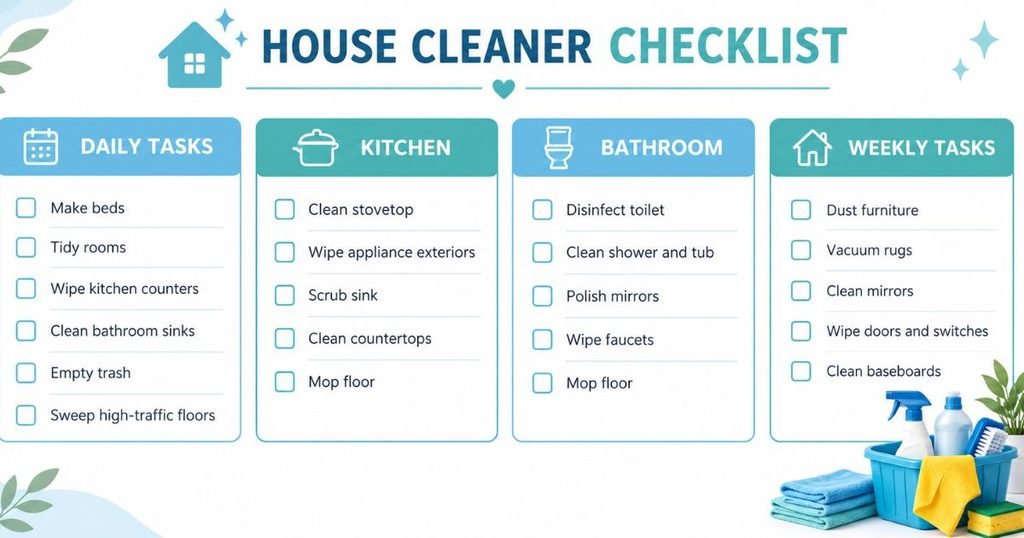
In the kitchen, prioritize appliances, countertops, and sinks. For bathrooms, include mold removal and disinfecting appropriate surfaces. Other essential tasks include vacuuming carpets, mopping floors, and changing linens.
How Often Should You Clean Your House
How often to clean your house depends on how many people live there, whether you have pets, and which rooms get the most use. As a starting point, wipe kitchen counters and wash dishes daily, tidy high traffic areas as needed, and clean bathroom sinks and toilets at least once a week. Vacuum or sweep busy floors weekly, and change bed linens about once a week. Adjust the routine when messes build up or certain areas need attention sooner.
Plan a deep clean every few months, or spread deeper tasks across the year to make them easier to manage. This can include cleaning inside appliances, washing windows, dusting less accessible surfaces, and clearing out closets. A simple weekly checklist can help you decide how often to clean house without trying to do everything in one day. Start with the tasks that affect comfort and hygiene, then fit occasional jobs into your schedule.
What Is Your Cleaning Schedule?
Before cleaning, declutter storage spaces and remove items you no longer need. Donating unused belongings and using vertical storage or clear bins can help you make better use of available space.
1. Start by Picking Up
- Clear clutter from surfaces.
- Return misplaced items to their designated places.
- Set aside unwanted belongings for donation.
2. Work From the Top Down
- Dust ceiling fans and light fixtures first.
- Clean wall hangings and artwork before moving to lower surfaces.
- Start with higher surfaces so falling dust can be removed when you clean the lower areas.
3. Prioritize the Kitchen and Bathroom
- Wipe kitchen counters and other food preparation surfaces.
- Clean bathroom faucets, toilet handles, and other frequently touched areas.
- Choose suitable cleaning products for each surface.
4. Sweep or Vacuum the Floors
- Remove dust and debris from floors.
- Clean corners and areas beneath furniture.
5. Mop and Finish with Details
- Mop hard floors with a suitable cleaning solution.
- Put away small items such as magazines, cords, and pillows.
6. Disinfect Where Needed
- Focus on frequently touched surfaces, including doorknobs and light switches.
- Use EPA registered disinfectants when appropriate and follow label instructions.
- Keep the cleaner on the surface for the length of time stated on its label before wiping it away.
7. Create a Regular Cleaning Routine
- Review your cleaning results and adjust your routine when needed.
- Set a consistent schedule to manage household chores.
- Involve family members to share responsibilities.
The best cleaning schedule is one that fits your daily routine, household needs, and available time, making it easier to keep every room clean and organized.
Daily House Cleaning Schedule
These quick tasks help keep your home tidy throughout the day. During meal preparation, wash pots and pans when possible, then clear the table and clean the kitchen after eating.
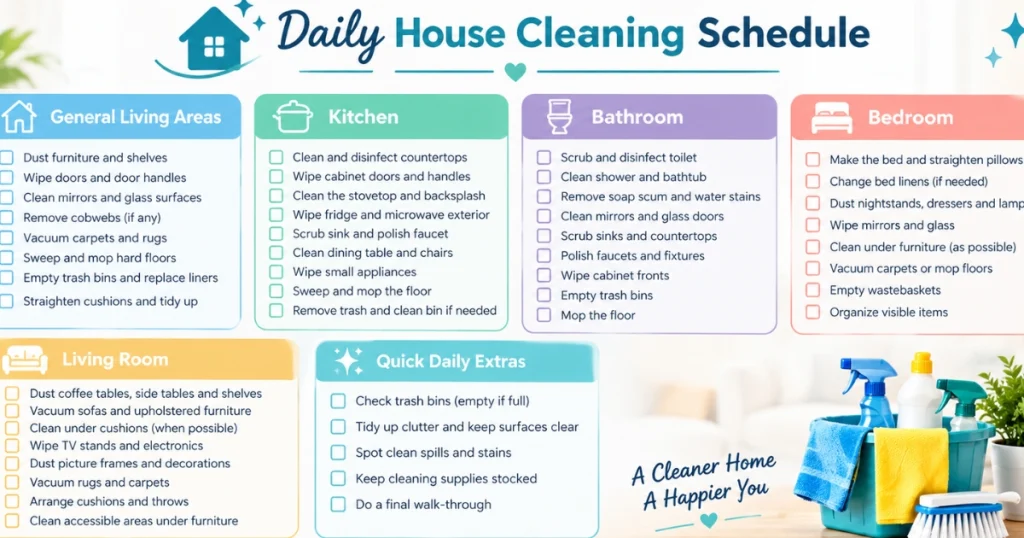
In the evening, spend a few minutes sorting mail, returning misplaced items, and clearing clutter from kitchen counters or coffee tables. Keep laundry manageable by organizing supplies and washing smaller loads regularly instead of allowing clothes to pile up.
Cleaning Small Kitchen Appliances After Use
Small kitchen appliances can collect food residue, grease, and crumbs during everyday cooking. Clean the air fryer basket after it has cooled, following the manufacturer’s instructions, and wipe away grease from the exterior.
If you use a coffee maker or Keurig regularly, empty used coffee grounds, wash removable parts, and wipe the outside to prevent residue from building up. Allow all parts to dry before putting them back together.
Weekly Cleaning Schedule
A weekly house cleaning schedule helps you divide household chores across different days. For example, you can focus on the kitchen early in the week and save the weekend for dusting furniture or washing bed linens.
In the kitchen, remove expired food from the refrigerator, wipe its shelves, and organize leftovers in containers. In the bathroom, scrub toilets with a suitable cleaner and polish mirrors to remove streaks. Run a dishwasher cleaning cycle according to the manufacturer’s instructions to help remove grease buildup. Wash towels regularly to keep them fresh.
Clean the Inside of Your Microwave
Food splashes and spills can quickly collect inside a microwave, leaving stains and unpleasant odors. Remove the turntable and wash it with warm, soapy water. Wipe the interior walls and door with a soft cloth and a suitable kitchen cleaner. Pay attention to dried food around the corners and door edges. Dry all surfaces before using the appliance again.
Clean and Maintain Kitchen Sponges
Kitchen sponges can hold food particles and develop unpleasant odors when they remain damp. Rinse them thoroughly after use, squeeze out excess water, and allow them to dry in an open area. Replace sponges regularly, especially when they develop a smell, discoloration, or signs of wear. If the manufacturer says a sponge is dishwasher-safe, you can follow its cleaning instructions.
Monthly Cleaning Schedule
Use your monthly cleaning routine to tackle areas that are often missed during regular chores. Remove dust from fan blades, light fittings, and baseboards, then clean rugs and furniture fabrics when necessary.
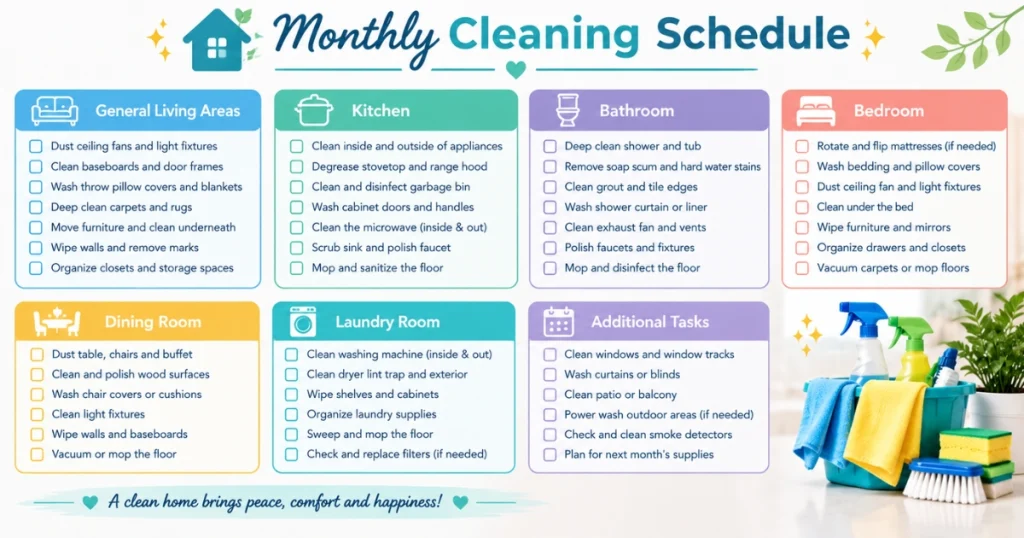
You can also organize seasonal wardrobes, refresh storage spaces, and clean wooden furniture with a suitable product. Use a microfiber cloth to remove dirt without scratching delicate finishes.
Clean Your Vacuum Cleaner
A vacuum cleaner needs regular maintenance to remove trapped dust, hair, and debris. Empty the dust container or replace the bag when it reaches the recommended level. Check the brush roll for tangled hair and threads, and remove them carefully according to the manufacturer’s instructions.
Wash or replace filters only as directed in the user manual. These simple steps help maintain proper suction and keep your vacuum ready for regular household cleaning.
Bathroom Cleaning
A shower scrub brush helps remove soap scum and grime from corners and other hard to reach areas. Pair it with a suitable bathroom cleaner to tackle buildup effectively.
When cleaning a bathroom, work from top to bottom. Start with mirrors and fixtures, then clean faucets, shower surfaces, and other areas that collect residue.
Choose products designed to remove mold, mildew, and soap scum without damaging your bathroom surfaces. Vinegar may help dissolve certain mineral deposits, while baking soda can assist with mild scrubbing. Use each cleaning product separately, and never combine bleach with vinegar or other cleaners, as dangerous fumes may form.
Regular bathroom cleaning helps prevent mold, mildew, and soap scum while keeping your bathroom fresh and hygienic.
Kitchen Cleaning Tips
Keeping your kitchen clean and organized also means making good use of the available space. Explore these unique kitchen ideas for small spaces to find practical ways to improve storage, reduce clutter, and keep countertops clear.
- Daily, Weekly, and Monthly Cleaning Tasks Wipe countertops and load the dishwasher daily. Set aside time each week to scrub floors and organize the pantry. During monthly cleaning, move appliances when safe to do so and check the refrigerator for expired food.
- Choosing the Right Cleaning Products Select kitchen cleaning sprays and liquids that suit your surfaces. Multi surface cleaners can help remove everyday grime from compatible countertops and stovetops. Always follow product instructions and avoid using cleaners that may damage a particular material.
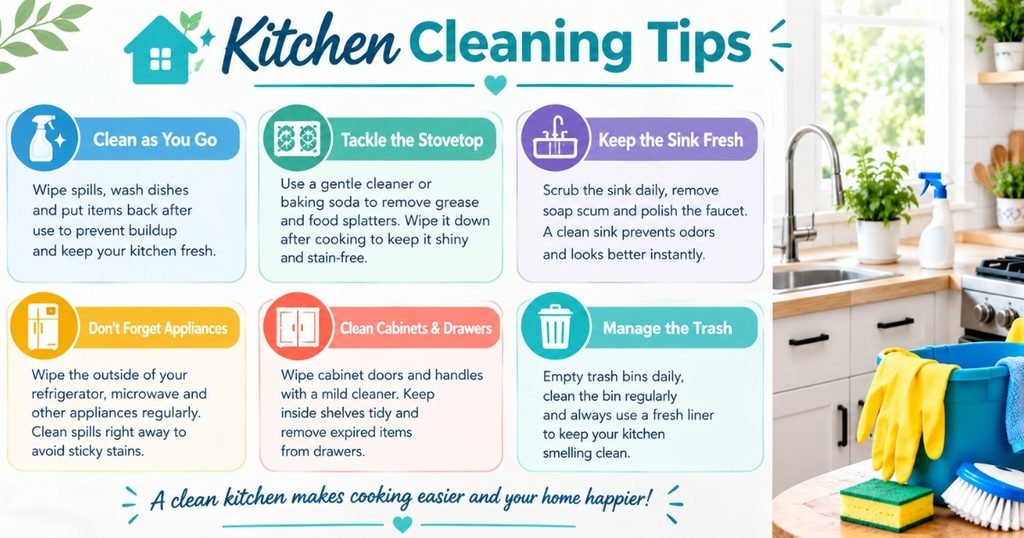
- Essential Kitchen Cleaning Tools Use microfiber cloths for dusting and wiping surfaces, and absorbent cotton cloths for spills. Keep separate cloths for different areas to reduce cross contamination. A suitable kitchen sponge can help remove stubborn food residue without scratching delicate surfaces.
Follow these 7 steps in cleaning the kitchen:
- Gather Supplies: Collect the necessary cleaning products and tools.
- Declutter Surfaces: Remove unnecessary items from countertops and tables.
- Dust and Wipe Down: Clean cabinets, shelves, and other surfaces.
- Clean Appliances: Wipe appliance exteriors and clean interiors as needed.
- Scrub the Sink: Remove food particles and clean the sink thoroughly.
- Mop the Floor: Sweep and mop to remove dirt and stains.
- Take Out the Trash: Empty the bin and replace the liner.
How to Clean Range Hood Filter
To clean a range hood filter, first remove it according to the hood’s instructions. Check whether the filter is dishwasher safe; if so, follow the manufacturer’s care guidance. Otherwise, place it in a sink or basin and cover it with hot water and a small amount of dish soap.
Let the filter soak to loosen grease, then gently scrub both sides with a nonabrasive brush. Rinse thoroughly and let it dry completely before reinstalling it. Cleaning the range hood filter regularly helps keep grease from building up, though the recommended schedule depends on the hood and how often you cook.
Living Room Cleaning Checklist
Keep pillows and cushions fresh by fluffing and rotating them regularly. Vacuum upholstery or spot clean it when needed to remove dust and dirt.
Use a microfiber cloth to dust the TV screen according to the manufacturer’s instructions, along with nearby shelves and media stands. Wipe walls when marks appear, and keep decorative surfaces organized to prevent clutter.
Refresh the room by washing cushion covers and throw blankets as needed. These simple tasks help maintain a neat and comfortable living space.
Laundry Room
Keep your laundry room organized by removing unnecessary items and storing supplies in labeled bins or baskets. A tiered shelf can provide extra storage for detergent bottles and fabric softeners.
Wipe down the washing machine and dryer regularly, and clean the lint trap after every load. Check and maintain the dryer vent according to the manufacturer’s instructions to support proper airflow and reduce fire risks. For general surface cleaning, use a suitable cleaner and follow the appliance care instructions. Store laundry products safely and keep the area dry to maintain a clean, functional workspace.
Cleaning Tasks to Complete Every 3–6 Months
Every few months, make time for cleaning jobs that need more than a weekly wipe down. These periodic tasks help you refresh items and areas that may be missed during routine cleaning. Follow the care instructions for each item, especially when using a washing machine or cleaning product.
Wash Bed Pillows
Check each pillow’s care label before washing, since cleaning methods vary by fill. If it is machine washable, use the settings and drying instructions on the label, and make sure it is fully dry before putting it back on the bed.
Wash Shower Curtain Liners
Look at the liner’s care instructions to confirm whether it can go in the washing machine. If so, follow the recommended settings, then hang it to dry as directed. Replace the liner if it is damaged or cannot be cleaned according to its care guidance.
Deep Clean the Inside of Your Oven
Remove racks and loose debris before cleaning the oven interior. Use the oven’s cleaning feature or a suitable cleaner according to the manufacturer’s instructions, and let the oven cool completely before you begin. Regular attention to these less frequent tasks makes it easier to keep household cleaning on track.
Seasonal Home Cleaning Checklist
Seasonal cleaning helps you take care of areas that often get missed during regular chores. By spreading these tasks throughout the year, you can keep your home fresh, organized, and ready for changing weather.
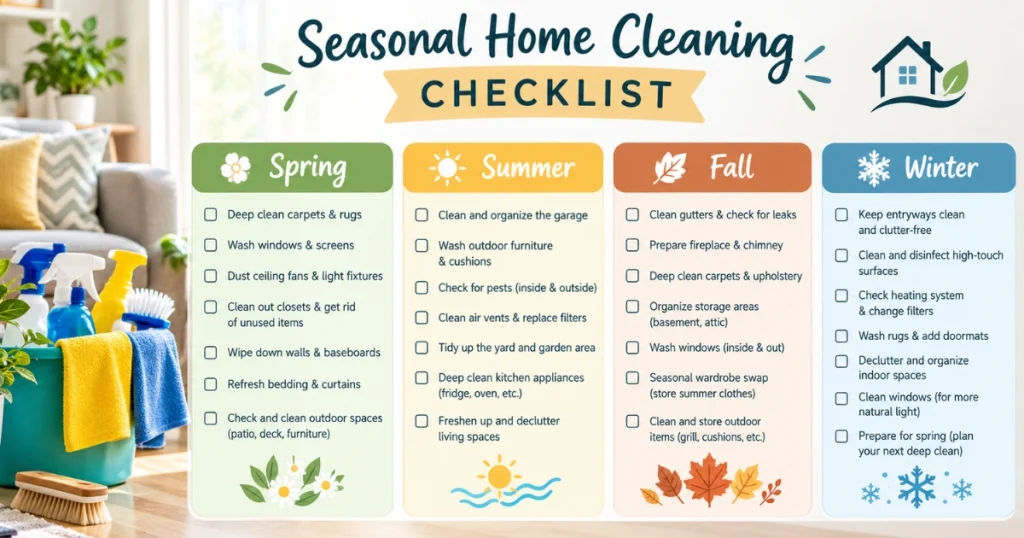
Spring: Freshen Up Your Home
- Windows and Screens: Wash window glass, clean the tracks, and check screens for small holes or damage. Repairing them can help keep insects outside.
- Ceilings and Light Fixtures: Use an extendable duster to remove cobwebs from ceiling corners, clean light fixtures, and clear dust from fan blades.
- Refrigerator and Pantry: Clean accessible areas behind the refrigerator if it is safe to move. Check the manufacturer’s instructions before cleaning the coils, and remove expired food from cabinets and shelves.
- Curtains and Soft Furnishings: Wash curtains according to their care labels, wipe down blinds, and freshen decorative pillows. Check whether bulky cushions need special cleaning.
Summer: Maintain Your Home and Outdoor Spaces
- Air Filters and Vents: Inspect your air conditioning filters and replace them as recommended. Vacuum dust from removable vent covers to improve cleanliness around your home.
- Decks and Patios: Sweep outdoor surfaces and wash away dirt, stains, and mildew using a suitable cleaning method. Choose pressure-washing settings that will not damage wood, siding, or other materials.
- Grill Cleaning: Once the grill has cooled completely, clean the cooking grates and empty the grease tray. Follow the manufacturer’s guidance to reduce grease buildup and lower the risk of flare-ups.
Fall: Get Ready for Cooler Weather
- Gutters and Downspouts: Remove leaves, twigs, and other debris so rainwater can drain properly. Use a professional service if the gutters are difficult or unsafe to reach.
- Smoke and Carbon Monoxide Alarms: Test both types of alarms and check their batteries and expiration dates. Replace units according to the manufacturer’s instructions.
- Entryway Organization: Put away summer accessories, sort shoes, and make room for jackets, umbrellas, and wet-weather footwear. Keep a mat near the door to catch mud and moisture.
- Mattress and Bedding Care: Vacuum the mattress surface and box spring, if applicable, and wash mattress protectors. Rotate the mattress only if the manufacturer recommends it; many modern mattresses should not be flipped.
Winter: Clean and Organize Indoor Spaces
- Frequently Touched Surfaces: Wipe doorknobs, light switches, remote controls, keyboards, and other commonly handled objects. Use a cleaner suitable for each surface and follow its label.
- Drawers and Closets: Sort through crowded drawers, remove unnecessary belongings, and set aside wearable clothing for donation. Keep everyday essentials within easy reach.
- Wood Furniture and Cabinets: Remove dust with a soft cloth and use a suitable wood-care product when needed. Avoid applying polish or conditioner to finishes that do not require it.
- Carpets and Upholstery: Vacuum busy areas, clean rugs according to their care instructions, and treat upholstery stains with an appropriate product. Arrange professional cleaning when fabrics need extra attention.
Best Practices for Seasonal Cleaning
A few simple habits can make seasonal chores easier to manage and help prevent unnecessary work.
- Clean from Top to Bottom: Start with ceiling corners, shelves, and light fixtures before moving to furniture and floors. This allows falling dust to be removed during the final steps.
- Follow the One-In, One-Out Rule: When bringing a new item home, consider donating or discarding an older item you no longer need. This habit helps prevent clutter from building up.
- Set a 30-Minute Timer: Divide larger projects into short sessions instead of trying to finish everything at once. Focus on one room or task at a time to make steady progress.
- Keep Supplies Ready: Store basic cleaning products, microfiber cloths, gloves, and suitable brushes together. Having essential tools nearby makes it easier to start each job.
- Create a Seasonal Schedule: Write down tasks for each season and add reminders to your calendar. Spread demanding chores across several days so your routine remains manageable.
Final Thoughts on House Cleaning Schedule
A house cleaning schedule helps you keep your home clean, organized, and comfortable throughout the year. By focusing on different tasks each season, you can manage household chores without feeling overwhelmed.
From washing windows in spring to preparing your home for colder weather in fall, a little planning can make a big difference. Follow a routine that suits your needs, tackle one task at a time, and enjoy a fresher living space in every season.