
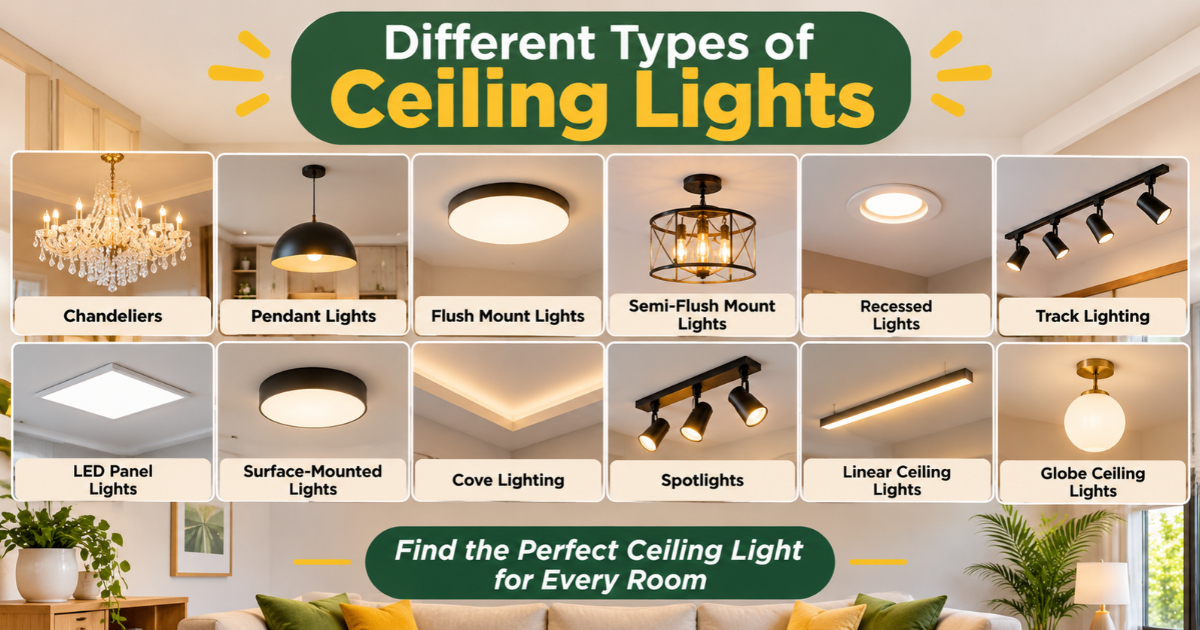
Different Types of Ceiling Lights: Styles and Ideas for Your Home
A ceiling light that leaves corners dim or hangs too low can make a room harder to use and enjoy. This guide explains the main types of ceiling lights, including canned lights, also called ceiling can lights or recessed lights, as well as flush and semi-flush mounts, pendants, chandeliers, track lighting, and ceiling fans with lights.
Learn how each option fits different rooms, ceiling heights, and lighting needs so you can narrow down the right choice for your home.
Types of Ceiling Lights with Names
Ceiling lights come in many styles, shapes, and designs to suit different spaces and lighting needs. Some fixtures provide general room lighting, while others focus light on specific areas or add a decorative touch. Below are some popular ceiling light types, along with their features and common uses, to help you understand which options may work best in your home.
Chandeliers
Chandeliers are decorative ceiling light fixtures that feature multiple arms, branches, or light sources arranged around a central structure. They are commonly used in living rooms, dining rooms, entryways, and rooms with high ceilings. Traditional designs often include crystal details, curved arms, and candle-style bulbs, while modern chandeliers feature geometric shapes, metal frames, glass globes, and simple lines.
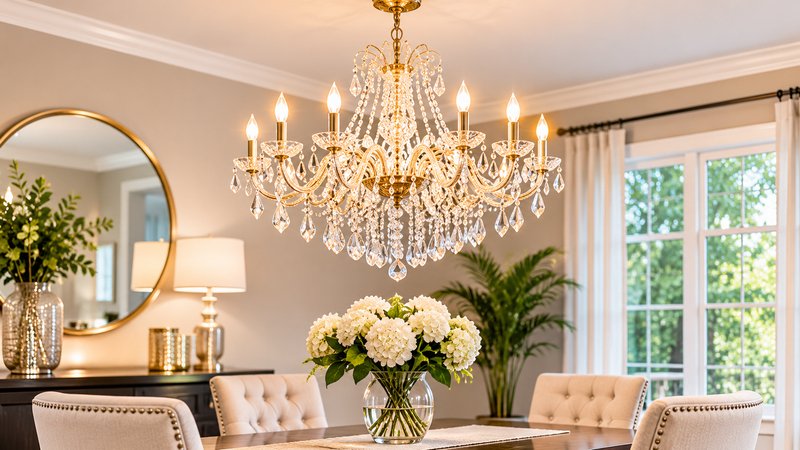
There are several types of chandeliers, including crystal chandeliers, drum chandeliers, globe chandeliers, tiered chandeliers, and linear chandeliers. Crystal styles add sparkle to formal spaces, while linear designs work well above dining tables and kitchen islands. When selecting a chandelier, consider the ceiling height, room size, fixture diameter, and light output to ensure it fits the space.
Pendant Lights
Pendant ceiling lights hang from the ceiling by a cord, chain, or rod, making them a versatile choice for focused or ambient lighting. Use one above a dining table or kitchen island for a defined pool of light, or choose a softer design to add a welcoming glow to a lounge or bedroom.
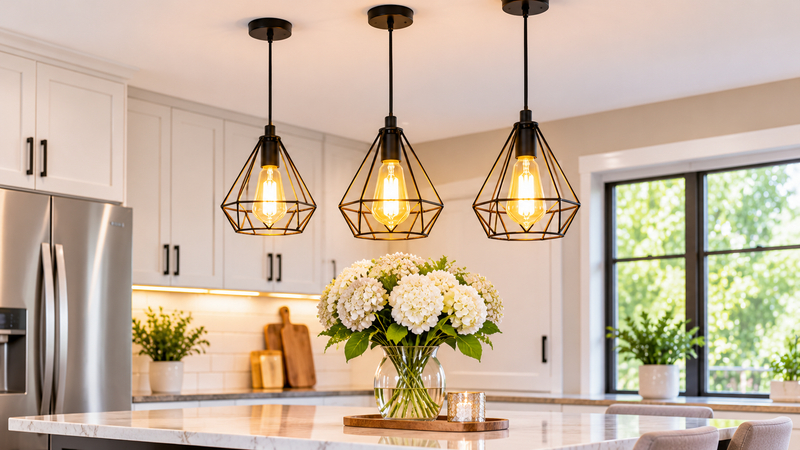
Modern pendant ceiling lights come in a range of shapes and finishes, so consider how the fixture will work with your room’s size and existing decor. For a living room, a pendant can help draw attention to a seating area; in an open-plan space, it can also distinguish one zone from another.
Also Read: Ideas for Adding Elegant Bedroom Pendant Lights to Your Interior
Flush Mount Lights
Flush mount ceiling lights sit close to the ceiling, making them a practical choice for rooms where a hanging fixture could feel in the way. Modern flush mount LED ceiling lights pair that low-profile shape with LED lighting, while small flush mount ceiling lights can suit compact rooms or tighter spaces.
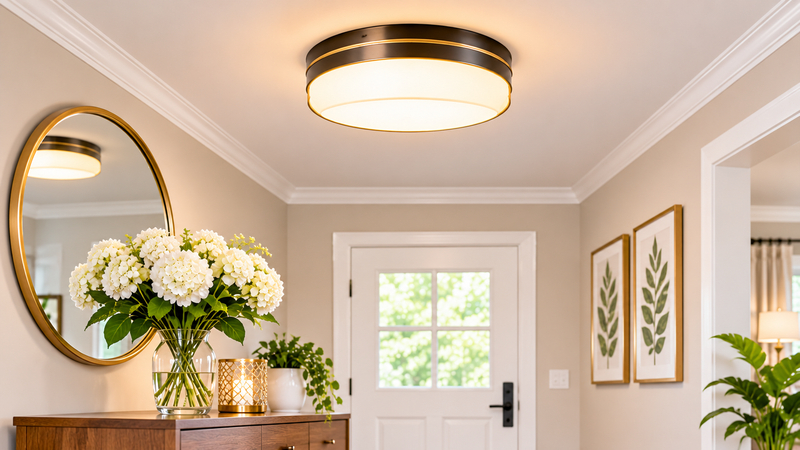
A large flush mount ceiling light offers a broader presence while maintaining that close-to-ceiling design, making it an option when you want the light to feel more substantial without a hanging silhouette.
For flush mount ceiling lights in the kitchen, consider the area you want to illuminate and how the fixture will work with the room’s layout. A compact model may fit a smaller kitchen, while a larger space may call for more than one light. Check the product’s stated brightness, color temperature, and dimming compatibility to find an option that fits your needs.
Semi-Flush Mount Lights
A semi-flush mount light hangs just below the ceiling, with a short stem or gap between the fixture and ceiling. It offers a little more dimension than a flush mount while keeping the light close overhead—useful in rooms where a chandelier or pendant would hang too low. Unique semi-flush mount lighting can also add a focal point without taking up much vertical space.
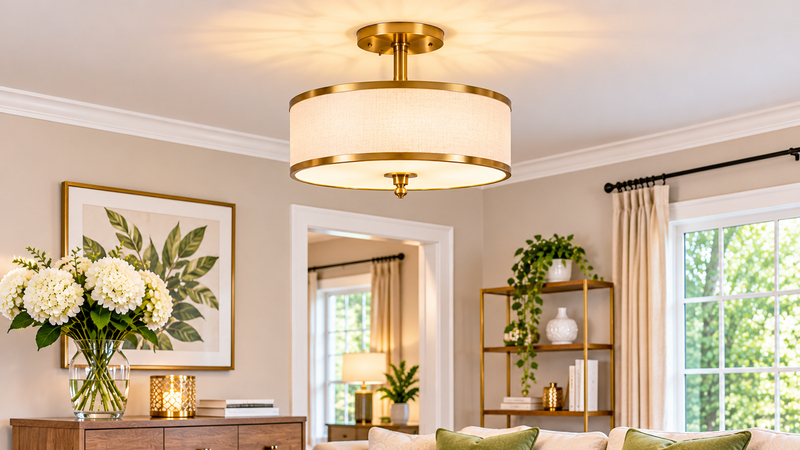
For a wider look, consider a wide semi-flush mount lighting fixture around 13 inches wide. Check its dimensions against the room and nearby walls or cabinets so it feels balanced and has enough clearance. These fixtures come in a variety of styles, finishes, and shades, making it easier to coordinate with your decor or add a distinctive accent.
Recessed Ceiling Lights
Recessed ceiling lights, sometimes called canned lights, sit within the ceiling rather than hanging below it. In a lounge, they can provide general illumination without drawing attention away from the room’s furnishings; in an office, thoughtful placement can help light the work area.
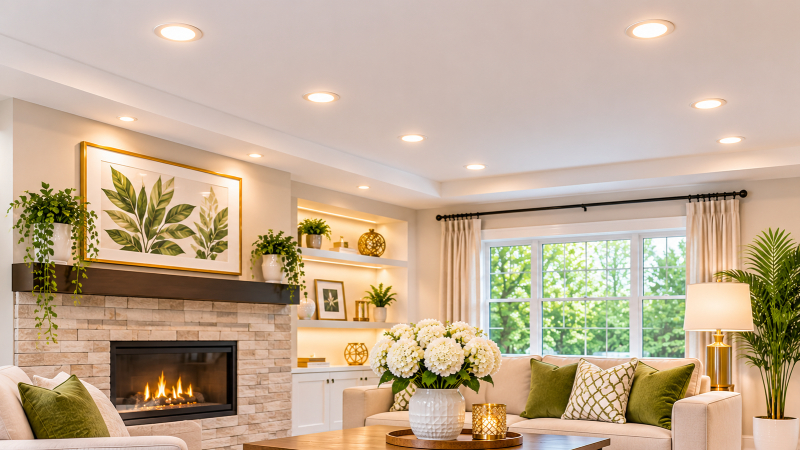
If your project includes gypsum work, plan the ceiling openings and fixture locations as part of that work. For an existing setup, an LED can light replacement may be an option, but check that the replacement is compatible with the existing housing and electrical requirements.
With those details settled, you can select a ceiling recessed light arrangement that fits the room and the renovation. An LED recessed downlight is another option for providing focused or general illumination, depending on its design and placement.
Track Lighting
Magnetic track ceiling lights offer a flexible way to illuminate living rooms, offices, showrooms, and other commercial interiors. Their track-based design makes it easier to arrange lighting around the needs of a space, whether you’re highlighting a display, brightening a work area, or adding focused light to a room.
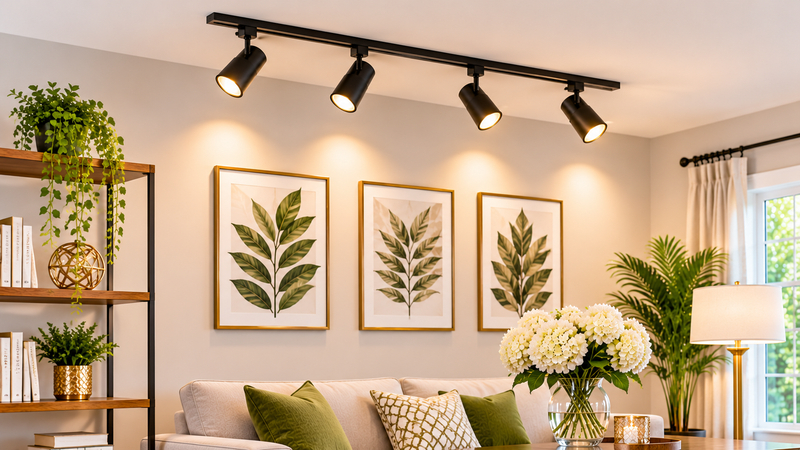
With magnetic track lighting solutions, you can create a cohesive look while tailoring the lighting layout to different zones. Consider how each area is used, then plan the placement to support its purpose. From a welcoming living room to a polished showroom, the right configuration can help bring the space together.
LED Panel Lights
LED panel lights provide a broad, even source of overhead lighting, making them a practical option for spaces that need consistent illumination. Installed as a led ceiling fixture, a panel can create a clean, low-profile look while serving as the main light in ceiling.
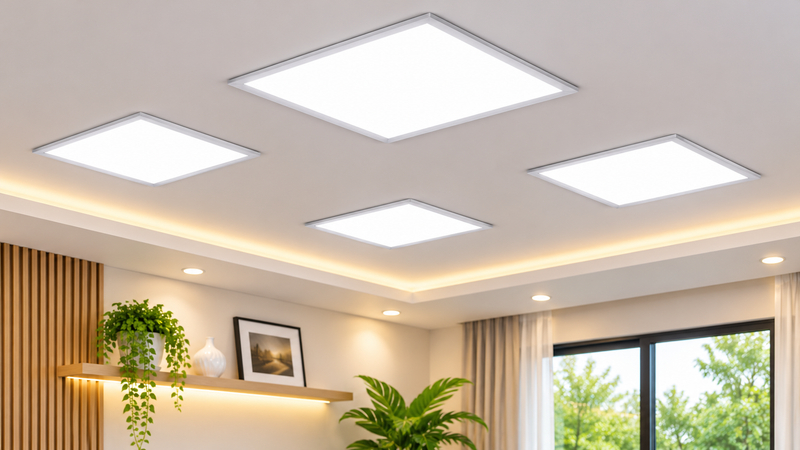
When comparing options, consider the panel’s size, brightness, color temperature, and compatibility with the existing ceiling and electrical setup. These details help ensure the led ceiling lighting suits the room’s layout and intended use. For specific energy savings or lifespan claims, consult the product’s published specifications.
With the right fit, an LED panel can bring a streamlined appearance to everyday lighting. Next, consider how placement and controls can shape the room’s overall lighting experience.
Surface-Mounted Lights
Surface-mounted ceiling lights attach directly to the ceiling, making them a practical option when recessed lighting isn’t suitable or a lower-profile installation is preferred. For indoor spaces, compare the fixture’s size, light output, color temperature, and dimming compatibility with the room’s needs.
Shoppers considering surface-mounted ceiling lights from Philips should check the product specifications and installation requirements for each model. For covered patios and other outdoor areas, choose surface-mounted ceiling lights specifically rated for the location’s exposure to moisture and weather; an indoor fixture may not be appropriate.
Product availability, electrical standards, and installation requirements can vary by country, so check local guidelines before purchasing. An LED strip surface-mounted on the ceiling can also provide a continuous line of light, but confirm that its components and installation method suit the intended setting.
Cove Lighting
Cove lights add indirect illumination by concealing the light source in a recessed ledge, perimeter detail, or similar ceiling feature. For a clean cove light ceiling detail, plan the ledge and fixture together: leave enough room to hide the source from typical viewpoints, and aim the light toward a surface that can reflect it into the room. The exact dimensions depend on the fixture and ceiling layout, so confirm them with the product specifications before construction.
A thoughtful cove light ceiling design also accounts for access to the fixtures, nearby ceiling elements, and how the indirect light will layer with task or accent lighting. Dimming can help adjust the ambiance, provided the selected lights and controls are compatible. With those practical details settled early, cove lighting can feel integrated into the architecture rather than added as an afterthought.
A COB light can be a practical option when you want a compact source tucked into a cove. Test its placement and aiming in the actual space so the light spreads evenly and the fixture stays out of direct view.
Spotlights
The best spotlights for a ceiling depend on what you need the light to do. Recessed ceiling spotlights create a streamlined look, while adjustable spot lights can direct light toward a reading area, artwork, or work surface. Before choosing, consider the room’s layout and whether you want focused task lighting, broader ambient light, or a mix of both.
For balanced ceiling spot lighting, plan fixture placement around the areas you use most and avoid relying on a single bright point to light the whole room. Check that each fixture is suitable for its location and compatible with your ceiling, dimmer, and bulb requirements. A ceiling with spotlights can feel both practical and inviting when the beam direction and spacing suit the room.
Linear Ceiling Lights
A linear ceiling light brings a clean, streamlined look to a room while spreading light along a longer surface. For kitchens, dining areas, or workspaces, a linear LED light ceiling fixture can provide focused illumination without the visual bulk of several separate fixtures. Choose a size and placement that suit the room and the task at hand.
The right linear light design also depends on how the fixture meets the ceiling. A flush or close-to-ceiling style keeps the profile compact, while linear pendant lighting hangs lower and can define a table or island. Compare both options with your ceiling height and layout in mind to find a lighting solution that feels balanced and practical.
Globe Ceiling Lights
Globe ceiling lights feature rounded shades that create a soft, balanced look while providing practical overhead illumination. They work well in living rooms, bedrooms, kitchens, and dining areas. A black globe ceiling light adds contrast to neutral interiors, while frosted or clear glass designs can create a lighter appearance.
Globe lights are available in flush-mounted and hanging styles. A single globe light pendant can suit a smaller area, while a multi-light globe pendant chandelier can make a stronger statement above a dining table or kitchen island. When choosing a design, consider the room’s size, ceiling height, light output, and the finish of nearby furniture and fixtures. For bathrooms, check that the fixture has the appropriate moisture rating for its intended location.
Island Lights
Kitchen island lighting should balance task light with the look and feel of the room. A row of pendants can define the island and provide focused light for prep or dining, while a ceiling fixture can create a cleaner, more streamlined effect. Choose a size and arrangement that suit the island, and leave enough visual breathing room so the fixtures don’t overwhelm the space.
For luxury island kitchen lighting, consider refined finishes, sculptural shapes, or thoughtfully layered light. Kitchen island lighting in black offers a crisp contrast against lighter cabinetry and countertops, while coordinating the fixture with cabinet hardware can help the room feel cohesive. Before choosing, check how the fixture’s scale, finish, and light output work with the rest of your kitchen.
Decorative Ceiling Lights
Decorative ceiling lights add visual interest while providing useful illumination. Unlike fixtures chosen mainly for general lighting, these designs can also complement a room’s colors, furniture, and interior style. Details such as textured shades, artistic shapes, metallic finishes, and decorative glass can make a ceiling fixture stand out.
When selecting a decorative light, consider how its shape, size, and finish will look with the rest of the room. In a bedroom, a softly diffused design can create a relaxing feel, while a sculptural fixture can add character to a living or dining area. Choose a fixture that provides enough light for the space without making the ceiling look crowded.
Ceiling Lights for Living Rooms
Ceiling lights for living rooms work best when they support the room’s everyday activities without overwhelming the space. For a balanced home light design, consider the room’s size, ceiling height, and how you use the area—then choose a fixture that provides comfortable general illumination and suits your décor.
LED ceiling lights for living rooms are one option to explore, with styles ranging from low-profile flush mounts to statement fixtures. Pair overhead light with floor or table lamps where you want a softer glow for reading or relaxing. A flush-mount or semi-flush-mount fixture can suit a room with limited ceiling height, while a chandelier or pendant can add a focal point where there’s more space. For a layered lighting setup, use warm ceiling light for general illumination, fabric or frosted-glass shades to soften the glow, and spotlights to highlight artwork or decorative features.
Ceiling Lights for Bedrooms
Modern ceiling lights for bedrooms provide general illumination while setting the mood for the room. When choosing a ceiling lamp for a bedroom, consider the room’s size, ceiling height, and how you use the space. A flush-mount fixture can suit a lower ceiling, while a pendant or contemporary ceiling lamp may work well where there is more clearance.
For a relaxing atmosphere, consider warm white lighting around 2700K–3000K. Also, leave at least 7 feet of clearance between the floor and the bottom of a hanging fixture in walking areas.
For comfortable bedroom lighting, look for a fixture that spreads light evenly. A dimmable ceiling light can make it easier to shift from getting ready to winding down, while bedside lamps or reading lights provide focused illumination for tasks. These bedroom lighting ideas can help you choose a ceiling fixture that works with the rest of your lighting and décor.
Ceiling Lights for Home Offices
A good ceiling light for a home office should provide even, comfortable illumination across the room, not just a bright pool directly under the fixture. Choose a ceiling lamp for your home office based on the room’s size, ceiling height, and existing daylight. Flush-mount fixtures suit many rooms with lower ceilings, while a pendant or other hanging fixture needs enough clearance above desks and walkways.
Look for a bright ceiling light for your home office with a dimmer or adjustable output, so you can change the light level for reading, video calls, or screen work. A diffuser or enclosed shade can soften the light and help reduce glare. Avoid placing a bare bulb where it shines directly into your eyes or reflects off your monitor.
Check the fixture’s light output, bulb type, dimensions, installation requirements, and dimmer compatibility before buying. For better task lighting, position your desk lamp to illuminate reading materials without creating shadows or reflecting light directly onto your computer screen.
Best Light Bulbs for Ceiling Fixtures
The right bulb can make a ceiling fixture more comfortable and easier to maintain. Check the fixture’s label and the bulb packaging before buying, since product standards and bulb regulations may vary by country.
| Bulb Type | Energy Efficiency | Average Lifespan | Best Use or Important Notes |
|---|---|---|---|
| LED | High | Varies by product; check package | Efficient everyday choice; widely available in different shapes and color temperatures. |
| CFL | More efficient than incandescent | Varies by product; check package | Uses less energy than incandescent bulbs; confirm it fits the fixture. |
| Halogen | Less efficient than LED or CFL | Varies by product; check package | Provides bright, crisp light; may run hot. |
| Incandescent | Low | Varies by product; check package | Familiar warm light, but uses more energy than LED or CFL. |
Lumens measure how much light a bulb gives off; wattage measures the electricity it uses. Match the bulb base to the fixture socket, and use a bulb marked dimmable with a compatible dimmer.
Color temperature, shown in Kelvin (K), describes the look of the light: warm light feels soft and yellowish, neutral light appears more balanced, and cool light looks whiter or bluer. Integrated LED fixtures have built-in light sources rather than replaceable bulbs, so check the manufacturer’s instructions for servicing or fixture replacement.
For more information, read this energy-efficient lighting guide.
Conclusion
The right ceiling light balances the room’s needs with your style. When exploring different types of ceiling lights, flush mount fixtures work well where you want a simple, low-profile look, while recessed lights provide a clean, streamlined feel.
Consider how much light the room needs, its ceiling height, and the atmosphere you want before choosing. Next, measure your space and compare fixture styles to find an option that fits.