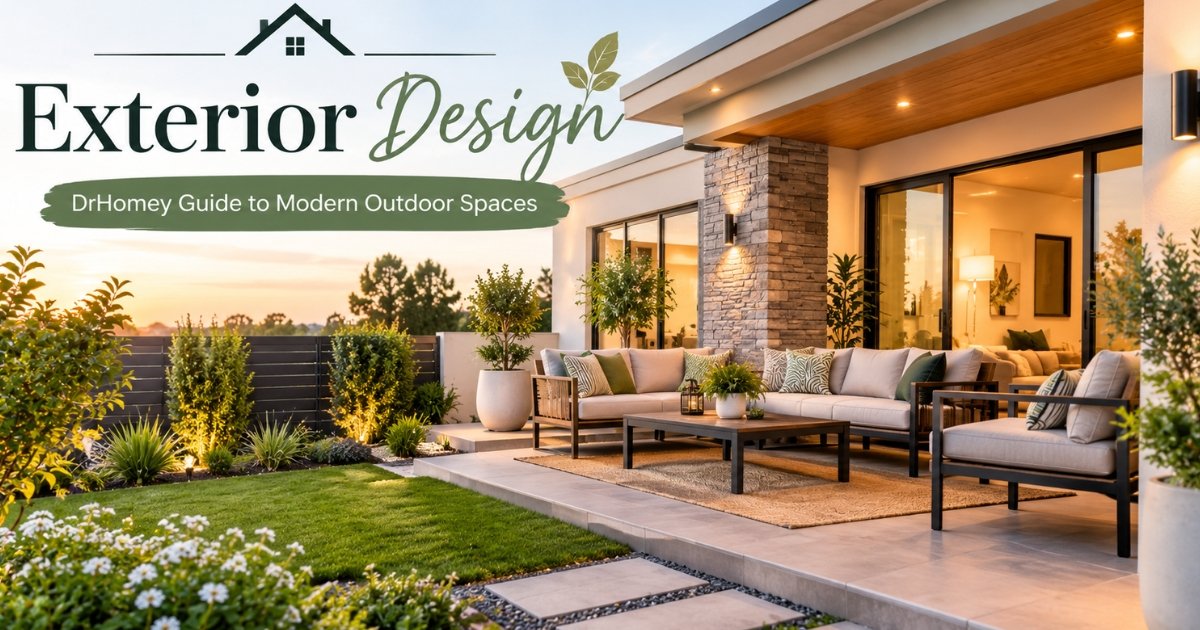
Exterior Design DrHomey: Amazing Ideas For Your Home
Pull into your driveway and take a good look at your home. The front door, porch, walkway, and the way the yard meets the siding all show how well the property is cared for. Guests, neighbors, and buyers notice these details before they see anything inside.
But exterior design DrHomey is about more than curb appeal. A well-planned exterior can make your home more comfortable, easier to maintain, and more functional, with porch seating you’ll actually use, path lights that make the walk to the door safer, and plants that don’t need constant trimming.
That approach helps you create an exterior that suits your home’s style, needs, and surroundings. Start with your home’s architectural style, then choose colors, materials, landscaping, and lighting that suit the property and your local climate. Planning a build, a renovation, or a simple refresh? The sections below cover everything you need to decide, one step at a time.
Start With Your Home’s Architecture

One effective strategy is to photograph your property from multiple angles. The structural elements often suggest a straightforward approach to style that can streamline the decision-making process. For example, a Victorian home with intricate moldings and bold colors lends itself well to detailed, multi-color paint schemes that highlight its trim, while a minimalist house might benefit from a more understated approach, focusing on clean lines and muted tones.
Traditional styles like Colonial or Craftsman call for warm, inviting exteriors that showcase craftsmanship and detail. Contemporary styles can flourish in modern homes, allowing for open spaces and the incorporation of innovative materials. Before you renovate, figure out what makes your house look the way it does. That tells you what to keep and what to change. By examining the architectural elements such as rooflines, windows, and exterior finishes, you can identify focal points that deserve special attention.
Seven Exterior Materials for Your Home

The right exterior material depends on your weather, your home’s style, and what you like the look of. Here’s a refined list to explore:
- Fiber Cement Siding – A versatile choice that withstands various climates, offering durability and aesthetic appeal.
- Vinyl Siding – Low maintenance and available in numerous colors, it suits many architectural styles, especially in the United States.
- Stucco – Ideal for warmer climates, stucco offers a unique texture and high insulation properties, enhancing energy efficiency.
- Brick – Timeless and resilient, brick works beautifully for traditional homes while providing excellent weather resistance.
- Wood – Offers unparalleled natural beauty, allowing for a warm aesthetic, although it requires more upkeep in moist environments.
- Metal Panels – These are gaining popularity in modern designs, providing a sleek, industrial look that can resist harsh weather.
- Stone Veneer – A cost-effective option for achieving a luxurious stone finish without the weight, suitable for varying climates.
Selecting fiber cement in areas prone to storms can save on future repairs, while choosing stucco in sunnier regions can keep your home cool and energy-efficient. Pick materials that suit your home’s style, your local weather, and the upkeep you’re willing to do. Get those three right and the exterior will look good and hold up for years.
Improve the Front Door and Entrance
Improve the front door and entrance by making the area clean, clear, and easy to use. Start with cleaning the door, including its handle and the surrounding frame. Then remove unnecessary items, such as shoes, packages, or décor that crowd the entry or block the path.
Check the door’s hardware for loose handles, sticking locks, or other visible damage. Repairing damaged hardware can help the door open and close smoothly; if a repair is beyond your skills, contact a qualified professional. With the entrance in order, you can move on to other areas that need attention.
Make the entrance easier to see and use with lighting near the door, choosing fixtures suited to the location and following the manufacturer’s installation instructions. If your home has a covered entrance, use the sheltered area to create a clear path to the door and keep the threshold free of clutter. Add planters beside the entry for a finished look, leaving enough room for people to approach and open the door comfortably.
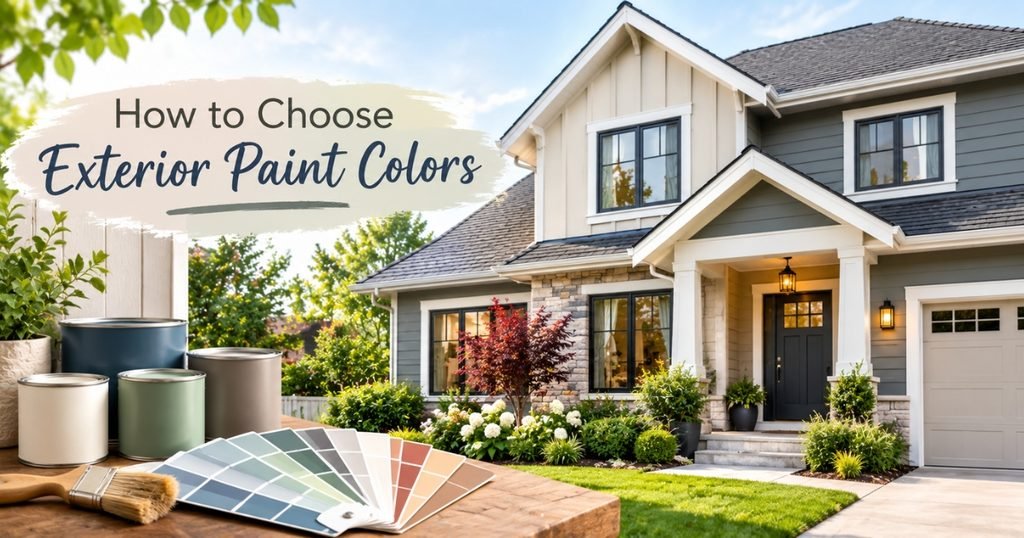
How to Choose Exterior Paint Colors
- Choose Three Exterior Colors
Most exteriors look best with three colors. The main color goes on the siding and sets the overall look of the house. The trim color covers the window frames, corner boards, and fascia. It can be lighter or darker than the siding, or the same color in a different shade for a clean, modern look. The accent color goes on the front door, and on the shutters if you have them. This simple approach to exterior design DrHomey can help you create a polished and well-balanced look.
- Outdoor Housing Painting Ideas
Outdoor house painting ideas often start with colors that match the surrounding landscape. Earthy tones like sage green or warm taupe blend well with nature, while brighter accents can add a modern touch without overpowering the look of your neighborhood. Consider the undertones of your chosen colors as well. A muted blue may appear calm in one type of light, while a bold gray can create a sharper appearance in another.
- Exterior House Color Scheme
Choosing the right exterior house color scheme is about more than personal taste. Look at the colors of trees, flowers, and even the sky when creating your palette. Earthy tones can work especially well in wooded areas, while brighter shades can help a home stand out against an urban backdrop.
- Consider Your Neighborhood
Some communities have color restrictions, and nearby homes can give you good ideas for keeping the street looking consistent. Watch the sunlight throughout the day, too, because changing light can make a big difference in how exterior colors look.
- Test Colors With a Paint Visualizer
When making a final decision, consider using a paint visualizer. These digital tools allow you to experiment with different palettes and see how various shades may look alongside your home’s architecture and surrounding landscape. This can make it easier to compare options and choose colors with greater confidence.
Refresh Windows, Roofs, and Exterior Details
Take a close look at your windows, roof, and other exterior features to identify any visible damage, peeling paint, or loose fittings. Check that window frames and trim appear sound, and look over roof edges, flashing, and other visible areas for gaps or damage. These signs can indicate that maintenance or repair is needed; have a qualified professional assess issues you cannot safely or confidently evaluate.
Clear debris from gutters and downspouts so water can drain properly. Look for sagging or disconnected sections, missing shingles, damaged flashing, and signs of moisture around nearby walls and windows. Address leaks, damaged materials, and other maintenance issues before painting trim or making cosmetic updates. If you notice problems that you cannot safely assess or repair, contact a qualified professional. Once the exterior is in good condition, you can move forward with refreshing the windows, roof elements, and trim.
Landscaping That Works for Your Yard, Not Just Looks Good
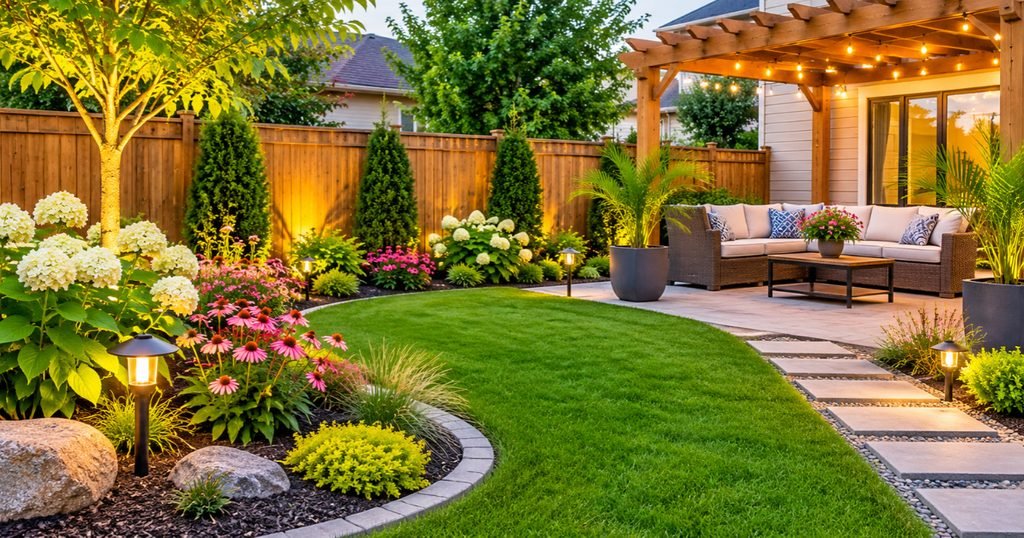
Landscaping isn’t just the finishing touch. A good yard layout decides where people walk, how much privacy you get, and which parts of the yard feel like separate spaces. Trees and shrubs work as natural borders, and they give you shade where you need it most.
Low plants and ground cover help mark out areas and keep people on the path. They work even better next to stone walkways, patios, and retaining walls. Together, they make the yard easier to use, and they handle drainage and soil runoff at the same time.
Choose plants that suit your climate. They need less watering and fertilizer, and they’re easier to keep alive. Native and drought-tolerant plants are usually a safe pick, since they’re already adapted to your region’s weather.
Two ideas worth looking at are rain gardens and xeriscaping. A rain garden catches runoff from the roof or driveway and lets it soak into the ground. Xeriscaping uses plants and layouts that need very little water, which makes sense in dry areas. Plan for how the yard looks and how it works, and it’ll stay easy to take care of.
Use Paths and Hardscaping to Improve Your Outdoor Space
Straight paths create clear, direct routes through an outdoor space, making it easier to move between entrances, seating areas, and the garden. Keep walking routes wide enough for comfortable passage and free of obstacles, and use steps where changes in grade make them useful.
Choose simple borders to define paths and paved areas without making the layout feel busy. Repeating materials or colors across paths, driveways, and other hardscaping can help the space feel cohesive, while contrasting textures can distinguish walking surfaces from planting areas.
Retaining walls can help organize sloped areas and provide a defined edge for nearby paths or paved spaces. Plan these features together so each route feels connected and the hardscaping supports how you use the yard.
Exterior Lighting After Dark
A single floodlight leaves some spots too bright and others completely dark. It works better to mix a few kinds of lights, so every part of the yard gets what it needs.
- Ambient light is the general glow that lets you see the yard. Think porch lights, wall lanterns by the front door, and fixtures over the patio. Match them to your house: black metal lanterns look right on a farmhouse, and simple, clean fixtures suit a modern home.
- Task light goes where you need to see what you’re doing, like the steps, the grill, the outdoor kitchen, and the walkway. Make it brighter than the rest, and aim it down so nobody gets a flash in the eyes.
- Accent light brings out the details you like. Point a light up at a stone wall, a column, or a big tree, and it stands out after dark.
A few tips make a big difference:
- Space path lights out. Place them several feet apart and alternate sides of the walkway. A straight, tight row looks like an airport runway.
- Keep tree lights close to the trunk. Set the fixture near the base and angle it up so the bark and branches show.
- Hang string lights over seating areas. A pergola, fence line, or patio edge works well and gives a warm gathering spot.
- Choose warm bulbs. Around 2700K to 3000K gives a soft, welcoming look. Cool white bulbs tend to feel harsh outside.
- Add dimmers and timers. You can turn the lights down for dinner outside, and the porch light comes on at dusk without you thinking about it.
How to Design an Outdoor Living Space
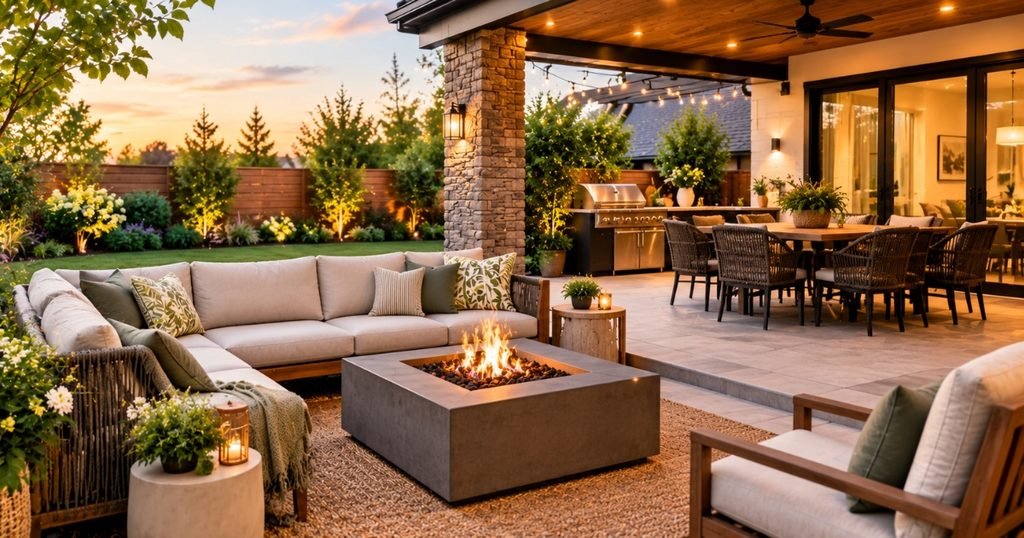
Most backyards have a patio, a grill, and a couple of chairs, and still nobody spends time out there. The reason is usually simple. The space was never planned around how people live. Decide how you want to use the space. You might want an area for family dinners, morning coffee, or a safe place for children to play. These drhomey tips will help you turn a patio, deck, or porch into a room you’ll actually want to sit in.
Plan Your Outdoor Layout
Once you know what the space is for, the layout almost decides itself. If it’s for dining, you need a flat surface and enough room to pull the chairs out without hitting a wall, which usually means leaving about three feet around the table. If it’s for relaxing, comfortable seating matters more, and so does shade, because even the nicest patio feels empty at 3 p.m. in full sun. A patio umbrella or a shade sail is often all it takes, and it costs far less than most people expect.
Define the Outdoor Space
An open yard doesn’t feel like a room until something defines it. A pergola works like a ceiling without closing the area in, a hedge or low wall marks where the space ends and adds privacy, and an outdoor rug under the seating pulls everything together the same way a rug does inside. Tall planters can do the same job if you don’t want to build a fence.
Choose Outdoor Furniture
Teak, powder-coated aluminum, and resin wicker are popular for that reason. Whatever you buy, cover it or store the cushions during the off-season. Lighting comes last. After the layout is set, a string of warm lights over the seating and a few path lights make the space easy to use after dark.
Tying Interior and Exterior Together
Using similar colors and materials indoors and outdoors can make the transition between the two spaces feel natural. For instance, earthy tones inside can complement the greens and browns in your garden. Large glass doors and expansive windows can further strengthen this relationship.
These features not only invite natural light into your living spaces but also blur the boundaries between indoors and outdoors. Whether it’s matching outdoor furniture with indoor decor or choosing similar textures for fabrics and surfaces, these small choices can make a big difference in the overall feel of your home. When natural light filters through, it draws attention to the vibrant textures and colors outside, making your home feel more expansive.
Budget-Friendly Ways to Improve Your Home’s Curb Appeal
- Wash exterior surfaces: Use a garden hose or suitable cleaner to remove dirt and grime from siding, porch railings, and other washable surfaces. Check the material’s care instructions before scrubbing.
- Clean windows: Wash the glass and wipe down frames for a clearer, tidier look. Choose a cloudy day to help prevent cleaning solution from drying too quickly.
- Trim shrubs: Cut back overgrown branches to neaten the front of the home and keep paths and windows unobstructed.
- Repaint peeling areas: Scrape away loose paint, prepare the surface, and touch up small spots with a compatible exterior paint.
- Clean pathways: Sweep away leaves and debris; wash stained areas with a method suitable for the path’s material.
- Replace damaged house components: Fix or replace visibly damaged items, such as house numbers, a mailbox, or a porch light, to complete the refresh.
Exterior Design Elements: A Quick Comparison
Exterior design elements each serve a different purpose, from shaping a home’s first impression to supporting everyday use. Compare the options below to see the main benefit of each and a practical tip for planning it.
| Design Element | Main Benefit | Practical Tip |
|---|---|---|
| Siding | Sets the home’s overall look and provides its exterior finish. | Choose a style and color that work with the roof, trim, and surrounding setting. |
| Roofing | Completes the home’s appearance and helps protect it from the elements. | Consider how the roof color and shape will look alongside the siding. |
| Windows | Bring natural light indoors and contribute to the exterior’s style. | Plan their placement and proportions to suit the home’s façade. |
| Front entry | Creates a focal point and guides visitors to the main entrance. | Use the door, lighting, and walkway to make the entry feel cohesive. |
| Porches and patios | Add outdoor areas for sitting and gathering. | Match the size and location to how you expect to use the space. |
| Landscaping | Frames the home and connects it visually to the yard. | Keep plant placement clear of paths and important views. |
For more ideas, use exterior design drhomey as a starting point, then compare options against your home’s practical needs.
Exterior Design Drhomey Final Thoughts
Exterior design DrHomey brings together the right materials, colors, landscaping, and lighting to create a home exterior that looks inviting and works for everyday life. Start by considering your home’s architectural style and local climate, then focus on improvements that suit your needs and budget.
When you have a sprawling garden or a cozy balcony, there are countless ways to transform your outdoor environment. Start planning your modern outdoor oasis today to enjoy the benefits of a well-designed space. For more information, visit Contact DrHomey.